Do the Hessdalen Lights represent known atmospheric/geophysical phenomena, or does the available evidence support an unresolved anomalous physical phenomenon?
Hessdalen Lights
Do the Hessdalen Lights represent known atmospheric/geophysical phenomena, or does the available evidence support an unresolved anomalous physical phenomenon?
Atmospheric ScienceGeophysicsObservational Anomaly
- Category
- Atmospheric Science / Geophysics
- Source record
- 22 sources
- Evidence reviews
- 07
- Current version
- v0.1.2
Unresolved does not automatically mean anomalous physics. This investigation separates a report that lacks enough information from a physical phenomenon that has been measured and shown to resist ordinary explanations.
Authority does not receive automatic closure, and dissent does not receive automatic credibility. This case remains open to stronger records, technical correction, and good-faith challenge.
Case briefing
Enter the conflict before the conclusion.
The accepted account is documented as a claim to test, not a truth to inherit. Serious alternatives face the same standard.
Most unusual lights are expected to reduce to aircraft, vehicles, astronomy, weather optics, camera behavior, radar propagation, or known natural luminous processes once enough information is available. Hessdalen is often placed inside that general expectation.
Important events often lack range, calibration, synchronized raw data, or secure source identity. Later papers also inherit measurements from a small overlapping research network.
- Reports recur in one bounded valley and have motivated decades of organized observation rather than one isolated story.
- A small residual includes multi-witness events, candidate spectra, and possible visual-radar coincidences that have not been cleanly identified.
- The valley has unusual conductive geology and several proposed physical mechanisms, yet no complete ordinary-source reconstruction covers every strongest case.
At a glance
What is firmly established
- A geographically concentrated modern report wave began in 1981 and motivated repeated field observation.
- The 1984 campaign logged 188 reports; 135 were graded F1-F4 and 53 crossed the project's subjective F5 threshold.
- Only six reports were F9-F10, and four of those also reached G7 or higher.
- Photographs, videos, a few candidate spectra, and sparse visual-radar coincidences exist.
- Known sources and sensor effects repeatedly appear in the archive and have sometimes been corrected after publication.
- A 2024 geophysical survey mapped conductive sulfide-bearing zones and a gabbro structure in the valley.
- No event has yet produced a complete, public, independently reproduced multi-sensor physical characterization.
Still open
What remains disputed or unresolved
- Whether the strongest residual events share one cause.
- Whether influential optical targets were distant phenomena or nearer artificial lights.
- Whether any published size, power, spectrum, or speed is robust to source and distance uncertainty.
- Whether 1984 radar echoes tracked the same targets seen visually.
- Whether magnetic, radio, radiation, or laser correlations exceed chance and control behavior.
- Whether conductive geology actively generates or merely coexists with the reports.
- Whether a known natural mechanism can reproduce the validated residual observations.
Evidence snapshot
Where the major categories currently point.
Current direction and evidence impact are separate. Open any review for the complete observations, interpretations, source quality, and unresolved questions.
How to read this
Current direction says what the evidence presently supports, challenges, or leaves unresolved. Evidence impact says how important that category is to understanding the case. Impact does not mean support for either side.
Evidence categoryCurrent directionEvidence impactKey limitation / note
Evidence categoryReport pattern
Read review4 linked sources
Current directionMixed: recurrence established, one class not established
Evidence impactHigh impactCentral to the case or capable of materially changing the assessment.
Key limitation / note
Repeated reports justify investigation, while the 1984 funnel and variable descriptions favor multiple causes.
Evidence categoryImages and geometry
Read review8 linked sources
Current directionMixed: real records, weak physical constraint
Evidence impactMedium impactMeaningfully informs the case but is not decisive alone.
Key limitation / note
Images establish lights in frames but usually not range, size, power, or source identity.
Evidence categorySpectroscopy
Read review5 linked sources
Current directionWeakly favors a natural-process research path
Evidence impactHigh impactCentral to the case or capable of materially changing the assessment.
Key limitation / note
Candidate spectra exist, but the small low-resolution set does not establish a characteristic composition.
Evidence categoryRadar and radio
Read review5 linked sources
Current directionUnresolved: sparse association and revised signals
Evidence impactHigh impactCentral to the case or capable of materially changing the assessment.
Key limitation / note
Three possible visual-radar coincidences are intriguing; extreme speed and anomalous are not established.
Evidence categoryGeology
Read review3 linked sources
Current directionLeans toward a testable natural context, not causation
Evidence impactMedium impactMeaningfully informs the case but is not decisive alone.
Key limitation / note
Conductive structures are measured, but no event-linked energy path has been demonstrated.
Evidence categoryMechanisms
Read review6 linked sources
Current directionUnresolved: several plausible models, none confirmed
Evidence impactMedium impactMeaningfully informs the case but is not decisive alone.
Key limitation / note
Known physics can generate luminous processes, but Hessdalen event conditions have not validated one model.
Evidence categoryControls and replication
Read review4 linked sources
Current directionStrongly supports H4: multiple causes
Evidence impactHigh impactCentral to the case or capable of materially changing the assessment.
Key limitation / note
Published false positives and incomplete synchronized data explain both ordinary cases and the remaining uncertainty.
Current read
Where the record points after review.
The available record strongly supports that Hessdalen has hosted a persistent observation problem and serious long-term field effort. It also shows that ordinary lights, astronomical sources, atmospheric optics, camera behavior, radar propagation, and radio interference make up a substantial part of the archive.
A smaller residue of reports and recordings remains unresolved. Some may reflect an uncommon natural luminous process, and the valley's conductive geology provides testable context. Existing spectra, radar coincidences, photometric estimates, radio signals, magnetic timing, and laser reports do not yet establish a reproducible anomalous physical class.
PARALLAX therefore favors a mixed-population interpretation. “Unresolved observation” is retained where the data do not decide; “unresolved anomalous physical phenomenon” remains possible but unproven. No extraterrestrial, intelligent, paranormal, or new-physics interpretation is required by the evidence.
What would change it
The assessment remains revisable.
- A repeated event-linked environmental precursor that predicts lights better than chance.
- A synchronized, triangulated event with calibrated spectrum, trajectory, photometry, radar or lidar, and environmental data.
- Independent reproduction from open raw files and calibration records.
- A controlled physical mechanism reproducing measured event size, spectrum, duration, and energy.
- Source-matched reconstructions explaining the highest-quality residual events.
- Blind classification demonstrating whether nominated anomalies differ from controlled ordinary sources.
01Visual source
Enter the conflict
What story were we given, and why is it questioned?
Begin with the account most people receive, then inspect why it remains contested before testing every serious possibility.The story we were given
The accepted account, stated without caricature.
Most unusual lights are expected to reduce to aircraft, vehicles, astronomy, weather optics, camera behavior, radar propagation, or known natural luminous processes once enough information is available. Hessdalen is often placed inside that general expectation.
Why people question it
The pressure points that keep this case open.
A contradiction is not proof of a preferred theory. It is a reason to keep asking better questions.
- 01
Reports recur in one bounded valley and have motivated decades of organized observation rather than one isolated story.
- 02
A small residual includes multi-witness events, candidate spectra, and possible visual-radar coincidences that have not been cleanly identified.
- 03
The valley has unusual conductive geology and several proposed physical mechanisms, yet no complete ordinary-source reconstruction covers every strongest case.
At a glance
What is firmly established
- A geographically concentrated modern report wave began in 1981 and motivated repeated field observation.
- The 1984 campaign logged 188 reports; 135 were graded F1-F4 and 53 crossed the project's subjective F5 threshold.
- Only six reports were F9-F10, and four of those also reached G7 or higher.
- Photographs, videos, a few candidate spectra, and sparse visual-radar coincidences exist.
- Known sources and sensor effects repeatedly appear in the archive and have sometimes been corrected after publication.
- A 2024 geophysical survey mapped conductive sulfide-bearing zones and a gabbro structure in the valley.
- No event has yet produced a complete, public, independently reproduced multi-sensor physical characterization.
Still open
What remains disputed or unresolved
- Whether the strongest residual events share one cause.
- Whether influential optical targets were distant phenomena or nearer artificial lights.
- Whether any published size, power, spectrum, or speed is robust to source and distance uncertainty.
- Whether 1984 radar echoes tracked the same targets seen visually.
- Whether magnetic, radio, radiation, or laser correlations exceed chance and control behavior.
- Whether conductive geology actively generates or merely coexists with the reports.
- Whether a known natural mechanism can reproduce the validated residual observations.
Scope
What this investigation is, and is not, asking.
This investigation tests the modern report wave, the 1984 campaign, later automatic and EMBLA monitoring, optical and spectral claims, radar and radio records, environmental correlations, and proposed physical mechanisms.
It treats each event and synchronized data bundle as the proper unit of analysis. The label “Hessdalen Lights” does not prove that every report, image, echo, and signal has the same cause.
It does not assume an extraterrestrial, technological, paranormal, or new-physics origin. Those interpretations are not required by the current evidence.
Timeline
Case chronology.
A compact record of the events, tests, publications, and review moments that define the current investigation.
Modern report wave begins
Residents begin reporting frequent unusual lights in and around the valley, especially during dark winter periods.
Project Hessdalen forms
A volunteer project is organized with support from UFO-Norway, UFO-Sweden, and scientific advisers.
Foundational field campaign
Observers log 188 reports and operate cameras, radar, spectroscopy, magnetics, radio, seismic, infrared, radiation, and laser equipment.
Automatic station begins monitoring
The Blue Box automatic measurement station starts long-term optical and sensor monitoring of the valley.
EMBLA campaigns
Norwegian and Italian teams conduct optical, radio, radar, and environmental campaigns that generate influential claims and later technical debate.
Headlight and VLF critiques
Source-specific critiques challenge target distance, power estimates, and radio interpretations; original investigators publish responses.
Spectral and physical models expand
Project spectrum work proposes combustion, while peer-reviewed papers explore dusty-plasma and cluster mechanisms.
Conductive geology mapped
A peer-reviewed VLF survey maps mineral-related conductive zones, strengthening the geophysical context without establishing a causal light mechanism.
PARALLAX state of evidence published
INV-006 separates ordinary sources, unresolved observations, proposed mechanisms, and the measurements required to distinguish them.
Observation filter
How 188 reports became four stronger cases.
The original campaign did not treat every reported light as an anomaly. This view keeps the denominator and the limits of its subjective screening visible.
Reports are not all equal
These are the project's own 1984 filters. F measured how hard a report was to explain; G measured report detail. The grades were subjective, so the funnel is context, not a scientific certainty score.
01
All 1984 light reports
188The complete field-period denominator.
02
F5-F10 candidates
53Passed the project's subjective “possibly Hessdalen” threshold.
03
F9-F10 reports
6Most difficult to explain under the project scale.
04
F9-F10 with G7+
4High anomaly score and relatively strong report quality.
Gallery
Visual context for the evidence.
These images are included as source-linked context, not as proof by themselves. Captions describe what the image can help inspect.
This image provides visual context. It does not establish cause, identity, date, or interpretation by itself.
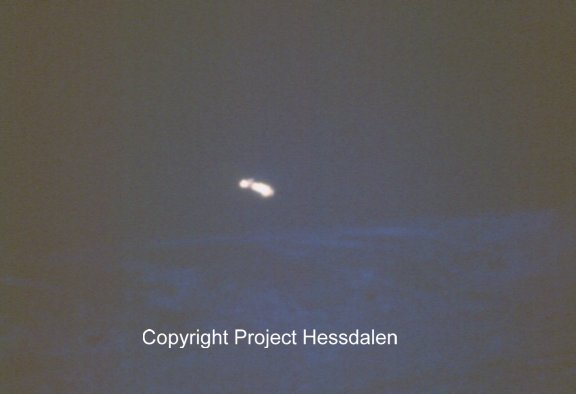
Arne P. Thomassen / Project Hessdalen. Copyright Project Hessdalen; low-resolution source-linked reproduction for research commentary.Project Hessdalen picture archive - H-a1This image provides visual context. It does not establish cause, identity, date, or interpretation by itself.
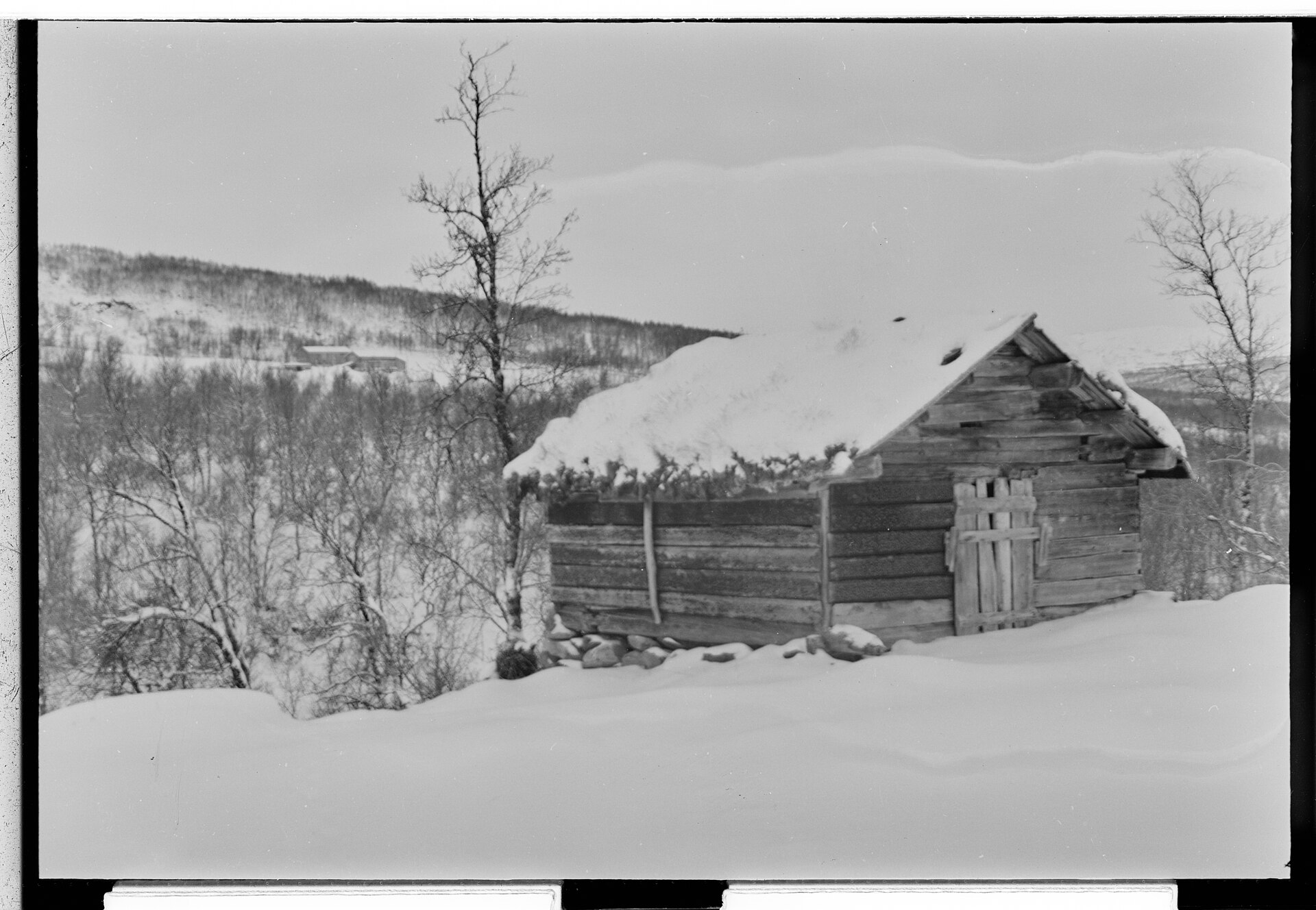
Unknown photographer / National Archives of Norway. CC BY-SA 4.0.Wikimedia Commons file pageThis image provides visual context. It does not establish cause, identity, date, or interpretation by itself.
Bjorn Lagesson / Project Hessdalen. Copyright Project Hessdalen; source-linked evidence excerpt for research commentary.Project Hessdalen spectrographic recordsThis image provides visual context. It does not establish cause, identity, date, or interpretation by itself.
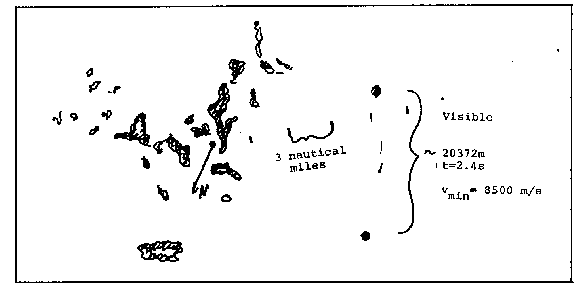
Project Hessdalen. Copyright Project Hessdalen; source-linked evidence excerpt for research commentary.Project Hessdalen 1984 final technical report, radar appendixPublic evidence record
What can actually be inspected.
Cases described as multi-source or multi-sensor still vary by channel. This inventory shows what is public, what is partial, what is missing, and how far each record can carry an inference.
Witness and campaign reports
InspectablePublic record
The 1984 report includes classifications, summaries, dates, locations, and observer notes for 188 reports.
What is missing
Explicit validated scoring rules, blind reclassification, and equal detail for every observation.
How it can be used
Strong for campaign history and the report funnel; limited for precise physical measurement.
Optical images and video
Partial recordPublic record
Selected film photographs, Blue Box recordings, Science Camp footage, and annual automatic-camera archives are public.
What is missing
Complete native files, calibration, triangulated range, control metadata, and source exclusions for many influential events.
How it can be used
Direct visual context; insufficient alone for size, power, or identity.
Optical spectra
Partial recordPublic record
1984 grating images and later preliminary spectrum analyses are inspectable.
What is missing
Repeated high-resolution calibrated spectra from securely identified, triangulated events.
How it can be used
Supports natural-process hypotheses but does not establish composition.
Radar
Partial recordPublic record
The 1984 report publishes counts, narrative descriptions, and analog sketches or photographs of selected echoes.
What is missing
Digital tracks, continuous trajectories, modern calibration, altitude, raw sweep data, and independent source association.
How it can be used
Shows possible radar coincidences; does not prove extreme kinematics.
Radio and magnetic records
Partial recordPublic record
Campaign reports and selected VLF analyses describe signals, equipment, and later conventional reassessment.
What is missing
Complete synchronized event records, background rates, and repeated correlations.
How it can be used
Primarily constrains earlier anomaly claims and guides better controls.
Geophysical survey
InspectablePublic record
A peer-reviewed 2024 paper and open PDF document the VLF survey and conductive-zone interpretation.
What is missing
A synchronized luminous event showing a causal current, field, or emission path from the mapped structures.
How it can be used
Strong geological context and a basis for preregistered environmental tests.

02Visual source
Map the possibilities
Which possibilities survive the pressure?
Give the accepted explanation and its strongest challengers the same hard questions: what fits, what fails, and what is still missing?Competing possibilities
The accepted account and its strongest alternatives.
Inclusion means a possibility is worth testing. It does not mean every possibility currently carries equal evidentiary weight.
Known atmospheric or geophysical luminous processes
Some residual events are natural electrical, plasma, combustion, optical, or geophysical phenomena whose local mechanism may be incompletely characterized.
Current treatment
Plausible research direction, not a demonstrated mechanism. Natural luminous processes could explain part of the residual.
Ordinary sources and instrument effects
Aircraft, vehicles, astronomy, weather optics, camera behavior, radar propagation, and radio interference explain many or possibly all events.
Current treatment
Strong for much of the archive. Whether it explains every high-quality residual remains open because several records lack decisive controls.
Recurrent unresolved physical phenomenon
A subset represents a real physical process with repeatable properties not adequately explained by established sources. This says nothing about extraterrestrial origin.
Current treatment
Possible but unproven. The unresolved residue justifies prospective measurement, not a claim of established anomalous physics.
Mixed observation population
The archive combines ordinary sources, instrument effects, plausible natural luminous events, and records that remain unresolved because data are incomplete.
Current treatment
Leading archive-level explanation. It best fits the observed diversity while honestly leaving a smaller residue unidentified.
Possibility map
Stress-test every serious explanation.
Select a possibility to see what would need to be true, what supports it, what weakens it, what is missing, and how seriously the current record allows PARALLAX to treat it.
Primary questionDo the Hessdalen Lights represent known atmospheric/geophysical phenomena, or does the available evidence support an unresolved anomalous physical phenomenon?
Known atmospheric or geophysical luminous processes
What would need to be true
Some residual events are natural electrical, plasma, combustion, optical, or geophysical phenomena whose local mechanism may be incompletely characterized.
What supports it
- Natural luminous atmospheric events such as ball lightning are empirically real.
- Candidate spectra and low-altitude descriptions are broadly compatible with natural luminous processes.
- The valley contains physically relevant conductive mineralization.
What weakens it
- No mechanism has been measured through a complete Hessdalen event.
- Typical ball-lightning context does not cleanly match many reports.
- Geological plausibility is not event-level causation.
What evidence is missing
- A synchronized event linking measured environmental conditions to a calibrated luminous source.
- A mechanism that reproduces the observed spectrum, duration, geometry, and energy.
How PARALLAX treats it now
Plausible research direction, not a demonstrated mechanism. Natural luminous processes could explain part of the residual.
Discriminating evidenceOpen the categories that can move the assessment
These links lead to the underlying evidence reviews. Direction is kept separate from importance and is never converted into a score.
High impactReport pattern
Mixed: recurrence established, one class not established
Open 006-AHigh impactSpectroscopy
Weakly favors a natural-process research path
Open 006-CHigh impactRadar and radio
Unresolved: sparse association and revised signals
Open 006-DHigh impactControls and replication
Strongly supports H4: multiple causes
Open 006-GMedium impactImages and geometry
Mixed: real records, weak physical constraint
Open 006-BMedium impactGeology
Leans toward a testable natural context, not causation
Open 006-EThis map does not award points for novelty or authority. Compare serious possibilities, inspect what each one explains, and follow the evidence categories back to their detailed reviews.
Evidence matrix
Current direction by category.
Current direction shows what a category supports, challenges, or leaves unresolved. Evidence impact shows how important that category is to understanding the case, without turning uncertainty into a fake score.
How to read this
Current direction says what the evidence presently supports, challenges, or leaves unresolved. Evidence impact says how important that category is to understanding the case. Impact does not mean support for either side.
Evidence categoryCurrent directionEvidence impactKey limitation / note
Evidence categoryReport pattern
Read review4 linked sources
Current directionMixed: recurrence established, one class not established
Evidence impactHigh impactCentral to the case or capable of materially changing the assessment.
Key limitation / note
Repeated reports justify investigation, while the 1984 funnel and variable descriptions favor multiple causes.
Evidence categoryImages and geometry
Read review8 linked sources
Current directionMixed: real records, weak physical constraint
Evidence impactMedium impactMeaningfully informs the case but is not decisive alone.
Key limitation / note
Images establish lights in frames but usually not range, size, power, or source identity.
Evidence categorySpectroscopy
Read review5 linked sources
Current directionWeakly favors a natural-process research path
Evidence impactHigh impactCentral to the case or capable of materially changing the assessment.
Key limitation / note
Candidate spectra exist, but the small low-resolution set does not establish a characteristic composition.
Evidence categoryRadar and radio
Read review5 linked sources
Current directionUnresolved: sparse association and revised signals
Evidence impactHigh impactCentral to the case or capable of materially changing the assessment.
Key limitation / note
Three possible visual-radar coincidences are intriguing; extreme speed and anomalous are not established.
Evidence categoryGeology
Read review3 linked sources
Current directionLeans toward a testable natural context, not causation
Evidence impactMedium impactMeaningfully informs the case but is not decisive alone.
Key limitation / note
Conductive structures are measured, but no event-linked energy path has been demonstrated.
Evidence categoryMechanisms
Read review6 linked sources
Current directionUnresolved: several plausible models, none confirmed
Evidence impactMedium impactMeaningfully informs the case but is not decisive alone.
Key limitation / note
Known physics can generate luminous processes, but Hessdalen event conditions have not validated one model.
Evidence categoryControls and replication
Read review4 linked sources
Current directionStrongly supports H4: multiple causes
Evidence impactHigh impactCentral to the case or capable of materially changing the assessment.
Key limitation / note
Published false positives and incomplete synchronized data explain both ordinary cases and the remaining uncertainty.
Evidence reviews
The repeatable review structure for future cases.
Each category separates the core question, established observations, source quality, competing interpretations, assessment, unresolved issues, and sources.
006-A
Reports and event taxonomy
Current directionMixed: persistent observation problem, heterogeneous causes
Question tested
Do repeated witness reports establish one stable recurrent phenomenon?
Current read
The geographic concentration and repeat observations are meaningful, but the 1984 filter retained only a small high-quality, high-anomaly subset and used subjective grades.
Established Observations
- FACTThe 1984 campaign logged 188 reports and classified 135 at F1-F4 and 53 at F5-F10.
- FACTOnly six reports were F9-F10, and only four of those also reached G7 or higher.
- FACTThe original report says the intermediate F grades had no specific decision rules and were assigned subjectively by two people.
- SUPPORTED INFERENCEThe archive is best treated as multiple event populations rather than one object with every reported property.
Evidence Quality
Strongest at the campaign-record level; limited for physical characterization because most individual reports lack range and synchronized measurements.
Accepted / Conventional Reading
- A valley with roads, aircraft sight lines, winter optics, astronomy, and sustained observer attention will generate repeated ambiguous lights.
- Subjective filtering can preserve underdetermined cases as anomalies without proving unusual physics.
Challenge / Alternative Reading
- Repeated reports in a bounded area, including some multi-observer events, remain compatible with a local natural process.
- Ordinary cases in the archive do not logically explain every residual event.
PARALLAX Current Read
A real, persistent observation problem is established; a single recurrent physical class is not.
006-B
Optical record and geometry
Current directionMixed: real recordings, underdetermined geometry
Question tested
Do the images establish physical distance, size, motion, and power?
Current read
Photographs and videos establish luminous images, but most are monocular and lack independent distance. This prevents robust size and energy estimates.
Established Observations
- FACTProject archives contain film photographs, automatic-camera recordings, and field videos of lights.
- FACTA point or streak in a monocular image does not independently determine target distance or physical size.
- DISPUTEDThe target distance and identity behind influential EMBLA photometric estimates remain disputed between the original analyst and a headlight reconstruction.
Evidence Quality
Primary images are inspectable; the physical inferences are often limited by missing calibration, native files, , and source controls.
Accepted / Conventional Reading
- Unknown distance and source saturation can make ordinary lights appear large, energetic, stationary, or fast.
- Headlights, stars, camera motion, cosmic rays, and long exposure have demonstrably entered the archive.
Challenge / Alternative Reading
- Some records include terrain context, witness tracking, or claimed multi-station information that investigators argue excludes nearby lights.
- The existence of false positives does not identify every source-linked residual clip.
- A later video and triangulation analysis argues that headlights and a second recurring light were separate observations.
PARALLAX Current Read
The visual archive is real and worth inspecting; it does not yet establish a characteristic physical size or energy.
Video Context
These clips are included to clarify how a claim is presented or explained. They are not substitutes for the source trail.
Blue Box historical recording
Project Hessdalen presents this as the best-known recording from the automatic Blue Box system, about one year after it began operating.
The clip lets readers inspect the recording but does not independently provide target range, scale, or identity.
Project Hessdalen pictures and videos archive
Science Camp field recording
Field footage published by Project Hessdalen showing students recording a candidate light during Science Camp.
Useful visual context, not a calibrated measurement or independent source identification.
Project Hessdalen pictures and videos archive
006-C
Spectroscopy, chemistry, and power
Current directionWeakly supports a natural luminous process; composition unresolved
Question tested
Do spectra identify a plasma, combustion process, or unusual composition?
Current read
Only a few early spectra were usable, and the strongest came from a source that may have been a snowmobile spotlight. Later combustion claims remain dependent on target identity and calibration.
Established Observations
- FACTNo usable 1984 spectrum came from an F10/G9 event, and the original report said the images could not prove a continuous spectrum for the phenomenon.
- FACTThe two strongest 1984 spectra came from an F5 event that one observer thought might be a snowmobile spotlight.
- DISPUTEDLater analyses interpret selected spectra as a combustion-like process with an unidentified power source.
- FACTBall lightning associated with a lightning strike has been spectroscopically observed, showing that natural luminous atmospheric processes are measurable.
Evidence Quality
Primary and technical records exist, but spectra are low-resolution, sparse, and not independently replicated across securely identified events.
Accepted / Conventional Reading
- Low-dispersion spectra of unidentified lights can reflect ordinary lamps, vehicles, atmospheric absorption, or calibration limits.
- A real ball-lightning spectrum shows what stronger event identification and time-resolved acquisition can achieve.
Challenge / Alternative Reading
- Repeated candidate emission features may indicate a genuine plasma or combustion process driven by local conditions.
- An incomplete spectrum can still guide better targeted instrumentation.
PARALLAX Current Read
Natural plasma or combustion remains plausible, but no characteristic Hessdalen composition or power source is established.
006-D
Radar, radio, and physical correlations
Current directionIntriguing but weakly constrained
Question tested
Do non-optical instruments establish a physical target with unusual behavior?
Current read
Three 1984 radar registrations were probably near a visible light, but no continuous public track establishes extreme motion. Radio, magnetic, radiation, seismic, and laser claims lack robust controls or replication.
Established Observations
- FACTThe 1984 report lists 36 radar registrations, only three of which were probably associated with a visible light.
- DISPUTEDThe often-repeated 8,500 m/s speed derives from two echoes 2.4 seconds apart, not a continuously tracked trajectory.
- FACTNo 1984 spectrum-analyzer signal was recorded simultaneously with a light.
- FACTA later reanalysis attributed examined EMBLA VLF signals to likely human sources.
- UNKNOWNThe reported laser flash-pattern changes have not been replicated under randomized target and control conditions.
Evidence Quality
Direct campaign records are available, but analog equipment, timing, source association, and small samples sharply limit inference.
Accepted / Conventional Reading
- Radar clutter, propagation, unrelated targets, radio interference, and chance timing can create cross-instrument coincidences.
- A flashing aircraft or observer pattern judgment can mimic a laser response.
Challenge / Alternative Reading
- A luminous ionized body might intermittently reflect radar and couple to local electromagnetic conditions.
- Sparse coincident detections are worth reproducing with modern synchronized systems.
PARALLAX Current Read
The non-optical record justifies targeted replication but does not establish anomalous kinematics or electromagnetic coupling.
006-E
Geology and environmental correlation
Current directionPlausible context; causal link not established
Question tested
Do the valley's conductive structures explain why lights are reported there?
Current read
A 2024 peer-reviewed survey establishes conductive sulfide-bearing zones and a gabbro structure. It does not connect those structures to a synchronized luminous event.
Established Observations
- FACTSix survey campaigns mapped conductive near-surface structures across about 100 square kilometers.
- SUPPORTED INFERENCEThe geology provides physically testable environmental hypotheses for future monitoring.
- UNKNOWNNo published event establishes a complete path from a mapped conductor through measured charge transfer to a light.
Evidence Quality
Strong for near-surface geophysics; indirect for the lights. Natural-battery work is exploratory gray literature.
Accepted / Conventional Reading
- Mineralized conductive ground is geologically interesting but may be unrelated to the visual reports.
- A correlation proposed after the fact can be easy to see in a unique valley without a matched control location.
Challenge / Alternative Reading
- Local conductivity, mineral chemistry, water, aerosols, and atmospheric electric fields could create unusual discharge conditions.
- The recurrence makes event-linked environmental monitoring a reasonable next test.
PARALLAX Current Read
Conductive geology is established and relevant to hypothesis design; it is not a demonstrated light source.
006-F
Physical mechanisms
Current directionPlausible models, no confirmed mechanism
Question tested
Can known physics produce the reported luminous behavior?
Current read
Electrical discharge, ball-lightning-like processes, combustion, , and electrochemistry offer testable mechanisms. None has been measured through a complete Hessdalen event.
Established Observations
- FACTTransient luminous atmospheric phenomena such as ball lightning have been observed and spectroscopically measured.
- SPECULATIONRadon-ionized dusty plasma could produce organized luminous clusters under assumed conditions.
- DISPUTEDSelected Hessdalen spectra have been interpreted as combustion driven by an unidentified source.
- SPECULATIONThe valley may act as a natural battery that contributes charge to the atmosphere.
Evidence Quality
Includes peer-reviewed theory and independent atmospheric comparison; application to Hessdalen remains conditional on uncertain event properties.
Accepted / Conventional Reading
- Known physics can generate luminous events, but the correct mechanism may vary across Hessdalen reports.
- Models should be tested against measured event conditions rather than against a composite list of claims.
Challenge / Alternative Reading
- An uncommon local combination of geology, aerosols, radio fields, and atmospheric electricity could support a recurrent luminous process not yet characterized.
- Failure of one proposed mechanism would not eliminate the physical residual.
PARALLAX Current Read
Ordinary physics provides credible research directions; no proposed mechanism has crossed from possibility to event-level demonstration.
006-G
Controls and reproducibility
Current directionUnresolved: promising site, incomplete decisive dataset
Question tested
Can the monitoring record separate rare physical events from a high-volume false-positive background?
Current read
Long-term monitoring and public control examples are genuine strengths. Event selection, raw-data access, , synchronized calibration, and independent replication remain insufficient.
Established Observations
- FACTAutomatic camera monitoring has operated in Hessdalen since 1998, with annual image and video archives.
- FACTProject and fieldwork pages publish examples of ordinary sources and corrected candidate events.
- FACTThe 2024 geophysical paper reports a large fisheye-image set without a captured target phenomenon, illustrating the importance of negative records.
- UNKNOWNThe public record does not provide one consistently calibrated, synchronized, independently reproduced event dataset.
Evidence Quality
Strongest for documented system history and known trigger classes; weak for population-level classification rates and reproducibility.
Accepted / Conventional Reading
- A high-volume sky camera will collect many ordinary lights, weather effects, insects, and sensor artifacts.
- Selecting interesting clips after recording can inflate anomaly rates without a denominator and blind review.
Challenge / Alternative Reading
- A permanent site is precisely what could capture a rare residual with adequate measurement.
- Publishing false positives and raw archives enables the field to improve rather than merely repeat anecdotes.
PARALLAX Current Read
Hessdalen is a promising natural laboratory, but the record has not yet produced the synchronized open dataset needed to establish a new physical class.
03Visual source
Name what remains
What still does not sit right?
Keep the stubborn gaps visible. Then state what the record can presently carry without pretending suspicion is proof or authority is closure.Open questions / What still does not sit right
The unanswered questions that matter.
- Which historical events retain complete raw images, timestamps, logs, and calibration records?
- Can the January 27, 1984 two-echo radar event be independently reconstructed?
- Can disputed EMBLA optical targets be reanalyzed from native files with full road, terrain, astronomy, and traffic controls?
- Is there a repeatable characteristic spectrum across triangulated events?
- What is the unresolved event rate per hour after blind classification and complete source controls?
- Do events correlate with electric field, aerosols, inversions, geomagnetics, radon, water chemistry, or mapped conductors after multiple-comparison correction?
- Can two or more stations automatically determine distance and altitude before an event is selected as interesting?
- How much of the reported long-term activity change is physical versus observational or classificatory?
What would change the picture
Evidence must be allowed to move the assessment.
- A repeated event-linked environmental precursor that predicts lights better than chance.
- A synchronized, triangulated event with calibrated spectrum, trajectory, photometry, radar or lidar, and environmental data.
- Independent reproduction from open raw files and calibration records.
- A controlled physical mechanism reproducing measured event size, spectrum, duration, and energy.
- Source-matched reconstructions explaining the highest-quality residual events.
- Blind classification demonstrating whether nominated anomalies differ from controlled ordinary sources.
Why this case matters
Why this conflict deserves scrutiny.
A field laboratory for uncertainty
Hessdalen is bounded, recurrent, and instrumentable. It offers a rare chance to move an extraordinary-claim case from retrospective stories toward prospective measurement.
Observation is not characterization
A light in a frame can be real while its distance, size, power, composition, mechanism, and identity remain unknown. Keeping those layers separate is the central discipline of this case.
Correction is progress
Publishing headlights, stars, satellites, light pillars, camera shake, and sensor hits strengthens the investigation. False positives are part of the result.
A decisive next step is possible
The case does not need another isolated bright dot. It needs one open, calibrated, synchronized event bundle with negative controls and independent analysis.
What the evidence currently suggests
Where the record points - v0.1.2
The available record strongly supports that Hessdalen has hosted a persistent observation problem and serious long-term field effort. It also shows that ordinary lights, astronomical sources, atmospheric optics, camera behavior, radar propagation, and radio interference make up a substantial part of the archive.
A smaller residue of reports and recordings remains unresolved. Some may reflect an uncommon natural luminous process, and the valley's conductive geology provides testable context. Existing spectra, radar coincidences, photometric estimates, radio signals, magnetic timing, and laser reports do not yet establish a reproducible anomalous physical class.
PARALLAX therefore favors a mixed-population interpretation. “Unresolved observation” is retained where the data do not decide; “unresolved anomalous physical phenomenon” remains possible but unproven. No extraterrestrial, intelligent, paranormal, or new-physics interpretation is required by the evidence.
04Visual source
Inspect the record
Follow the evidence back to its sources.
Trace the sources, shared foundations, definitions, corrections, and revision history behind the public assessment.Source record
Inspect the material.
- Primary evidencehess-1984-report
Project Hessdalen 1984 - Final Technical Report
Primary evidenceDirect material, dataset, exhibit, transcript, or record; directness does not remove context checks.- Provenance
- Published by the original project lead from the campaign record.
- Directness
- Direct for campaign methods and recorded results; individual observations vary in documentation.
- Method
- Five-week volunteer field campaign using visual stations, cameras, radar, spectroscopy, magnetics, radio, seismic, infrared, radiation, and laser equipment.
- Corroboration
- Later project papers reproduce the campaign totals and instrument history.
- Limit
- Subjective case grading, variable staffing, manually watched instruments, sparse synchronization, and few high-quality high-anomaly reports.
- Verification
- Verified full project report.
Foundational field report documenting 188 light reports, the F/G classification system, instruments, photographs, radar registrations, and negative findings.
- Technical / scientific analysishess-spectra-1984
Spectrographic records
Technical sourceScientific, engineering, forensic, or specialist analysis; weight follows method and reproducibility.- Provenance
- Project analysis of its own original negatives and records.
- Directness
- Direct for acquisition and analysis history.
- Method
- Photographic gratings with known-light references and later film-response analysis.
- Corroboration
- Consistent with the final report that only a few candidate spectra were usable.
- Limit
- Low signal, uncertain target identities, and no usable spectrum from the strongest F10/G9 event class.
- Verification
- Verified project report page.
Detailed project account of the 1984 diffraction-grating photography and reference spectra.
- Primary evidencehess-picture-archive
Pictures of the Hessdalen phenomena and fieldwork
Primary evidenceDirect material, dataset, exhibit, transcript, or record; directness does not remove context checks.- Provenance
- Project-hosted copies from identified campaign photographers.
- Directness
- Direct visual records of lights and field activity.
- Method
- Film photography, often with telephoto or long exposure.
- Corroboration
- Several images and captions also appear in the 1984 final report.
- Limit
- Most frames do not independently establish distance, scale, identity, or camera stability.
- Verification
- Verified archive page.
Source-linked archive with photographer, date, equipment, and narrative notes for selected photographs.
- Technical / scientific analysishess-embla-2000
First Steps of the EMBLA Project in Hessdalen: A Preliminary Report
Technical sourceScientific, engineering, forensic, or specialist analysis; weight follows method and reproducibility.- Provenance
- Campaign report by the observing team.
- Directness
- Direct for instrumentation and recordings.
- Method
- Field optical monitoring and broad radio-spectrum acquisition with an automatic station.
- Corroboration
- Later papers reproduce selected results; later VLF analysis revises the radio interpretation.
- Limit
- Gray literature, limited optical coverage, and key radio records without simultaneous luminous events.
- Verification
- Verified full PDF.
Preliminary optical and radio campaign report that helped establish later EMBLA claims.
- Technical / scientific analysishess-embla-2001
EMBLA 2001: The Optical Mission
Technical sourceScientific, engineering, forensic, or specialist analysis; weight follows method and reproducibility.- Provenance
- Campaign report by the observing team.
- Directness
- Direct for campaign procedure and observations.
- Method
- Visual stations, video, photography, night vision, telescopes, radar, and portable detectors.
- Corroboration
- Documents both observations and several non-detections.
- Limit
- Gray literature; plasma and structured-object language goes beyond what low-resolution imagery alone demonstrates.
- Verification
- Verified full PDF.
Field report describing optical systems, sightings, negative portable-instrument results, and proposed plasma characteristics.
- Technical / scientific analysishess-teodorani-2004
A Long-Term Scientific Survey of the Hessdalen Phenomenon
Technical sourceScientific, engineering, forensic, or specialist analysis; weight follows method and reproducibility.- Provenance
- Published analysis by a central EMBLA investigator.
- Directness
- Direct for the author's analyses; secondary for the 1984 campaign.
- Method
- Cross-campaign synthesis with image analysis, photometry, and physical modeling.
- Corroboration
- Some observations and methods can be traced to campaign reports.
- Limit
- Anomaly-focused journal, overlapping source network, and quantitative results sensitive to target distance and identity.
- Verification
- Verified journal PDF.
Long-form synthesis of 1984 and EMBLA observations, including photometry, spectra, radar, radio, and physical interpretations.
- Independent technical analysishess-leone-rebuttal
Questioning Answers on the Hessdalen Phenomenon
Independent critiqueTechnical analysis outside the principal institution; judged by methods and source trail, not outsider status.- Provenance
- Independent reanalysis responding to the published campaign report.
- Directness
- Direct critique of the published analysis, not a new field record.
- Method
- Recalculation and comparison with road geometry and conventional light sources.
- Corroboration
- Later project-adjacent summaries acknowledge headlight contamination as a serious research issue.
- Limit
- The accessible full publication is German and the proposed source match is not a complete independent reconstruction of every event.
- Verification
- Verified journal PDF and abstract.
Expanded German publication of a source-specific critique of EMBLA 2002 photometry, distance, spectra, and car-headlight controls.
- Technical / scientific analysishess-teodorani-reply
Hessdalen Light Phenomena and the Inconsistency of the Car-Headlight Interpretation
Technical sourceScientific, engineering, forensic, or specialist analysis; weight follows method and reproducibility.- Provenance
- Response by the original analyst.
- Directness
- Direct for the project's rebuttal and claimed controls.
- Method
- Reassessment of maps, traffic familiarity, spectra, radar, and triangulation arguments.
- Corroboration
- Documents the strongest response to the conventional reconstruction.
- Limit
- Not independent and does not make the disputed raw files and calibration independently reproducible.
- Verification
- Verified publication record and author-uploaded text.
Reply defending the EMBLA target identification and distance against the headlight critique.
- Technical / scientific analysishess-embla-2002
EMBLA 2002: An Optical and Ground Survey in Hessdalen
Technical sourceScientific, engineering, forensic, or specialist analysis; weight follows method and reproducibility.- Provenance
- Field report by the physics group that collected the records.
- Directness
- Direct for campaign acquisition and selected analysis.
- Method
- Film photography, low-dispersion spectroscopy, photometry, field radiation sampling, and comparison lights.
- Corroboration
- The report is the common source addressed by Leone, Teodorani, and Adams.
- Limit
- Target identity, distance, isotropic-emission assumptions, and event selection remain disputed.
- Verification
- Verified full project-hosted PDF.
Primary campaign report behind the disputed 100-kilowatt photometry, spectra, and clustered-light interpretations.
- Independent technical analysishess-adams-triangulation
Characteristics of the August 7, 2002 Recurring Hessdalen Light Determined by Video and Triangulation
Independent critiqueTechnical analysis outside the principal institution; judged by methods and source trail, not outsider status.- Provenance
- Technical report by a participant in the 2002 field effort.
- Directness
- Direct reanalysis of video and field bearings.
- Method
- Video timing review, GPS-referenced bearings, terrain geometry, and two-site triangulation.
- Corroboration
- Addresses the exact target-identity dispute and preserves both conventional and residual observations.
- Limit
- Not peer reviewed; the triangulated August 15 light was similar to, but not identical with, the disputed August 7 event.
- Verification
- Verified full technical-report PDF.
Video reanalysis arguing that headlights and a second light appeared 19 seconds apart, plus triangulation of a similar recurring light on August 15 at about 8.3 kilometers.
The original publisher host no longer serves this PDF reliably over HTTPS; this link opens a preserved copy.
- Technical / scientific analysishess-hauge-2007
Optical spectrum analysis of the Hessdalen phenomenon
Technical sourceScientific, engineering, forensic, or specialist analysis; weight follows method and reproducibility.- Provenance
- Project investigator report from the 2006 campaign.
- Directness
- Direct for the selected images and analysis.
- Method
- Low-dispersion optical spectroscopy with reference lights.
- Corroboration
- Feeds the later peer-reviewed combustion interpretation.
- Limit
- Preliminary, not independently replicated, and dependent on target identity, distance, and spectral calibration.
- Verification
- Verified public PDF mirror.
Preliminary analysis of Science Camp diffraction-grating images and proposed elemental emissions.
- Technical / scientific analysishess-hauge-2010
Investigation & analysis of transient luminous phenomena in the low atmosphere of Hessdalen valley, Norway
Technical sourceScientific, engineering, forensic, or specialist analysis; weight follows method and reproducibility.- Provenance
- Journal article by a principal Project Hessdalen investigator.
- Directness
- Technical analysis of project observations.
- Method
- Synthesis of optical, spectral, radar, and environmental records.
- Corroboration
- Builds on published campaign materials and Hauge's preliminary spectrum work.
- Limit
- Same-team evidence base, heterogeneous events, and uncertain target distances and identities.
- Verification
- Verified publisher record and accessible author copy.
Peer-reviewed summary concluding that selected results indicate combustion driven by an unidentified energy source.
- Technical / scientific analysishess-dusty-plasma
A hypothetical dusty plasma mechanism of Hessdalen lights
Technical sourceScientific, engineering, forensic, or specialist analysis; weight follows method and reproducibility.- Provenance
- Peer-reviewed theoretical paper.
- Directness
- A mechanism model, not an event observation.
- Method
- Plasma-physics modeling applied to reported properties.
- Corroboration
- Uses established dusty-plasma physics as a conditional basis.
- Limit
- The required event-level radon, dust, charge, and plasma conditions were not measured.
- Verification
- Verified publisher abstract and DOI.
Model proposing radon-ionized dusty plasma and Coulomb-crystal clusters.
- Technical / scientific analysishess-cluster-model
Cluster formation in Hessdalen lights
Technical sourceScientific, engineering, forensic, or specialist analysis; weight follows method and reproducibility.- Provenance
- Peer-reviewed theoretical paper.
- Directness
- Conditional model, not direct measurement.
- Method
- Nonlinear dusty-plasma wave calculations.
- Corroboration
- Extends the authors' earlier mechanism.
- Limit
- Its agreement with reported speed depends on a speed estimate that is itself weakly constrained.
- Verification
- Verified publisher record and DOI.
Follow-on model for ejected light clusters using nonlinear plasma-wave interactions.
- Technical / scientific analysishess-vlf-reanalysis
Luminous Phenomena in the Hessdalen Valley and VLF Emissions
Technical sourceScientific, engineering, forensic, or specialist analysis; weight follows method and reproducibility.- Provenance
- Technical analysis by radio investigators associated with the campaign.
- Directness
- Direct analysis of selected VLF recordings.
- Method
- Signal-pattern comparison and source identification.
- Corroboration
- Project-adjacent historical summaries preserve the negative conclusion.
- Limit
- Original site uses HTTP and the full raw audio archive is not conveniently reproducible through the page.
- Verification
- Verified source trail and preserved summary.
Reanalysis concluding that examined VLF signals from the 2000 campaign could probably be explained by human sources.
The original publisher page is no longer reliable over HTTPS; this link opens a preserved copy.
- Technical / scientific analysishess-geophysics-2024
Contribution of VLF electromagnetic survey to the investigation of Hessdalen lights (Norway)
Technical sourceScientific, engineering, forensic, or specialist analysis; weight follows method and reproducibility.- Provenance
- Peer-reviewed geophysical field survey.
- Directness
- Direct for geology and conductivity; indirect for luminous events.
- Method
- About 100 kilometers of VLF profiles at roughly 20-meter spacing across about 100 square kilometers.
- Corroboration
- Integrates magnetic, self-potential, and prior geological context.
- Limit
- No event-linked causal chain or repeated correlation between mapped conductors and specific lights.
- Verification
- Verified publisher page and open full-text PDF.
Six-campaign VLF survey mapping conductive near-surface zones associated mainly with sulfide deposits and a gabbro intrusion.
- Secondary analysishess-field-controls
Conducting fieldwork in Hessdalen
Context sourceUseful synthesis or historical framing; claims should be traced back when possible.- Provenance
- Public fieldwork notes by recurring Hessdalen observers.
- Directness
- Direct for the authors' field controls; secondary for the wider archive.
- Method
- Source comparison, telephoto inspection, and later image reassessment.
- Corroboration
- Current Project Hessdalen image examples document the same false-positive families.
- Limit
- Not a peer-reviewed statistical reclassification of all events.
- Verification
- Verified public page.
Project-adjacent field record documenting snowmobiles, ice fishers, cabin lights, satellites, meteors, and cosmic-ray sensor hits as identified sources.
- Primary evidencehess-image-controls
Image Examples
Primary evidenceDirect material, dataset, exhibit, transcript, or record; directness does not remove context checks.- Provenance
- Project-published examples from its own monitoring systems.
- Directness
- Direct for known trigger classes.
- Method
- Visual classification of camera and stacked-image records.
- Corroboration
- Matches false-positive categories documented in fieldwork notes.
- Limit
- Does not publish a blinded classification rate or complete denominator for all captures.
- Verification
- Verified current project page.
Current visual control library for aurora, meteors, aircraft, satellites, insects, headlights, cosmic rays, light pillars, precipitation, reflections, and birds.
- Independent technical analysishess-ball-lightning-spectrum
Observation of the Optical and Spectral Characteristics of Ball Lightning
Independent critiqueTechnical analysis outside the principal institution; judged by methods and source trail, not outsider status.- Provenance
- Peer-reviewed primary atmospheric observation.
- Directness
- Direct for ball lightning; comparative rather than direct for Hessdalen.
- Method
- Two slitless spectrographs with time-resolved optical imaging.
- Corroboration
- Reported soil-element emission across the event lifetime.
- Limit
- The thunderstorm-linked event does not identify Hessdalen lights, which often lack a reported lightning trigger.
- Verification
- Verified APS publisher record.
Direct optical and spectral observation of ball lightning generated by a cloud-to-ground strike at about 0.9 kilometers.
- Independent technical analysishess-ball-lightning-model
Birth of ball lightning
Independent critiqueTechnical analysis outside the principal institution; judged by methods and source trail, not outsider status.- Provenance
- Peer-reviewed atmospheric-physics paper.
- Directness
- Comparative physical model, not Hessdalen evidence.
- Method
- Two-dimensional electron and ion transport calculations.
- Corroboration
- Engages a documented class of luminous atmospheric reports.
- Limit
- Specific to surface-charge contexts and does not explain the Hessdalen archive as a whole.
- Verification
- Verified full publisher text.
Physical model and witness cases involving ion accumulation and discharge near insulating windows.
- Technical / scientific analysishess-natural-battery
Hessdalen and the Natural Battery
Technical sourceScientific, engineering, forensic, or specialist analysis; weight follows method and reproducibility.- Provenance
- Public mirror of a project technical presentation.
- Directness
- Direct for the proposed model and reported field/lab tests.
- Method
- Rock-electrode tests and short field electric-potential surveys.
- Corroboration
- The 2024 geophysics paper cites and contextualizes the proposal.
- Limit
- No demonstrated event-linked power transfer from the proposed cell to a luminous atmospheric phenomenon.
- Verification
- Verified accessible mirror; original project host is unavailable.
Gray-literature proposal that valley mineralization and sulfur-bearing water form an electrochemical battery.
- Primary evidencehess-current-archive
Pictures and Videos of the Hessdalen Phenomena
Primary evidenceDirect material, dataset, exhibit, transcript, or record; directness does not remove context checks.- Provenance
- Official Project Hessdalen media index.
- Directness
- Direct for the project's visual record and media provenance.
- Method
- Automatic camera recording and field video.
- Corroboration
- Links back to annual alarm-camera archives from 1998 onward.
- Limit
- Selected clips are not identified by appearance alone and may lack complete calibration and source exclusion.
- Verification
- Verified current page and embedded video IDs.
Current project page preserving historical Blue Box footage, Science Camp footage, and links to automated image archives.
Source relationships
Where the argument shares a foundation.
This view identifies records reused across observations, evidence reviews, or other PARALLAX investigations. It prevents citation volume from being mistaken for independent confirmation.
Repeated citation is not independent corroboration.
A record is counted once even when several sections rely on it. This audit shows the sources carrying more than one part of the public argument.
Project Hessdalen 1984 - Final Technical Report
Primary evidence
- Review reuse
- 3 evidence reviews
- Observation reuse
- 10 established observations
- Cross-case reuse
- 0 other investigations
Contribution of VLF electromagnetic survey to the investigation of Hessdalen lights (Norway)
Technical / scientific analysis
- Review reuse
- 3 evidence reviews
- Observation reuse
- 6 established observations
- Cross-case reuse
- 0 other investigations
Image Examples
Primary evidence
- Review reuse
- 3 evidence reviews
- Observation reuse
- 2 established observations
- Cross-case reuse
- 0 other investigations
Hessdalen and the Natural Battery
Technical / scientific analysis
- Review reuse
- 2 evidence reviews
- Observation reuse
- 3 established observations
- Cross-case reuse
- 0 other investigations
Pictures and Videos of the Hessdalen Phenomena
Primary evidence
- Review reuse
- 2 evidence reviews
- Observation reuse
- 3 established observations
- Cross-case reuse
- 0 other investigations
A Long-Term Scientific Survey of the Hessdalen Phenomenon
Technical / scientific analysis
- Review reuse
- 2 evidence reviews
- Observation reuse
- 2 established observations
- Cross-case reuse
- 0 other investigations
Optical spectrum analysis of the Hessdalen phenomenon
Technical / scientific analysis
- Review reuse
- 2 evidence reviews
- Observation reuse
- 2 established observations
- Cross-case reuse
- 0 other investigations
Investigation & analysis of transient luminous phenomena in the low atmosphere of Hessdalen valley, Norway
Technical / scientific analysis
- Review reuse
- 2 evidence reviews
- Observation reuse
- 2 established observations
- Cross-case reuse
- 0 other investigations
Conducting fieldwork in Hessdalen
Secondary analysis
- Review reuse
- 2 evidence reviews
- Observation reuse
- 2 established observations
- Cross-case reuse
- 0 other investigations
Observation of the Optical and Spectral Characteristics of Ball Lightning
Independent technical analysis
- Review reuse
- 2 evidence reviews
- Observation reuse
- 2 established observations
- Cross-case reuse
- 0 other investigations
Spectrographic records
Technical / scientific analysis
- Review reuse
- 1 evidence reviews
- Observation reuse
- 2 established observations
- Cross-case reuse
- 0 other investigations
Appears in006-C Spectroscopy, chemistry, and power
Pictures of the Hessdalen phenomena and fieldwork
Primary evidence
- Review reuse
- 2 evidence reviews
- Observation reuse
- 1 established observations
- Cross-case reuse
- 0 other investigations
Glossary
Plain-English terms for this case.
Definitions focus on words that materially affect how the evidence is understood.
ball lightning
A rare luminous atmospheric event usually reported near thunderstorms, with no single accepted mechanism for every case.
It is a useful physical comparison, but it does not automatically identify Hessdalen events.
Related evidence
dusty plasma
Ionized gas containing charged microscopic particles that can organize into collective structures.
It is a proposed Hessdalen mechanism, not a measured event composition.
Related evidence
F scoreF-score
The 1984 project's subjective 1-to-10 estimate of how difficult a reported light was to explain, from known at F1 to no explanation found at F10.
The project placed its working anomaly threshold between F4 and F5.
Related evidence
G scoreG-score
The 1984 project's 1-to-10 rating for the detail and documentation quality of a report.
Only four reports combined F9-F10 with a report-quality score of G7 or higher.
Related evidence
light pillar
A vertical optical column produced when suspended ice crystals reflect a bright source.
It is one of several known effects recorded by current Hessdalen cameras.
Related evidence
negative control
A comparison expected not to contain the effect being tested, used to reveal false positives and background behavior.
Control valleys, known lights, blind classification, and non-event periods are needed to test Hessdalen correlations.
Related evidence
radar clutter
Unwanted radar echoes from terrain, weather, propagation, interference, or other non-target sources.
Historical analog radar echoes require careful association before they can define a target trajectory.
Related evidence
spectrum
The distribution of light by wavelength, which can reveal temperature, atoms, molecules, or the way light is produced.
Hessdalen spectra are few, low-resolution, and often tied to uncertain source identity.
Related evidence
triangulation
Estimating a target's position by observing it simultaneously from separated locations with known geometry.
Reliable triangulation is needed before angular size or brightness can become physical size or power.
Related evidence
VLF
Very low frequency radio, usually 3 to 30 kilohertz, sensitive to natural and human-made signals over long distances.
Signals once treated as unusual in EMBLA data were later attributed to likely human sources.
Challenge tools
PARALLAX can be challenged.
Challenges are evaluated by evidentiary quality, not ideological alignment.
Revision history
Important changes remain traceable.
Repaired legacy source links with secure, preserved copies.
September 3, 2026
- Replaced two unreliable plain-HTTP or broken-TLS research links with verified HTTPS archive captures.
- Moved the field-control source to the publisher's working HTTPS page.
- Made no change to the evidence assessment or case conclusion.
Added the accepted-explanation conflict frame and a four-part possibility map.
September 1, 2026
- Made the ordinary-source expectation and the strongest reasons for doubt explicit.
- Added missing-evidence and current-standing tests for every live possibility.
- Preserved the mixed-population assessment without reducing unresolved cases to probably nothing.
Initial state of evidence published
August 30, 2026
- Applied PARALLAX Investigation Protocol v1.1.1 to the report and public case page.
- Separated ordinary sources, unresolved observations, physical mechanisms, and the mixed-population interpretation.
- Audited the 1984 report funnel and principal optical, spectral, radar, radio, magnetic, laser, and geophysical claims.
- Added seven evidence reviews, an evidence-record inventory, source metadata, glossary, gallery, and embedded project footage.
- Recorded clear criteria that would materially change the assessment.