
Does the publicly available evidence from the 2004 USS Nimitz encounters establish that a physical object demonstrated genuinely extraordinary performance, or is the case better explained by conventional objects, sensor and perception limits, classified activity, and an incomplete public record?
USS Nimitz "Tic Tac" UAP Encounter
Does the publicly available evidence from the 2004 USS Nimitz encounters establish that a physical object demonstrated genuinely extraordinary performance, or is the case better explained by conventional objects, sensor and perception limits, classified activity, and an incomplete public record?
AviationUAPSensor AnalysisMilitary Records
- Category
- Aviation / Sensors / Military Records
- Source record
- 20 sources
- Evidence reviews
- 07
- Current version
- v0.1.1
This investigation treats the close visual encounter, USS Princeton radar reports, the later CAP-point report, and FLIR1 as related but not automatically identical events. Multi-sensor testimony is not the same thing as public multi-sensor data, and unidentified is not an origin claim.
Authority does not receive automatic closure, and dissent does not receive automatic credibility. This case remains open to stronger records, technical correction, and good-faith challenge.
Case briefing
Enter the conflict before the conclusion.
The accepted account is documented as a claim to test, not a truth to inherit. Serious alternatives face the same standard.
The public was eventually told that Navy personnel encountered and recorded phenomena they could not identify. Official releases authenticated FLIR1 but stopped short of confirming extraordinary performance or origin, while later public retellings often fused several observations into one seamless Tic Tac event.
The witnesses are credible and the event involved several reported channels, but most quantitative claims survive through retrospective testimony. The only inspectable sensor clip lacks range and complete ; raw ship and airborne radar records are absent.
- Multiple trained aviators describe a structured object with behavior they did not recognize.
- Radar operators later reported extreme altitude changes and a contact near the planned , but the raw tracks are not public.
- The surviving clip lacks range and complete , and the visual encounter, radar history, CAP-point report, and FLIR1 target cannot be continuously matched from public evidence.
At a glance
What is firmly established
- A Navy training event and unusual-aircraft report occurred in November 2004 off Southern California and Mexico.
- David Fravor and Alex Dietrich provide attributable, broadly corroborating accounts of a smooth white object above disturbed water.
- FLIR1 is authentic Navy footage from November 2004 and was formally released by DoD in 2020.
- FLIR1 was recorded by a later sortie; it is not a recording of Fravor's close visual encounter.
- The public FLIR1 derivative does not display a reliable target range or complete native metadata.
- Raw Princeton and airborne radar records capable of independently reproducing the reported kinematics are not public.
- An official retrospective briefing described the case data as very limited for technical analysis.
Still open
What remains disputed or unresolved
- Was the visually observed object a conventional aircraft, balloon, drone, test article, or genuinely unfamiliar vehicle?
- Did Princeton tracks measure a rapid descent from extreme altitude, and were the tracks all one object?
- Was the contact at the CAP point the same object observed minutes earlier?
- Did airborne radar record deliberate jamming, and does that indicate target capability?
- Does FLIR1 show extraordinary motion or a distant target combined with sensor behavior and parallax?
- Were the white-water disturbance and aerial object causally related?
- Were key records removed, routinely overwritten, classified, or never preserved?
- Do all encounter elements share one explanation, or did later retelling integrate separate events?
Evidence snapshot
Where the major categories currently point.
Current direction and evidence impact are separate. Open any review for the complete observations, interpretations, source quality, and unresolved questions.
How to read this
Current direction says what the evidence presently supports, challenges, or leaves unresolved. Evidence impact says how important that category is to understanding the case. Impact does not mean support for either side.
Evidence categoryCurrent directionEvidence impactKey limitation / note
Evidence categoryClose visual encounter
Read review5 linked sources
Current directionSupports a real unusual encounter; performance disputed
Evidence impactHigh impactCentral to the case or capable of materially changing the assessment.
Key limitation / note
Two identified pilots corroborate the central observation, but geometry and kinematics were not instrumentally measured.
Evidence categoryPrinceton radar and CAP point
Read review5 linked sources
Current directionUnresolved; could materially discriminate
Evidence impactHigh impactCentral to the case or capable of materially changing the assessment.
Key limitation / note
Later operator accounts are important, but raw tracks and track-association evidence are unavailable.
Evidence categoryFLIR1 video
Read review7 linked sources
Current directionSupports an unidentified target; extraordinary motion not established
Evidence impactHigh impactCentral to the case or capable of materially changing the assessment.
Key limitation / note
The authentic clip can be inspected, but no reliable range supports a speed or acceleration calculation.
Evidence categoryPerformance calculations
Read review4 linked sources
Current directionAmbiguous; consequences depend on unverified inputs
Evidence impactMedium impactMeaningfully informs the case but is not decisive alone.
Key limitation / note
The equations expose what would follow if reconstructed inputs are accurate; they do not verify those inputs.
Evidence categoryConventional and classified alternatives
Read review6 linked sources
Current directionMixed; no complete explanation established
Evidence impactMedium impactMeaningfully informs the case but is not decisive alone.
Key limitation / note
Several mechanisms explain parts of the record, and mixed-event models remain viable because continuity is unproven.
Evidence categoryProvenance and missing data
Read review7 linked sources
Current directionLimits public conclusions
Evidence impactHigh impactCentral to the case or capable of materially changing the assessment.
Key limitation / note
Video authenticity is established, while the decisive radar, telemetry, and contemporaneous records are not public.
Evidence categoryInstitutional handling
Read review5 linked sources
Current directionSupports data-governance failure; does not establish origin
Evidence impactMedium impactMeaningfully informs the case but is not decisive alone.
Key limitation / note
Stigma and fragmented collection matter, but official interest cannot substitute for missing measurement.
Current read
Where the record points after review.
A genuine unusual military encounter is supported. Two identified pilots provide mutually reinforcing accounts of a smooth white object near disturbed water, and a later sortie produced an authentic Navy infrared clip. The event should not be dismissed as invented or reduced to a single anonymous story.
The public record does not establish that a physical object demonstrated extraordinary performance. The dramatic radar descents, acceleration estimates, jamming claims, and CAP-point continuity cannot be reproduced from released raw data. FLIR1 has no dependable target range and does not independently measure extraordinary speed.
No complete conventional explanation has been demonstrated. Aircraft, balloons, radar effects, electronic warfare, classified tests, and mixed-event models each explain some features while leaving others dependent on witness error or missing records. Their incompleteness keeps the case open; it does not establish an exotic alternative by default.
The current PARALLAX assessment is unresolved. The strongest warranted conclusion is narrower than either pole: credible personnel encountered and recorded something they could not identify, while the surviving public evidence is insufficient to verify the most extraordinary performance claims or determine origin.
What would change it
The assessment remains revisable.
- Release of raw, timestamped Princeton radar and tactical-data tracks with calibration and track-quality information.
- Release of native FLIR1 and airborne-radar records containing range, mode history, aircraft telemetry, and sensor metadata.
- Contemporaneous radio traffic, debriefs, deck logs, or independent aircrew statements that securely synchronize the event sequence.
- A reproducible conventional reconstruction matching the visual geometry, radar reports, CAP-point sequence, and FLIR1 display.
- Documented proof of an electronic-warfare exercise, classified platform, or known object operating at the relevant time and location.
- Physical or high-resolution multispectral evidence establishing structure, material, propulsion, or origin.
- A documented chain showing that critical records were deliberately removed, altered, or withheld for a case-specific reason.
01Visual source
Enter the conflict
What story were we given, and why is it questioned?
Begin with the account most people receive, then inspect why it remains contested before testing every serious possibility.The story we were given
The accepted account, stated without caricature.
The public was eventually told that Navy personnel encountered and recorded phenomena they could not identify. Official releases authenticated FLIR1 but stopped short of confirming extraordinary performance or origin, while later public retellings often fused several observations into one seamless Tic Tac event.
Why people question it
The pressure points that keep this case open.
A contradiction is not proof of a preferred theory. It is a reason to keep asking better questions.
- 01
Multiple trained aviators describe a structured object with behavior they did not recognize.
- 02
Radar operators later reported extreme altitude changes and a contact near the planned , but the raw tracks are not public.
- 03
The surviving clip lacks range and complete , and the visual encounter, radar history, CAP-point report, and FLIR1 target cannot be continuously matched from public evidence.
At a glance
What is firmly established
- A Navy training event and unusual-aircraft report occurred in November 2004 off Southern California and Mexico.
- David Fravor and Alex Dietrich provide attributable, broadly corroborating accounts of a smooth white object above disturbed water.
- FLIR1 is authentic Navy footage from November 2004 and was formally released by DoD in 2020.
- FLIR1 was recorded by a later sortie; it is not a recording of Fravor's close visual encounter.
- The public FLIR1 derivative does not display a reliable target range or complete native metadata.
- Raw Princeton and airborne radar records capable of independently reproducing the reported kinematics are not public.
- An official retrospective briefing described the case data as very limited for technical analysis.
Still open
What remains disputed or unresolved
- Was the visually observed object a conventional aircraft, balloon, drone, test article, or genuinely unfamiliar vehicle?
- Did Princeton tracks measure a rapid descent from extreme altitude, and were the tracks all one object?
- Was the contact at the CAP point the same object observed minutes earlier?
- Did airborne radar record deliberate jamming, and does that indicate target capability?
- Does FLIR1 show extraordinary motion or a distant target combined with sensor behavior and parallax?
- Were the white-water disturbance and aerial object causally related?
- Were key records removed, routinely overwritten, classified, or never preserved?
- Do all encounter elements share one explanation, or did later retelling integrate separate events?
Scope
What this investigation is, and is not, asking.
The core review covers the November 2004 Carrier Strike Group Eleven training period, unusual USS Princeton radar reports, the Fravor and Dietrich visual encounter, the later Underwood sortie and FLIR1 recording, the CAP-point and jamming claims, and the handling of the surviving record.
Four non-exclusive interpretations are tested: a physical object with genuinely anomalous performance; conventional objects plus sensor and perception limits; classified or electronic-warfare activity; and a mixed sequence that later became one integrated narrative.
The investigation does not use unrelated UAP cases, alleged crash-retrieval programs, or generic extraterrestrial claims to fill gaps. It does not infer origin from unidentified status, and it does not require every reported event to have one cause.
Timeline
Case chronology.
A compact record of the events, tests, publications, and review moments that define the current investigation.
Princeton personnel report unusual radar contacts
Later accounts describe intermittent tracks during pre-deployment exercises. Exact altitudes, durations, and track histories vary and the raw files are not public.
Fravor and Dietrich flight is diverted
Two F/A-18F aircraft are directed from a training mission toward a Princeton contact and receive a merge-plot call.
White water and oblong object reported
Aircrew report disturbed ocean water and a smooth white object above it. Fravor descends and describes an apparent response before the object leaves view.
Contact reported near CAP point
Fravor says Princeton advised that a radar contact appeared near the planned CAP point. The underlying track and same-object association are unavailable.
FLIR1 is recorded on a separate sortie
Chad Underwood is associated with the later sensor encounter that produced FLIR1. The public clip is not footage of the close visual event.
FLIR1 leaks publicly
A derivative appears online years before formal government authentication, creating a complicated but traceable public provenance.
Contractor-era reconstruction develops
BAASS-associated inquiry and interviews build a detailed technical narrative later reflected in public analyses. The leaked report is not an authenticated government release.
Case reaches a wider public
An early aviation account is followed by major national reporting, bringing the witnesses and leaked video into sustained public debate.
DoD officially releases FLIR1
The Department of Defense authenticates and releases the Navy video while stating that the depicted phenomenon remained unidentified.
Public testimony and method reviews expand
Witness interviews, congressional testimony, ODNI review, and NASA methodology work clarify the reporting problem while leaving the missing case data unresolved.
Gallery
Visual context for the evidence.
These images are included as source-linked context, not as proof by themselves. Captions describe what the image can help inspect.
This image provides visual context. It does not establish cause, identity, date, or interpretation by itself.
U.S. Navy photo by Photographer's Mate 3rd Class Christopher B. Long. Public domain - U.S. Navy work.USS Nimitz underway off the California coast, 16 November 2004This image provides visual context. It does not establish cause, identity, date, or interpretation by itself.
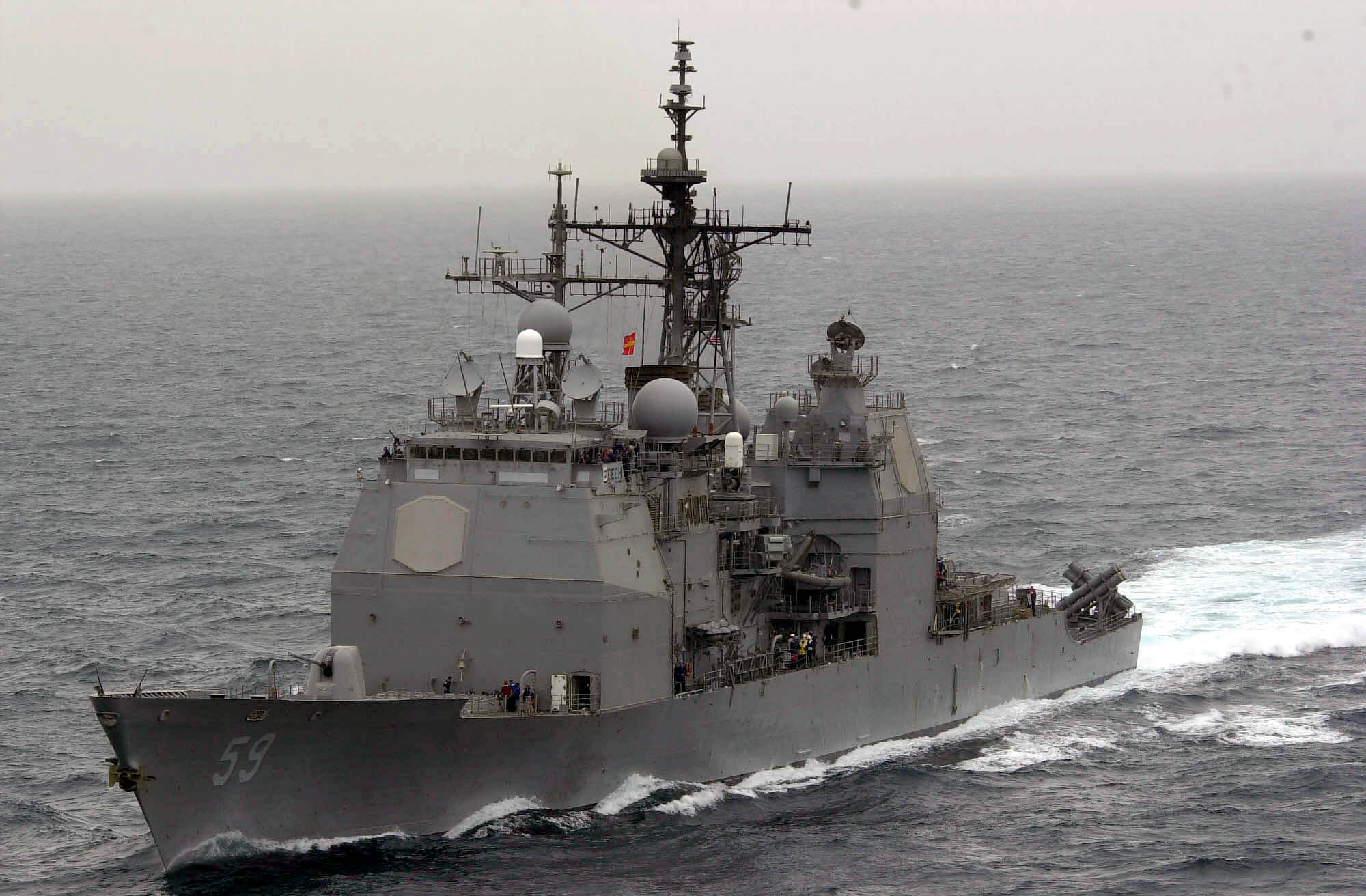
U.S. Navy photograph. Public domain - U.S. Navy work.USS Princeton (CG-59), 2003This image provides visual context. It does not establish cause, identity, date, or interpretation by itself.
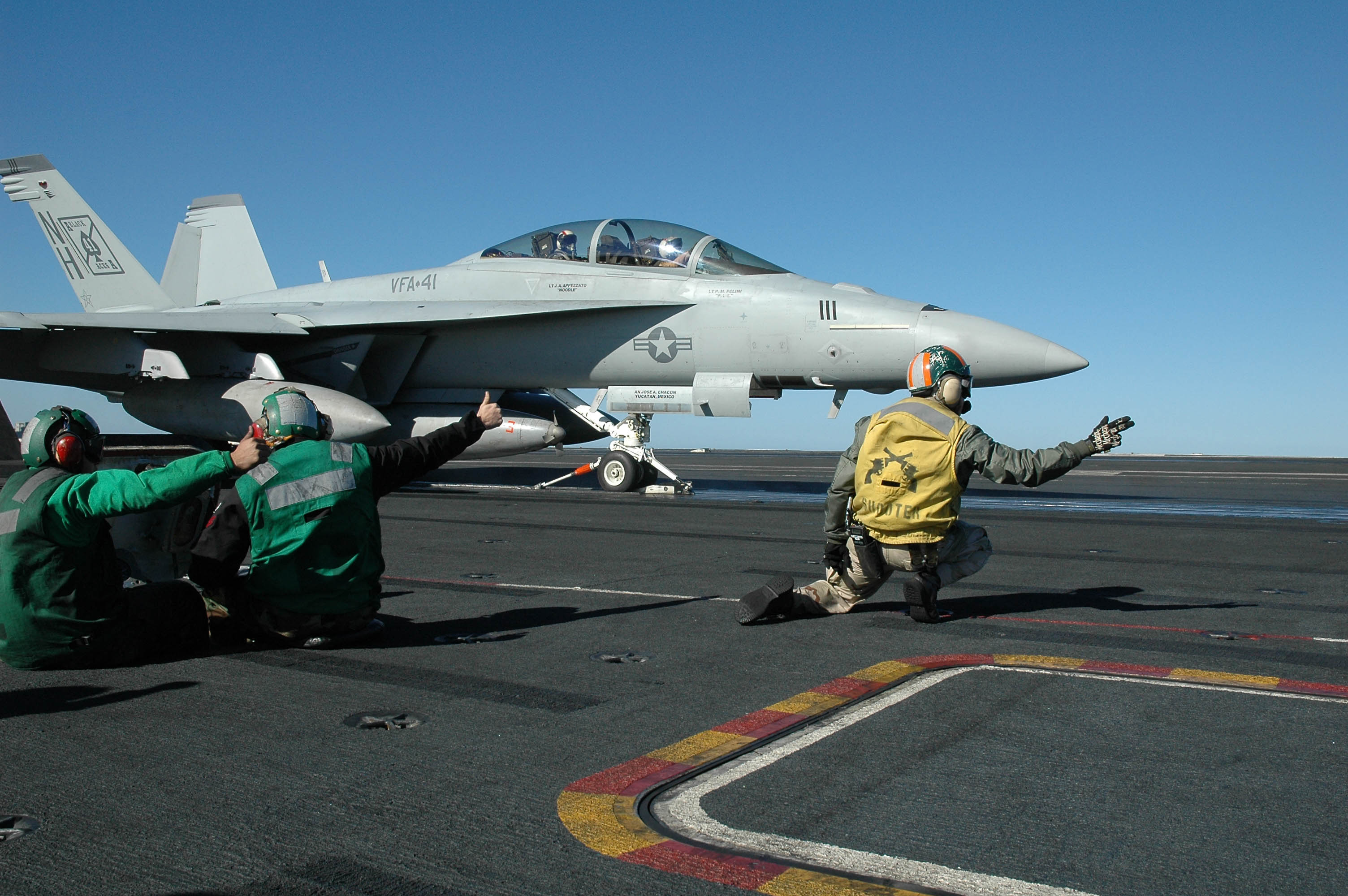
U.S. Navy photo by Photographer's Mate Airman Richard R. Waite. Public domain - U.S. Navy work.VFA-41 F/A-18F Super Hornet launches from USS Nimitz, 2004This image provides visual context. It does not establish cause, identity, date, or interpretation by itself.
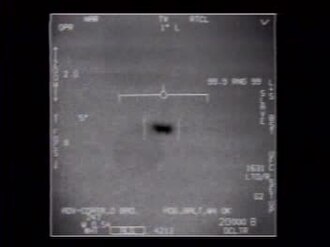
U.S. Department of Defense / U.S. Navy. Public domain - U.S. government work.FLIR1 official UAP footage from the USG for public releasePublic evidence record
What can actually be inspected.
Cases described as multi-source or multi-sensor still vary by channel. This inventory shows what is public, what is partial, what is missing, and how far each record can carry an inference.
Close visual encounter
Testimony onlyPublic record
Later attributable accounts from Fravor and Dietrich plus an official retrospective summary.
What is missing
Full contemporaneous debriefs, cockpit imagery, measured range, and synchronized telemetry.
How it can be used
Establishes a reported unusual visual event; does not measure the object's kinematics.
USS Princeton radar
Testimony onlyPublic record
Later operator accounts and retrospective summaries describing unusual tracks.
What is missing
Raw SPY-1 and CEC tracks, calibration logs, track-quality data, and synchronized timestamps.
How it can be used
Supports that unusual tracks were reported; extreme motion cannot be independently reproduced.
Airborne radar and EW
Testimony onlyPublic record
Underwood and Fravor accounts plus later summaries of tracking and alleged jamming.
What is missing
APG-73 tape, radar-mode history, electronic-warfare cues, and a target range solution.
How it can be used
Jamming and radar-continuity claims remain disputed and publicly unverified.
FLIR1
Partial recordPublic record
Officially authenticated public derivative clip with visible ATFLIR symbology.
What is missing
Native file, complete metadata, reliable range, and full sortie context.
How it can be used
Establishes an unidentified tracked target; does not independently establish extraordinary speed.
CAP-point reappearance
Testimony onlyPublic record
Pilot and operator accounts that a contact appeared near the intended CAP point.
What is missing
Raw track, exact timing, and evidence that it was the same object.
How it can be used
Potentially important indication of continuity, but not independently measurable.
White-water disturbance
Testimony onlyPublic record
Aircrew accounts of a cross-like or irregular disturbance beneath the object.
What is missing
Imagery, sonar, oceanographic record, and physical samples.
How it can be used
Visual context only; cause and relationship to the aerial object are unresolved.
Operational records
UnavailablePublic record
Scattered FOIA correspondence, release emails, and later administrative summaries.
What is missing
Complete air plan, radio traffic, Princeton logs, debriefs, and case-specific sensor detail.
How it can be used
Anchors later provenance and search efforts but cannot reconstruct the encounter.
02Visual source
Map the possibilities
Which possibilities survive the pressure?
Give the accepted explanation and its strongest challengers the same hard questions: what fits, what fails, and what is still missing?Competing possibilities
The accepted account and its strongest alternatives.
Inclusion means a possibility is worth testing. It does not mean every possibility currently carries equal evidentiary weight.
Physical object with anomalous performance
Aircrew encountered a real structured object whose motion exceeded known aircraft capabilities. Origin remains unknown and is not inferred from performance alone.
Current treatment
Open and consequential, but not established at the performance level. The encounter is credible; extraordinary kinematics and origin remain unverified.
Conventional objects, sensors, and perception
Ordinary aircraft or objects appeared extraordinary because range was uncertain and radar, infrared, geometry, expectation, and memory limits compounded.
Current treatment
Plausible but incomplete. Conventional mechanisms explain parts of the record, while no single demonstrated identification resolves the strongest witness account.
Classified activity or electronic warfare
A compartmented platform, spoofing system, test exercise, or foreign capability generated some or all of the observations and confusing record handling.
Current treatment
Plausible context, unsupported attribution. Classification and the test-range setting keep it open without identifying a specific system.
Mixed events and retrospective integration
Radar anomalies, a visual object, a CAP-point contact, and FLIR1 had different or partly different causes and were later joined into one continuous Tic Tac narrative.
Current treatment
Strongly viable as a caution against narrative over-integration. It explains evidentiary discontinuity but does not identify the individual causes.
Possibility map
Stress-test every serious explanation.
Select a possibility to see what would need to be true, what supports it, what weakens it, what is missing, and how seriously the current record allows PARALLAX to treat it.
Primary questionDoes the publicly available evidence from the 2004 USS Nimitz encounters establish that a physical object demonstrated genuinely extraordinary performance, or is the case better explained by conventional objects, sensor and perception limits, classified activity, and an incomplete public record?
Physical object with anomalous performance
What would need to be true
Aircrew encountered a real structured object whose motion exceeded known aircraft capabilities. Origin remains unknown and is not inferred from performance alone.
What supports it
- Corroborating accounts from trained aircrew observing from different positions.
- Reported radar history, CAP-point reappearance, and later infrared track appear to form a multi-channel sequence.
- Witnesses describe no wings, rotors, exhaust, or expected aerodynamic behavior.
What weakens it
- The extreme kinematics are not reproducible from public raw sensor data.
- FLIR1 is later and cannot be securely associated with the visual object.
- Origin claims go far beyond what even confirmed unusual performance would establish.
What evidence is missing
- Raw synchronized radar, aircraft telemetry, and target-range data reproducing the claimed kinematics.
- Evidence securely linking the visual object, CAP-point contact, and FLIR1 target.
How PARALLAX treats it now
Open and consequential, but not established at the performance level. The encounter is credible; extraordinary kinematics and origin remain unverified.
Discriminating evidenceOpen the categories that can move the assessment
These links lead to the underlying evidence reviews. Direction is kept separate from importance and is never converted into a score.
High impactClose visual encounter
Supports a real unusual encounter; performance disputed
Open 005-AHigh impactPrinceton radar and CAP point
Unresolved; could materially discriminate
Open 005-BHigh impactFLIR1 video
Supports an unidentified target; extraordinary motion not established
Open 005-CHigh impactProvenance and missing data
Limits public conclusions
Open 005-FMedium impactPerformance calculations
Ambiguous; consequences depend on unverified inputs
Open 005-DMedium impactConventional and classified alternatives
Mixed; no complete explanation established
Open 005-EThis map does not award points for novelty or authority. Compare serious possibilities, inspect what each one explains, and follow the evidence categories back to their detailed reviews.
Evidence matrix
Current direction by category.
Current direction shows what a category supports, challenges, or leaves unresolved. Evidence impact shows how important that category is to understanding the case, without turning uncertainty into a fake score.
How to read this
Current direction says what the evidence presently supports, challenges, or leaves unresolved. Evidence impact says how important that category is to understanding the case. Impact does not mean support for either side.
Evidence categoryCurrent directionEvidence impactKey limitation / note
Evidence categoryClose visual encounter
Read review5 linked sources
Current directionSupports a real unusual encounter; performance disputed
Evidence impactHigh impactCentral to the case or capable of materially changing the assessment.
Key limitation / note
Two identified pilots corroborate the central observation, but geometry and kinematics were not instrumentally measured.
Evidence categoryPrinceton radar and CAP point
Read review5 linked sources
Current directionUnresolved; could materially discriminate
Evidence impactHigh impactCentral to the case or capable of materially changing the assessment.
Key limitation / note
Later operator accounts are important, but raw tracks and track-association evidence are unavailable.
Evidence categoryFLIR1 video
Read review7 linked sources
Current directionSupports an unidentified target; extraordinary motion not established
Evidence impactHigh impactCentral to the case or capable of materially changing the assessment.
Key limitation / note
The authentic clip can be inspected, but no reliable range supports a speed or acceleration calculation.
Evidence categoryPerformance calculations
Read review4 linked sources
Current directionAmbiguous; consequences depend on unverified inputs
Evidence impactMedium impactMeaningfully informs the case but is not decisive alone.
Key limitation / note
The equations expose what would follow if reconstructed inputs are accurate; they do not verify those inputs.
Evidence categoryConventional and classified alternatives
Read review6 linked sources
Current directionMixed; no complete explanation established
Evidence impactMedium impactMeaningfully informs the case but is not decisive alone.
Key limitation / note
Several mechanisms explain parts of the record, and mixed-event models remain viable because continuity is unproven.
Evidence categoryProvenance and missing data
Read review7 linked sources
Current directionLimits public conclusions
Evidence impactHigh impactCentral to the case or capable of materially changing the assessment.
Key limitation / note
Video authenticity is established, while the decisive radar, telemetry, and contemporaneous records are not public.
Evidence categoryInstitutional handling
Read review5 linked sources
Current directionSupports data-governance failure; does not establish origin
Evidence impactMedium impactMeaningfully informs the case but is not decisive alone.
Key limitation / note
Stigma and fragmented collection matter, but official interest cannot substitute for missing measurement.
Evidence reviews
The repeatable review structure for future cases.
Each category separates the core question, established observations, source quality, competing interpretations, assessment, unresolved issues, and sources.
005-A
The close visual encounter
Current directionEstablishes an unusual reported encounter; extraordinary performance remains unmeasured
Question tested
How much does the Fravor and Dietrich visual event establish about the presence and performance of a physical object?
Current read
Two identified pilots provide meaningful corroboration for a smooth white object near disturbed water. Their accounts deserve weight, but range, dimensions, closure, duration, and acceleration were estimated rather than instrumentally measured.
Established Observations
- FACTDavid Fravor and Alex Dietrich publicly report seeing a smooth white oblong object above disturbed water during a training flight on November 14, 2004.
- FACTThe two aircraft observed from different altitudes and perspectives, giving the core event more weight than a single-observer report.
- SUPPORTED INFERENCEThe witnesses likely encountered something they could not identify under the available conditions.
- DISPUTEDThe object reacted intelligently to Fravor and departed with extraordinary acceleration.
Evidence Quality
The strongest evidence is attributable firsthand testimony from trained observers, supported by an official retrospective summary. It remains retrospective testimony without cockpit imagery, synchronized telemetry, or complete contemporaneous debriefs.
Accepted / Conventional Reading
- A real but conventional object could appear smooth, featureless, and extremely agile when distance and scale are uncertain.
- Observer motion, viewing angle, limited duration, and expectation after a radar tasking can distort inferred geometry and maneuver.
- The disturbed water and aerial object may have been unrelated observations retrospectively joined into one event.
Challenge / Alternative Reading
- Four aircrew members were positioned to observe an apparently solid object that lacked visible wings, rotors, exhaust, or control surfaces.
- Fravor reports a responsive maneuver and abrupt disappearance inconsistent with aircraft familiar to him.
- The later CAP-point report and FLIR event appear to witnesses to corroborate a persistent, unusual vehicle.
PARALLAX Current Read
The close visual event is the case's strongest evidence that something unusual was observed. It is much weaker evidence for the reported performance because the decisive quantities were not measured publicly.
Video Context
These clips are included to clarify how a claim is presented or explained. They are not substitutes for the source trail.
Fravor testimony before the House Oversight Committee
The full hearing preserves Fravor describing the 2004 encounter in his own words and responding to questions.
Recorded nineteen years later; the full hearing also contains unrelated claims and is not a technical reconstruction.
House Oversight UAP hearing - full public hearing
005-B
Princeton radar and the CAP point
Current directionPotentially important but unresolved because the raw radar record is unavailable
Question tested
Do the reported ship radar tracks independently establish extraordinary altitude changes or continuity with the visual object?
Current read
Radar operators later described repeated unusual tracks and a contact at the flight . If accurate and correctly associated, these reports strongly deepen the case. The public record lacks raw tracks, calibration logs, quality indicators, synchronized timestamps, and a reproducible association among events.
Established Observations
- FACTUSS Princeton personnel later reported radar contacts that prompted aircraft tasking on November 14.
- UNKNOWNThe raw SPY-1, Cooperative Engagement Capability, and airborne-radar records are not publicly available for independent analysis.
- DISPUTEDA tracked object descended from very high altitude to near sea level in less than a second.
- DISPUTEDThe later contact at the CAP point was the same object Fravor had seen.
Evidence Quality
Multiple retrospective operator accounts and official summaries support that radar anomalies were reported. Quantitative performance claims rely on remembered displays and later reconstruction, with some published altitude details in tension.
Accepted / Conventional Reading
- Track initiation, clutter, anomalous propagation, software settings, and track association can create apparent motion that no single object performed.
- A series of unrelated conventional returns may have been grouped after controllers expected an unusual target.
- The CAP-point contact may reflect coincidence, information leakage, or a separate target rather than anticipation by the observed object.
Challenge / Alternative Reading
- Experienced Aegis personnel reported repeated tracks over several days, reducing the plausibility of one momentary display artifact.
- A radar contact corresponding with the visual tasking and later appearing near the CAP point would be difficult to dismiss if the original track data confirm continuity.
- Reported post-upgrade sensitivity and cross-platform observations could indicate a real low-observable target.
PARALLAX Current Read
The radar narrative may be the most discriminating part of INV-005, but it is currently one of the least inspectable. It supports an unresolved multi-witness event, not a verified extreme trajectory.
005-C
FLIR1: what the video shows
Current directionEstablishes an unidentified tracked target; extraordinary motion is not established
Question tested
Does the public FLIR1 clip independently show extraordinary shape, speed, or acceleration?
Current read
FLIR1 is authentic Navy footage of a later sortie tracking a small infrared target. The clip contains useful sensor symbology but no dependable target range. Its final apparent departure is compatible with target motion, loss of track, field-of-view change, or a combination.
Established Observations
- FACTDoD authenticated FLIR1 as Navy footage from a November 2004 incident and released it officially in 2020.
- FACTThe video was recorded on a later sortie and is not footage of Fravor's close visual encounter.
- FACTNo reliable target range is displayed in the public clip.
- DISPUTEDThe final leftward image motion records an extraordinary target acceleration.
Evidence Quality
The video is the case's only directly inspectable sensor artifact, officially authenticated and available frame by frame. It is a compressed derivative lacking native , full sortie context, and range, so kinematic conclusions are sharply limited.
Accepted / Conventional Reading
- A distant aircraft can appear as a compact infrared blob whose airframe detail is below the video resolution.
- The final movement occurs as track lock is lost and the display changes, preventing target acceleration from being isolated from sensor behavior.
- Aircraft motion and parallax cannot be converted into target speed without range.
Challenge / Alternative Reading
- An experienced aircrew had difficulty obtaining a stable track and did not identify an expected aircraft planform or exhaust configuration.
- The clip belongs to the same operational episode as the visual and radar reports, which makes a purely ordinary reading less satisfying to participants.
- Reported radar and electronic-warfare behavior could add context if the original data corroborate it.
PARALLAX Current Read
FLIR1 is authentic and genuinely unidentified in the public record. It is not public proof of extraordinary acceleration. Its greatest value is that readers can inspect it directly and see exactly where the inference limits begin.
Video Context
These clips are included to clarify how a claim is presented or explained. They are not substitutes for the source trail.
FLIR1 - official U.S. Navy public-release footage
The full public FLIR1 derivative can be played here. Watch the symbology, field-of-view changes, and tracker state as carefully as the target image.
This compressed public derivative has no complete native metadata or dependable target range.
Naval Air Systems Command FOIA release
005-D
Performance calculations
Current directionConditional models raise the stakes but do not establish the inputs
Question tested
How much evidentiary weight should be placed on published extreme speed, acceleration, and power estimates?
Current read
Published calculations show what would follow if the reported distances, times, track continuity, and geometry are accurate. Their equations can be valid while the numerical conclusion remains uncertain because the decisive inputs are reconstructed rather than publicly measured.
Established Observations
- FACTPublished technical analyses calculate extreme acceleration and power from reported Nimitz event parameters.
- FACTThe public record does not contain the raw radar or complete metadata needed to verify the central kinematic inputs.
- SUPPORTED INFERENCEIf the reported rapid altitude changes and track continuity are accurate, a conventional aircraft explanation becomes highly implausible.
- DISPUTEDThe calculations are measurements of what the object actually did.
Evidence Quality
The SCU report and Knuth paper expose equations and assumptions, which is useful. The models rely on recalled radar behavior, visual estimates, and assumed distance; no independent analyst can currently reproduce the inputs from raw case data.
Accepted / Conventional Reading
- The arithmetic is conditional and amplifies uncertainty in timing, distance, and track association.
- Apparent disappearance, track loss, and a sequence of different returns can masquerade as extreme acceleration.
- The lack of reported sonic effects is not independent proof of exotic physics when the speed premise itself is uncertain.
Challenge / Alternative Reading
- Several independent accounts describe abrupt motion, and the models demonstrate how far beyond known aircraft those reports would reach if confirmed.
- The absence of visible control surfaces, exhaust, or expected aerodynamic effects is consistent with a genuinely unfamiliar flight system.
- Converging radar, visual, and infrared reports may justify treating the modeled trajectory as a serious hypothesis rather than dismissing it.
PARALLAX Current Read
The calculations demonstrate why the missing raw record matters. They do not substitute for it. Extraordinary performance remains a conditional result rather than an established measurement.
005-E
Conventional, classified, and mixed explanations
Current directionNo complete conventional explanation; mixed-event alternatives remain serious
Question tested
Can a conventional object, sensor artifact, classified activity, or combination explain the public record?
Current read
Aircraft, balloons, drones, atmospheric radar effects, electronic warfare, and classified tests each explain some features but not every reported feature. Because the events are not continuously linked by public data, a mixed explanation is not special pleading; it is a live alternative.
Established Observations
- FACTNo publicly demonstrated conventional identification currently accounts for the complete set of visual, radar, and infrared reports.
- FACTThe public evidence does not establish that every reported observation involved the same object.
- SPECULATIONThe event was a classified U.S. test, foreign system, or electronic-warfare exercise.
- SPECULATIONThe object represented non-human technology.
Evidence Quality
Alternative explanations are constrained by an incomplete record. Technical mechanisms can be tested against FLIR1, while classified-program and electronic-warfare ideas remain difficult to falsify without operational records.
Accepted / Conventional Reading
- A distant aircraft may fit the infrared record, while an unrelated small object or perceptual geometry accounts for the close visual report.
- Radar anomalies can arise from propagation, filters, track association, exercise traffic, or deliberate electronic effects.
- A compartmented test can explain unusual behavior and poor disclosure, though exposing it to an active carrier group would create operational risk.
Challenge / Alternative Reading
- Experienced observers describe a coherent object unlike familiar aircraft, and no public prosaic model reproduces the entire reported sequence.
- Multiple sensor modalities and operational participants make a single trivial error less persuasive.
- A truly unfamiliar physical system remains compatible with the current gaps, even though origin is not established.
PARALLAX Current Read
No complete conventional identification is established, but that is not equivalent to establishing an extraordinary vehicle. H2, H3, and especially H4 remain viable because the public record cannot securely associate all observations.
005-F
Record provenance and missing data
Current directionStrongly limits any conclusive interpretation
Question tested
What public materials are original, derivative, retrospective, missing, or unverified?
Current read
The official FLIR1 derivative is authentic, while the ship and airborne radar records are absent and witness accounts are mostly retrospective. Conflicting removal and erasure claims remain unresolved. A leaked contractor report is useful for leads but unauthenticated.
Established Observations
- FACTFLIR1 existed publicly before its official release, and DoD later authenticated and released a derivative.
- FACTThe public case record lacks raw radar tracks, complete cockpit telemetry, and full contemporaneous debriefs.
- DISPUTEDUnknown personnel removed or erased all key data immediately after the encounter.
- UNVERIFIED CLAIMThe leaked BAASS report is a complete and authentic contractor record of the event.
Evidence Quality
Administrative records establish the later video release. FOIA files and technical reports illuminate provenance but do not produce the decisive radar or telemetry. The evidentiary bottleneck is access, not a lack of narratives.
Accepted / Conventional Reading
- Routine overwrite, retention schedules, classification, and fragmented custody can explain missing records without a coordinated suppression effort.
- The video leak and later official release show confused handling rather than a clean, secret evidentiary archive.
- Retrospective interview projects can unintentionally standardize language and chronology across witnesses.
Challenge / Alternative Reading
- Rapid data collection by unidentified personnel, if documented, would suggest institutional interest and possibly withheld evidence.
- Missing radar and electronic-warfare data may conceal stronger corroboration than the public clip provides.
- Official ambiguity after authentication can appear inconsistent with the seriousness witnesses attach to the event.
PARALLAX Current Read
The case cannot be closed confidently in either direction from the public archive. Provenance is sufficient to authenticate FLIR1 but insufficient to reproduce the radar and performance narrative.
005-G
Institutional handling and public meaning
Current directionEstablishes a reporting and data-governance failure, not an exotic origin
Question tested
What do official recognition, stigma, and later public attention actually establish?
Current read
The Navy and DoD eventually authenticated the video and acknowledged an unidentified case, while official reviews emphasize weak data quality. Stigma and fragmented reporting plausibly degraded collection. Institutional acknowledgment increases legitimacy of the question, not the probability of a specific answer by itself.
Established Observations
- FACTDoD officially released FLIR1 and described the depicted phenomenon as unidentified.
- FACTAn official retrospective briefing described ridicule, stopped reporting, and very limited data for technical analysis.
- FACTNASA and ODNI identify inconsistent collection, absent metadata, and calibration limits as major UAP-analysis problems.
- SUPPORTED INFERENCEReporting stigma and fragmented custody likely reduced the quality of the surviving Nimitz record.
Evidence Quality
Official releases, NASA methodology, ODNI assessment, and professional military analysis are strong for policy and data-quality context. They are not substitutes for case-specific measurements.
Accepted / Conventional Reading
- Official unidentified status is an administrative statement about available information, not a scientific finding of anomalous technology.
- Institutional interest is expected for airspace intrusions, sensor anomalies, and flight-safety hazards regardless of origin.
- Data reform can be justified without accepting the strongest witness interpretation.
Challenge / Alternative Reading
- Official authentication ended the claim that the video was simply fabricated and made the underlying event worthy of serious inquiry.
- Stigma may have prevented collection of evidence that would have revealed truly anomalous performance.
- Repeated pilot reports in restricted airspace deserve systematic scientific attention rather than ridicule.
PARALLAX Current Read
INV-005 is a strong case for better reporting and evidence preservation. Institutional acknowledgment does not establish the identity or origin of the target.
03Visual source
Name what remains
What still does not sit right?
Keep the stubborn gaps visible. Then state what the record can presently carry without pretending suspicion is proof or authority is closure.Open questions / What still does not sit right
The unanswered questions that matter.
- Do original Princeton radar files, screenshots, tactical-data tracks, or calibration records still exist?
- Do APG-73 or electronic-warfare records preserve target range, mode history, or jamming cues?
- Can the native FLIR1 recording and complete metadata be released in a form suitable for independent analysis?
- What were the actual visual geometry, event duration, closest range, and object dimensions?
- Were the radar tracks, visual object, CAP-point report, and FLIR1 target demonstrably the same object?
- What caused the white-water disturbance, and was it connected to the aerial observation?
- Why do later accounts differ on reported radar altitudes and event timing?
- Were any relevant records removed, routinely overwritten, classified, or never created?
- Were classified U.S., allied, foreign, or electronic-warfare activities present in the operating area?
- Can a conventional model reproduce both the visual account and FLIR1 without importing unsupported assumptions?
What would change the picture
Evidence must be allowed to move the assessment.
- Release of raw, timestamped Princeton radar and tactical-data tracks with calibration and track-quality information.
- Release of native FLIR1 and airborne-radar records containing range, mode history, aircraft telemetry, and sensor metadata.
- Contemporaneous radio traffic, debriefs, deck logs, or independent aircrew statements that securely synchronize the event sequence.
- A reproducible conventional reconstruction matching the visual geometry, radar reports, CAP-point sequence, and FLIR1 display.
- Documented proof of an electronic-warfare exercise, classified platform, or known object operating at the relevant time and location.
- Physical or high-resolution multispectral evidence establishing structure, material, propulsion, or origin.
- A documented chain showing that critical records were deliberately removed, altered, or withheld for a case-specific reason.
Why this case matters
Why this conflict deserves scrutiny.
Credibility is not measurement
Credible witnesses can establish that an event deserves investigation. Precision claims still require calibrated data. INV-005 makes that distinction unusually visible.
Multi-sensor needs a record
Several sensor channels were reportedly involved, but only one compressed infrared derivative is publicly inspectable. Counting channels is not the same as correlating measurements.
Provenance changes conclusions
The same clip can support a modest fact and an overstated inference: it is authentic Navy footage of an unidentified target, but it does not independently show extraordinary speed.
Flight safety survives every interpretation
An unidentified object, sensor artifact, spoofed track, or reporting failure near military aircraft is operationally relevant even if no exotic technology is involved.
Stigma has an evidentiary cost
Ridicule and unclear reporting pathways can prevent prompt debriefing, metadata preservation, and technical review. Better process protects both open inquiry and skeptical analysis.
What the evidence currently suggests
Where the record points - v0.1.1
A genuine unusual military encounter is supported. Two identified pilots provide mutually reinforcing accounts of a smooth white object near disturbed water, and a later sortie produced an authentic Navy infrared clip. The event should not be dismissed as invented or reduced to a single anonymous story.
The public record does not establish that a physical object demonstrated extraordinary performance. The dramatic radar descents, acceleration estimates, jamming claims, and CAP-point continuity cannot be reproduced from released raw data. FLIR1 has no dependable target range and does not independently measure extraordinary speed.
No complete conventional explanation has been demonstrated. Aircraft, balloons, radar effects, electronic warfare, classified tests, and mixed-event models each explain some features while leaving others dependent on witness error or missing records. Their incompleteness keeps the case open; it does not establish an exotic alternative by default.
The current PARALLAX assessment is unresolved. The strongest warranted conclusion is narrower than either pole: credible personnel encountered and recorded something they could not identify, while the surviving public evidence is insufficient to verify the most extraordinary performance claims or determine origin.
04Visual source
Inspect the record
Follow the evidence back to its sources.
Trace the sources, shared foundations, definitions, corrections, and revision history behind the public assessment.Source record
Inspect the material.
- Official recordnimitz-dod-videos
Statement by the Department of Defense on the Release of Historical Navy Videos
Official recordInstitutional record; weight depends on evidence, method, provenance, corroboration, and limits.- Provenance
- Official DoD release statement.
- Directness
- Direct for authenticity and release status; indirect for the event itself.
- Method
- Administrative review and public release.
- Corroboration
- Consistent with the NAVAIR release file and classification-review emails.
- Limit
- Does not establish the target identity, performance, or origin.
- Verification
- Verified official page.
Authenticates one November 2004 Navy video and records that the depicted phenomenon remained unidentified.
- Primary evidencenimitz-flir1
FLIR1 official UAP footage from the USG for public release
Primary evidenceDirect material, dataset, exhibit, transcript, or record; directness does not remove context checks.- Provenance
- Officially released derivative; local site copy is a public-domain Wikimedia transcode of that file.
- Directness
- Direct visual-sensor record of the later target track.
- Method
- ATFLIR infrared recording displayed with aircraft and sensor symbology.
- Corroboration
- Authenticated by DoD and documented in Navy review correspondence.
- Limit
- Compressed derivative without complete native metadata, a reliable target range, or the full sortie context.
- Verification
- Verified official file and public-domain derivative.
The inspectable public FLIR1 video, recorded during a later sortie on November 14, 2004.
- Eyewitness / testimonynimitz-fravor-statement
David Fravor Statement for the House Oversight Committee
Witness recordFirsthand or witness-adjacent material; important even when mediation and memory limits remain.- Provenance
- Written statement published by the congressional committee receiving the testimony.
- Directness
- Direct for what Fravor recalls seeing and doing.
- Method
- Retrospective witness statement under a congressional hearing record.
- Corroboration
- Core visual outline is independently supported by Alex Dietrich.
- Limit
- Nineteen-year-old recollection that also includes interpretation beyond direct observation.
- Verification
- Verified committee record.
Attributable account of the close visual encounter, reported CAP-point contact, later FLIR sortie, and handling of the incident.
- Official recordnimitz-house-hearing
Unidentified Anomalous Phenomena: Implications on National Security, Public Safety, and Government Transparency
Official recordInstitutional record; weight depends on evidence, method, provenance, corroboration, and limits.- Provenance
- Government hearing record.
- Directness
- Direct record of testimony, not a direct record of the 2004 event.
- Method
- Public hearing with prepared statements and questioning.
- Corroboration
- Preserves claims also made in Fravor interviews and written statement.
- Limit
- A hearing is not a technical reconstruction and did not produce the missing sensor data.
- Verification
- Verified official transcript and hearing page.
Official transcript and video page preserving Fravor testimony and congressional questioning.
- Investigative journalismnimitz-60-minutes
UFOs regularly spotted in restricted U.S. airspace
Reported contextInvestigative or explanatory reporting; useful for leads and context, checked against primary sources.- Provenance
- Recorded on-camera interviews with identified witnesses.
- Directness
- Direct interview testimony mediated through an edited broadcast.
- Method
- Journalistic interview and contextual reporting.
- Corroboration
- Allows two aircrew perspectives to be compared in one record.
- Limit
- Edited broadcast recorded roughly sixteen years after the event.
- Verification
- Verified publisher page.
Joint public presentation of Fravor and Dietrich accounts, including Dietrich corroboration of the white object and disturbed water.
- Investigative journalismnimitz-dietrich-reuters
Normalizing UFOs - retired U.S. Navy pilot recalls Tic Tac encounter
Reported contextInvestigative or explanatory reporting; useful for leads and context, checked against primary sources.- Provenance
- Reuters interview with Alex Dietrich.
- Directness
- Direct for Dietrich recollection; journalistic for presentation.
- Method
- Reported interview with contextual verification.
- Corroboration
- Supports the core visual event while showing some differences in timing and emphasis.
- Limit
- Retrospective account without contemporaneous sensor records.
- Verification
- Verified publisher page.
An independently reported attributable account from the second aircraft pilot.
- Investigative journalismnimitz-underwood
The Navy Pilot Who Filmed the Tic Tac UFO Speaks
Reported contextInvestigative or explanatory reporting; useful for leads and context, checked against primary sources.- Provenance
- Attributable interview with the aircrew member associated with the public video.
- Directness
- Direct for operator recollection; indirect for unavailable sensor modes and radar tape.
- Method
- Technical journalistic interview.
- Corroboration
- Supports that FLIR1 came from a later aircraft and describes a difficult track.
- Limit
- Retrospective; full APG-73 radar and ATFLIR records are unavailable.
- Verification
- Verified publisher page.
Interview with Chad Underwood about the later sortie, FLIR1 recording, radar tracking, and reported jamming cues.
- Archival materialnimitz-classification-emails
2020-006828 email - AFOSI / Navy cockpit videos review
Archival recordHistorical or FOIA/source-file material; relevance depends on provenance, completeness, and context.- Provenance
- Official FOIA release.
- Directness
- Direct for later administrative provenance only.
- Method
- Classification and public-release correspondence.
- Corroboration
- Consistent with the 2020 DoD release statement.
- Limit
- Does not analyze the target or reconstruct the encounter.
- Verification
- Verified official PDF.
Administrative correspondence documenting institutional review and release handling for FLIR1 and other cockpit videos.
- Independent technical analysisnimitz-scu-report
A Forensic Analysis of Navy Carrier Strike Group Eleven's Encounter with an Anomalous Aerial Vehicle
Independent critiqueTechnical analysis outside the principal institution; judged by methods and source trail, not outsider status.- Provenance
- Public report by an independent organization focused on anomalous-aircraft research.
- Directness
- Secondary reconstruction drawing heavily on attributable and anonymous retrospective testimony.
- Method
- Interview synthesis, document collection, geometry, and performance estimates.
- Corroboration
- Collects accounts across ships and aircraft and exposes assumptions in its calculations.
- Limit
- No raw radar data; important calculations depend on recalled timing, range, and geometry. The organization has an anomaly-investigation mission.
- Verification
- Verified report copy; claims assessed individually.
Extensive witness interviews, FOIA appendices, chronology, and conditional performance modeling.
- Technical / scientific analysisnimitz-knuth
Estimating Flight Characteristics of Anomalous Unidentified Aerial Vehicles
Technical sourceScientific, engineering, forensic, or specialist analysis; weight follows method and reproducibility.- Provenance
- Open-access conference-proceedings paper.
- Directness
- Technical analysis of secondary case inputs, not raw Nimitz measurements.
- Method
- Kinematic models with stated input assumptions.
- Corroboration
- Equations are inspectable and overlap the SCU reconstruction.
- Limit
- Results inherit testimony, timing, track association, and assumed geometry; peer review does not validate those inputs.
- Verification
- Verified paper and DOI.
Formalizes conditional speed, acceleration, energy, and power estimates for several UAP cases, including Nimitz.
- Independent technical analysisnimitz-video-provenance
Original FLIR1, GIMBAL, and GOFAST video files
Independent critiqueTechnical analysis outside the principal institution; judged by methods and source trail, not outsider status.- Provenance
- Open technical forum with preserved file comparisons.
- Directness
- Direct comparison of public derivatives; not a Navy chain-of-custody record.
- Method
- File, frame, and metadata comparison.
- Corroboration
- Official NAVAIR and DoD links allow independent checking.
- Limit
- Forum publication and incomplete access to the native recording.
- Verification
- Verified thread and linked official files.
Compares leaked and official video derivatives and records direct official file links.
- Independent technical analysisnimitz-metabunk-flir
2004 USS Nimitz Tic Tac UFO FLIR footage (FLIR1)
Independent critiqueTechnical analysis outside the principal institution; judged by methods and source trail, not outsider status.- Provenance
- Open technical forum retaining calculations, imagery, objections, and revisions.
- Directness
- Directly analyzes the public clip but not unavailable telemetry.
- Method
- Display reading, geometry, comparison, and alternative reconstruction.
- Corroboration
- Several claims are independently checkable against the clip frame by frame.
- Limit
- Mixed contributor quality; cannot explain the separate visual encounter or absent radar record.
- Verification
- Verified thread; conclusions remain contestable.
Tests distant-aircraft, track-loss, field-of-view, and camera-motion explanations for FLIR1.
- Independent technical analysisnimitz-metabunk-atflir
Gimbal lock and derotation in FLIR/ATFLIR systems
Independent critiqueTechnical analysis outside the principal institution; judged by methods and source trail, not outsider status.- Provenance
- Open technical forum and reconstruction record.
- Directness
- General sensor analysis relevant to reading FLIR videos.
- Method
- Geometric reconstruction, optical comparison, and public-document review.
- Corroboration
- Provides testable mechanisms rather than identity claims.
- Limit
- Public ATFLIR documentation is incomplete and some reconstructions rely on approximations.
- Verification
- Verified thread; used as a bounded skeptical source.
Technical discussion of infrared-pod geometry, display behavior, and apparent motion.
- Official recordnimitz-nasa-report
NASA Unidentified Anomalous Phenomena Independent Study Team Report
Official recordInstitutional record; weight depends on evidence, method, provenance, corroboration, and limits.- Provenance
- Official independent-study report.
- Directness
- Methodological guidance, not a case-specific Nimitz adjudication.
- Method
- Expert review of UAP data collection and scientific analysis.
- Corroboration
- Consistent with the official Nimitz briefing warning that technical data are limited.
- Limit
- Does not explain or decide the 2004 encounter.
- Verification
- Verified official report.
Defines scientific requirements for calibrated, ranged, metadata-rich, reproducible UAP evidence.
- Official recordnimitz-odni
Preliminary Assessment: Unidentified Aerial Phenomena
Official recordInstitutional record; weight depends on evidence, method, provenance, corroboration, and limits.- Provenance
- Official intelligence-community assessment.
- Directness
- Aggregate context rather than a Nimitz case file.
- Method
- Cross-agency review of 2004-2021 military reports.
- Corroboration
- Supports the broader data-quality concerns visible in this case.
- Limit
- Does not publish a case-specific Nimitz finding or source data.
- Verification
- Verified official report.
Places military UAP reporting in an official framework of inconsistent collection and limited high-quality data.
- Secondary analysisnimitz-fightersweep
There I Was: The X-Files Edition
Context sourceUseful synthesis or historical framing; claims should be traced back when possible.- Provenance
- Aviation publication relying substantially on sources then kept anonymous.
- Directness
- Early secondary narrative, not a primary operational record.
- Method
- Reported reconstruction from participant-adjacent interviews.
- Corroboration
- Many broad elements later appear in attributable accounts.
- Limit
- Key sources were anonymous and several details cannot be independently checked.
- Verification
- Verified publication; claims are not promoted solely because they appeared early.
An important pre-2017 public narrative of the encounter and its chronology.
- Unverified materialnimitz-baass
Summary Report on BAASS UAP Analysis Capabilities: Tic Tac and Sphere Assessments
Needs verificationLogged for traceability but not treated as established.- Provenance
- Publicly leaked in 2025; hosted by The Black Vault.
- Directness
- Purported contractor analysis, not an authenticated government release.
- Method
- Witness interviews, performance modeling, and capabilities assessment.
- Corroboration
- Parts overlap later public accounts and the SCU report.
- Limit
- Public file provenance, authorship chain, and completeness have not been authenticated by DIA.
- Verification
- Logged as unverified and not used as evidentiary backbone.
Lead source for contractor-era modeling, witness material, and development of the later case narrative.
- Archival materialnimitz-air-plan
Nimitz CSG Daily Air Plan and Flight Schedule 11.14.2004
Archival recordHistorical or FOIA/source-file material; relevance depends on provenance, completeness, and context.- Provenance
- Public FOIA request and correspondence record.
- Directness
- Direct for the records request, not for the encounter.
- Method
- FOIA request tracking.
- Corroboration
- Illustrates continuing gaps in the public operational record.
- Limit
- A request is not evidence that responsive records exist or support any interpretation.
- Verification
- Verified request page.
Documents targeted attempts to locate contemporaneous flight and operational records.
- Secondary analysisnimitz-jfq
Cutting the Chaff: Overlooked Lessons of Military UAP Sightings for Joint Force and Interagency Coordination
Context sourceUseful synthesis or historical framing; claims should be traced back when possible.- Provenance
- Official professional military journal.
- Directness
- Institutional analysis relying on public case records.
- Method
- Policy and organizational analysis.
- Corroboration
- Fits the documented reporting stigma and fragmented records.
- Limit
- Does not provide missing Nimitz sensor data or resolve target identity.
- Verification
- Verified official publication.
Professional military analysis of reporting, coordination, collection, and flight-safety lessons.
Source relationships
Where the argument shares a foundation.
This view identifies records reused across observations, evidence reviews, or other PARALLAX investigations. It prevents citation volume from being mistaken for independent confirmation.
Repeated citation is not independent corroboration.
A record is counted once even when several sections rely on it. This audit shows the sources carrying more than one part of the public argument.
A Forensic Analysis of Navy Carrier Strike Group Eleven's Encounter with an Anomalous Aerial Vehicle
Independent technical analysis
- Review reuse
- 6 evidence reviews
- Observation reuse
- 12 established observations
- Cross-case reuse
- 0 other investigations
Tic Tac Case 14 Nov 2004 - Interagency Task Force briefing
Official record
- Review reuse
- 6 evidence reviews
- Observation reuse
- 7 established observations
- Cross-case reuse
- 0 other investigations
David Fravor Statement for the House Oversight Committee
Eyewitness / testimony
- Review reuse
- 5 evidence reviews
- Observation reuse
- 7 established observations
- Cross-case reuse
- 0 other investigations
Statement by the Department of Defense on the Release of Historical Navy Videos
Official record
- Review reuse
- 4 evidence reviews
- Observation reuse
- 4 established observations
- Cross-case reuse
- 1 other investigations
Appears in005-C FLIR1: what the video shows005-E Conventional, classified, and mixed explanations005-F Record provenance and missing data005-G Institutional handling and public meaning
Same underlying URL also used byUAP Files: Transparency, Disclosure, and Public Benefit
NASA Unidentified Anomalous Phenomena Independent Study Team Report
Official record
- Review reuse
- 4 evidence reviews
- Observation reuse
- 4 established observations
- Cross-case reuse
- 0 other investigations
Estimating Flight Characteristics of Anomalous Unidentified Aerial Vehicles
Technical / scientific analysis
- Review reuse
- 2 evidence reviews
- Observation reuse
- 4 established observations
- Cross-case reuse
- 0 other investigations
2004 USS Nimitz Tic Tac UFO FLIR footage (FLIR1)
Independent technical analysis
- Review reuse
- 3 evidence reviews
- Observation reuse
- 3 established observations
- Cross-case reuse
- 0 other investigations
FLIR1 official UAP footage from the USG for public release
Primary evidence
- Review reuse
- 2 evidence reviews
- Observation reuse
- 2 established observations
- Cross-case reuse
- 0 other investigations
2020-006828 email - AFOSI / Navy cockpit videos review
Archival material
- Review reuse
- 2 evidence reviews
- Observation reuse
- 2 established observations
- Cross-case reuse
- 0 other investigations
Preliminary Assessment: Unidentified Aerial Phenomena
Official record
- Review reuse
- 2 evidence reviews
- Observation reuse
- 2 established observations
- Cross-case reuse
- 0 other investigations
Cutting the Chaff: Overlooked Lessons of Military UAP Sightings for Joint Force and Interagency Coordination
Secondary analysis
- Review reuse
- 2 evidence reviews
- Observation reuse
- 2 established observations
- Cross-case reuse
- 0 other investigations
UFOs regularly spotted in restricted U.S. airspace
Investigative journalism
- Review reuse
- 1 evidence reviews
- Observation reuse
- 2 established observations
- Cross-case reuse
- 0 other investigations
Appears in005-A The close visual encounter
Glossary
Plain-English terms for this case.
Definitions focus on words that materially affect how the evidence is understood.
Aegis combat systemAegis
An integrated naval sensor, command, and weapons system used to detect, track, and engage targets.
USS Princeton was an Aegis cruiser; no raw case-specific Aegis tracks are public.
anomalous propagation
Atmospheric refraction that can bend radar energy and generate misleading or displaced returns.
It is a possible contributor to radar anomalies, not a complete explanation of the aircrew visual report.
ATFLIRFLIR, infrared targeting pod
Advanced Targeting Forward-Looking Infrared, an electro-optical targeting pod used by Navy aircraft.
FLIR1 shows pod imagery and display symbology, but the public derivative lacks a reliable target range.
CAP pointcombat air patrol point
A geographic reference used for combat air patrol operations.
Witnesses say Princeton later reported a contact at the intended CAP point; the raw track and same-object identification are unavailable.
field of viewFOV
The angular width shown by an imaging system; switching fields changes apparent target size and background motion.
jamming
Deliberate interference with a sensor or communications system.
Underwood later described jamming indications; the public record does not include the underlying radar mode history or electronic-warfare data.
merge plot
A controller instruction indicating that aircraft and an unknown radar track have converged too closely for radar separation.
It directs visual acquisition; it does not itself identify or measure the target.
metadata
Context recorded with a file or observation, such as time, position, sensor settings, calibration, and range.
Missing metadata prevents several dramatic performance claims from being independently calculated.
parallax
Apparent motion caused by a change in the observer viewpoint relative to objects at different distances.
Without target range, aircraft motion and parallax can make speed difficult to infer from a short clip.
raw sensor data
The original measurements and accompanying system information before compression, selection, or narrative summary.
The decisive ship and airborne radar records have not been made public.
SPY-1 radarAN/SPY-1, SPY-1
A phased-array radar forming a central sensor of the Aegis combat system.
Later operator accounts attribute unusual tracks to Princeton systems, but track-quality and calibration records are absent.
track association
The evidentiary step of showing that observations at different times or on different sensors refer to the same object.
Radar tracks, Fravor visual observation, CAP-point report, and FLIR1 cannot simply be assumed to depict one continuous object.
track lock
A sensor state in which an automated tracker follows a selected image or radar return.
Losing lock can produce abrupt apparent motion without proving target acceleration.
UAPunidentified aerial phenomenon, UFO
Unidentified anomalous phenomenon: a neutral status label for an observation not identified at the time of review.
Unidentified does not itself mean extraordinary, extraterrestrial, or permanently unexplainable.
Challenge tools
PARALLAX can be challenged.
Challenges are evaluated by evidentiary quality, not ideological alignment.
Revision history
Important changes remain traceable.
Added a conflict-first briefing and a four-branch possibility map.
September 1, 2026
- Separated the official unidentified status from the later seamless public narrative.
- Added explicit missing-evidence tests and current treatment for all four possibilities.
- Preserved the unresolved assessment and the distinction between witness credibility and measured performance.
Opened INV-005 and published the first state-of-evidence review.
August 30, 2026
- Defined four non-exclusive interpretations without beginning from an origin claim.
- Separated the close visual encounter, Princeton radar, CAP-point report, and later FLIR1 recording.
- Added a public evidence inventory showing what readers can inspect and what remains unavailable.
- Reviewed official records, direct testimony, anomaly-favoring technical work, skeptical analysis, and classified or mixed alternatives.
- Classified extreme performance estimates as conditional model outputs rather than public sensor measurements.
- Embedded the official FLIR1 derivative and the full Fravor congressional testimony with source limitations.