What explains the recent U.S. government release of records, and how much does this actually benefit the public's ability to understand the UAP issue?
UAP Files: Transparency, Disclosure, and Public Benefit
Public transparency, managed disclosure, legal compliance, or all three?
What explains the recent U.S. government release of records, and how much does this actually benefit the public's ability to understand the UAP issue?
Government TransparencyUAPPublic RecordsNational Security
- Category
- Government Transparency / Public Records
- Source record
- 32 sources
- Evidence reviews
- 07
- Current version
- v0.1.1
This investigation audits release mechanisms and public usefulness. It does not assume that curation proves deception, that official status proves completeness, or that an file proves an extraordinary origin.
Authority does not receive automatic closure, and dissent does not receive automatic credibility. This case remains open to stronger records, technical correction, and good-faith challenge.
Case briefing
Enter the conflict before the conclusion.
The accepted account is documented as a claim to test, not a truth to inherit. Serious alternatives face the same standard.
The government account presents recent as a combination of legal compliance, records preservation, operational reform, and responsible transparency constrained by national security. More authentic material is public, and unresolved does not mean extraordinary.
People often collapse authenticity, completeness, institutional motive, and physical explanation into one question. They are four different evidence problems.
- The public still lacks a complete denominator showing what exists, what was reviewed, what remains classified, and what was never transferred.
- Agencies select, redact, sequence, and frame the files, while many releases omit the raw data and needed to test their conclusions.
- Congress narrowed stronger independent-review proposals, and whistleblower or concealed-program allegations remain only partly testable from the public record.
At a glance
What is firmly established
- Congress made recurring UAP reporting and a government-wide archival collection legal requirements.
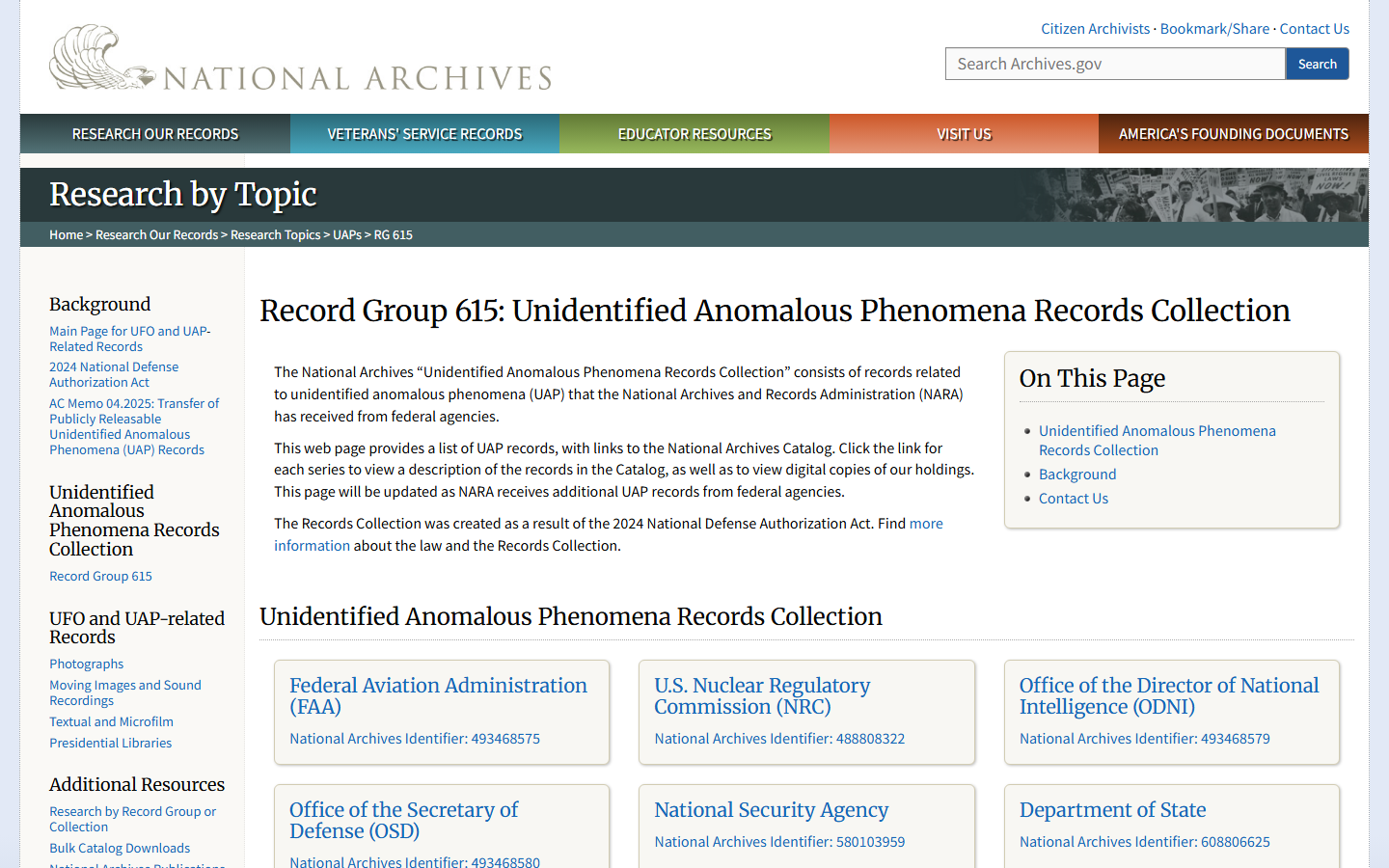
- Record Group 615 listed accessions from eight agencies at the review cutoff and remains open to new transfers.
- AARO publishes annual reports, selected case products, imagery, historical analysis, and an E-FOIA reading room.
- PURSUE published five searchable and downloadable release tranches between May and August 2026.
- Agencies select, review, redact, sequence, and frame national-security releases; that procedural management is openly observable.
- NASA and AARO both identify missing metadata and inadequate sensor data as major barriers to case resolution.
- No public record reviewed here establishes recovered non-human technology, while unresolved cases cannot all be assumed ordinary.
Still open
What remains disputed or unresolved
- Whether current releases represent a substantially complete corpus or a still-small selected portion of responsive holdings.
- Whether agency-originated review provides enough independence after Congress omitted the proposed review board.
- How many high-interest records remain classified, postponed, untransferred, or not yet located.
- Whether AARO historical conclusions can be fully tested from the public source trail.
- How representative publicly selected case resolutions and unresolved clips are of total AARO holdings.
- Whether some missing context is unavoidable security protection or avoidable institutional opacity.
- How much release volume has materially advanced physical understanding rather than awareness and provenance.
Evidence snapshot
Where the major categories currently point.
Current direction and evidence impact are separate. Open any review for the complete observations, interpretations, source quality, and unresolved questions.
How to read this
Current direction says what the evidence presently supports, challenges, or leaves unresolved. Evidence impact says how important that category is to understanding the case. Impact does not mean support for either side.
Evidence categoryCurrent directionEvidence impactKey limitation / note
Evidence categoryLegal mandates
Read review11 linked sources
Current directionSupports legal-compliance explanation
Evidence impactHigh impactCentral to the case or capable of materially changing the assessment.
Key limitation / note
Annual reports and are explicit statutory duties.
Evidence categoryArchives and provenance
Read review11 linked sources
Current directionSupports public transparency and access
Evidence impactHigh impactCentral to the case or capable of materially changing the assessment.
Key limitation / note
NARA materially improves authenticity, preservation, , and access.
Evidence categoryAARO public record
Read review9 linked sources
Current directionSupports partial, selected transparency
Evidence impactHigh impactCentral to the case or capable of materially changing the assessment.
Key limitation / note
Official trends and some methods are public; the complete case corpus is not.
Evidence categoryPURSUE 2026
Read review5 linked sources
Current directionSupports access gain and managed disclosure
Evidence impactHigh impactCentral to the case or capable of materially changing the assessment.
Key limitation / note
Five large tranches improve visibility while completeness and analytical context remain uneven.
Evidence categoryHearings and testimony
Read review6 linked sources
Current directionSupports oversight; individual claims remain mixed
Evidence impactMedium impactMeaningfully informs the case but is not decisive alone.
Key limitation / note
Hearings expose disputes and leads, but extraordinary allegations need corroboration.
Evidence categoryClassification and redaction
Read review6 linked sources
Current directionLimits public conclusions; security rationale remains real
Evidence impactHigh impactCentral to the case or capable of materially changing the assessment.
Key limitation / note
Security can require withholding exactly the context outside analysts need.
Evidence categoryScientific usability
Read review6 linked sources
Current directionLimits scientific conclusions
Evidence impactHigh impactCentral to the case or capable of materially changing the assessment.
Key limitation / note
Authenticity and access have improved faster than calibrated, reproducible data.
Current read
Where the record points after review.
The current record is best explained by a mixed-driver model. Legal compliance is the structural backbone; genuine public-interest transparency, operational reform, national-security review, and managed political communication also contribute.
The releases provide meaningful public benefit in authenticity, provenance, preservation, findability, and oversight. Record Group 615 is the strongest durable improvement, PURSUE is the largest recent access expansion, and AARO provides the main official analytic baseline.
The benefit is incomplete. The public lacks a complete holdings denominator and often lacks the raw sensor context, metadata, and analytical work products needed to reproduce case conclusions. More files therefore improve understanding of government handling more consistently than understanding of physical origin.
Managed disclosure is established as an ordinary release process: agencies curate, redact, sequence, and frame information. The available evidence does not establish a coordinated deceptive disclosure campaign. Public allegations of recovered non-human technology remain unverified, while unresolved cases cannot honestly be presumed ordinary merely because proof of an extraordinary origin is absent.
PARALLAX assesses the current state as meaningful but incomplete transparency. The case remains open because NARA transfers, PURSUE releases, AARO work, declassification review, and congressional oversight continue.
What would change it
The assessment remains revisable.
- A government-wide completeness manifest covering agencies, record counts, transfer status, release status, and postponement grounds.
- Stable identifiers linking NARA, AARO, FOIA, hearing, and PURSUE records across publication channels.
- Representative public case files with non-sensitive raw data, calibration, geometry, metadata, methods, and uncertainty sufficient for independent reproduction.
- A meaningful independent postponement-review process or equivalent authority outside originating agencies.
- Primary evidence that officials knowingly withheld or selected material to create a materially false public impression.
- Independently authenticated calibrated multi-sensor data or physical material that changes the underlying UAP evidentiary question.
01Visual source
Enter the conflict
What story were we given, and why is it questioned?
Begin with the account most people receive, then inspect why it remains contested before testing every serious possibility.The story we were given
The accepted account, stated without caricature.
The government account presents recent as a combination of legal compliance, records preservation, operational reform, and responsible constrained by national security. More authentic material is public, and unresolved does not mean extraordinary.
Why people question it
The pressure points that keep this case open.
A contradiction is not proof of a preferred theory. It is a reason to keep asking better questions.
- 01
The public still lacks a complete denominator showing what exists, what was reviewed, what remains classified, and what was never transferred.
- 02
Agencies select, redact, sequence, and frame the files, while many releases omit the raw data and needed to test their conclusions.
- 03
Congress narrowed stronger independent-review proposals, and whistleblower or concealed-program allegations remain only partly testable from the public record.
At a glance
What is firmly established
- Congress made recurring UAP reporting and a government-wide archival collection legal requirements.
- Record Group 615 listed accessions from eight agencies at the review cutoff and remains open to new transfers.
- AARO publishes annual reports, selected case products, imagery, historical analysis, and an E-FOIA reading room.
- PURSUE published five searchable and downloadable release tranches between May and August 2026.
- Agencies select, review, redact, sequence, and frame national-security releases; that procedural management is openly observable.
- NASA and AARO both identify missing metadata and inadequate sensor data as major barriers to case resolution.
- No public record reviewed here establishes recovered non-human technology, while unresolved cases cannot all be assumed ordinary.
Still open
What remains disputed or unresolved
- Whether current releases represent a substantially complete corpus or a still-small selected portion of responsive holdings.
- Whether agency-originated review provides enough independence after Congress omitted the proposed review board.
- How many high-interest records remain classified, postponed, untransferred, or not yet located.
- Whether AARO historical conclusions can be fully tested from the public source trail.
- How representative publicly selected case resolutions and unresolved clips are of total AARO holdings.
- Whether some missing context is unavoidable security protection or avoidable institutional opacity.
- How much release volume has materially advanced physical understanding rather than awareness and provenance.
Scope
What this investigation is, and is not, asking.
The main review period is 2017 through August 31, 2026, with emphasis on federal releases since 2020 and all five current PURSUE tranches.
The case compares statutory reports, NARA transfers, FOIA, hearings, AARO publications, ordinary declassification, and executive-directed releases as distinct channels.
Public benefit is tested through provenance, findability, completeness, analytical context, reproducibility, independent oversight, and revision pathways.
The investigation does not decide the physical origin of every UAP, infer the content of withheld records, or treat legislative terminology as proof that non-human intelligence exists.
Timeline
Case chronology.
A compact record of the events, tests, publications, and review moments that define the current investigation.
Modern public catalyst
Major reporting on Pentagon UAP work and Navy encounters changes the public and congressional environment.
DoD authenticates three Navy videos
The Department formally releases previously circulating unclassified footage to resolve authenticity misconceptions while leaving the phenomena unidentified.
ODNI preliminary assessment
A congressionally required report describes a limited dataset and calls for standardized collection and reporting.
AARO becomes a statutory office
Congress establishes a permanent office with collection, analysis, reporting, historical-review, and authorized-disclosure duties.
House public hearing
Encounter testimony and serious allegations about concealed programs increase oversight pressure without publicly verifying every allegation.
Disclosure proposal narrowed in conference
Congress enacts the archive and disclosure standards but omits the proposed independent review board and several stronger authorities.
UAP Records Collection becomes law
Public Law 118-31 creates the government-wide collection now held as Record Group 615.
Inspector General identifies fragmented DoD process
The unclassified summary finds no comprehensive coordinated DoD approach and issues 11 recommendations.
AARO Historical Record Report, Volume I
AARO publishes strong negative findings about confirmed extraterrestrial technology and alleged reverse-engineering programs; public auditability remains contested.
Agency identification deadline
NARA guidance requires agencies to identify, organize, and prepare responsive UAP records with machine-readable metadata.
Initial RG 615 accessions published
NARA opens initial agency transfers; the collection continues to grow on a rolling basis.
House requests 46 named videos
The House Task Force documents continuing dissatisfaction with access and requests specific records.
Five PURSUE tranches released
A new executive-directed portal publishes searchable multi-agency documents and videos in five rolling batches.
FY2025 AARO annual report published
AARO reports 1,870 holdings, 370 period resolutions, nine cases for further analysis, and 191 new insufficient-data cases placed in active archive.
Current PARALLAX cutoff
NARA lists eight transferring agencies; both RG 615 and PURSUE remain rolling collections.
Gallery
Visual context for the evidence.
These images are included as source-linked context, not as proof by themselves. Captions describe what the image can help inspect.
This image provides visual context. It does not establish cause, identity, date, or interpretation by itself.
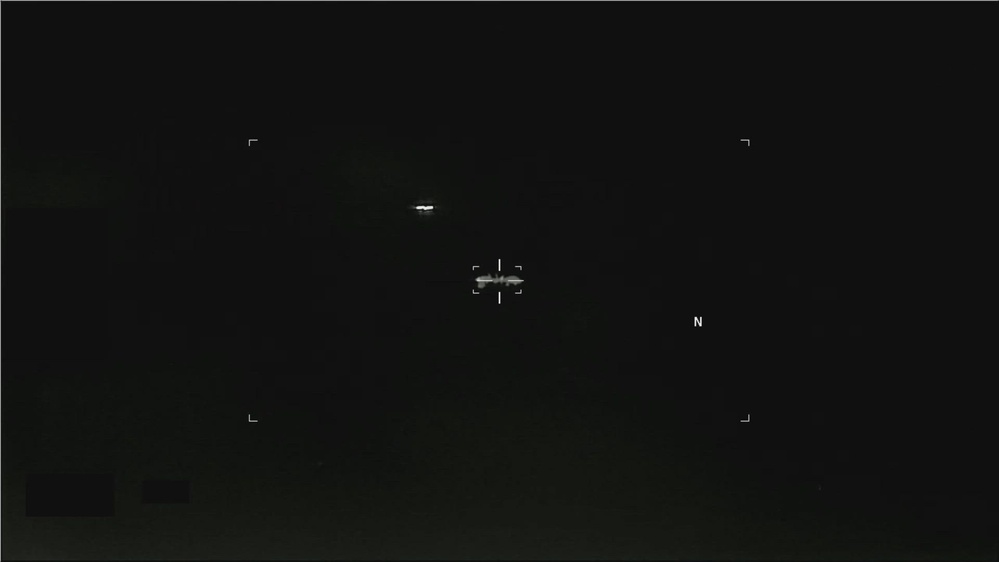
U.S. Department of War / DVIDS. Public domain, U.S. federal government work.PURSUE official UAP release portalThis image provides visual context. It does not establish cause, identity, date, or interpretation by itself.
National Archives and Records Administration; page capture August 31, 2026. Public U.S. government webpage capture.Record Group 615: UAP Records CollectionThis image provides visual context. It does not establish cause, identity, date, or interpretation by itself.
U.S. House Committee on Oversight and Accountability. Public domain, U.S. federal government work.House hearing: UAP - Exposing the TruthPublic evidence record
What can actually be inspected.
Cases described as multi-source or multi-sensor still vary by channel. This inventory shows what is public, what is partial, what is missing, and how far each record can carry an inference.
NARA Record Group 615
InspectablePublic record
Agency accessions, catalog metadata, downloadable records, and bulk datasets for parts of the collection.
What is missing
One government-wide denominator for agencies reviewed, records identified, transfers pending, and release-status totals.
How it can be used
Best channel for provenance, preservation, historical research, and release-status auditing.
AARO annual and historical reports
Partial recordPublic record
Official counts, trends, findings, program updates, and historical conclusions.
What is missing
Complete row-level case data, classified annexes, and all underlying historical work papers.
How it can be used
Best official analytic baseline, with claim weight limited by shown method and source access.
AARO imagery and case resolutions
Partial recordPublic record
Selected clips, images, calculations, and resolution papers.
What is missing
Selection denominator and, for many files, full sensor metadata and corroborating records.
How it can be used
Case-specific inspection where enough inputs and method are published.
PURSUE release portal
InspectablePublic record
Five searchable tranches with documents, images, videos, and large downloads.
What is missing
Complete holdings manifest, consistent analytical context, and clear prior-release status for every item.
How it can be used
Broad public discovery and independent triage; technical value varies file by file.
FOIA reading rooms and releases
Partial recordPublic record
Responsive records published after requester-driven searches and review.
What is missing
Records never requested, exempt material, cross-agency completeness, and often a thematic manifest.
How it can be used
Targeted accountability, lead development, and recovery of records outside proactive publication.
Congressional hearings and letters
Testimony onlyPublic record
Video, transcripts, written statements, named requests, and public oversight positions.
What is missing
Classified follow-up, protected sources, and documentary corroboration for many allegations.
How it can be used
Establishes claims, institutional disputes, oversight pressure, and investigation leads.
Classified annexes and postponed records
UnavailablePublic record
Some restriction authorities, review metadata, and aggregate official conclusions.
What is missing
The protected contents and often enough segregable context to reproduce conclusions publicly.
How it can be used
Supports oversight questions but cannot carry public case resolution without accessible corroboration.
Public-benefit audit
Released is not the same as usable.
Each dimension separates the access the public actually gained from the barrier that still limits understanding. This is an evidence audit, not a single transparency score.
Provenance and authenticity
Strong improvementWhat the public gained
Official portals, NARA identifiers, and formal authentication make genuine records easier to distinguish from altered or falsely attributed material.
What still blocks understanding
Authenticity establishes where a record came from, not what an object was or whether a claim inside the record is correct.
Findability and access
Meaningful improvementWhat the public gained
Searchable archives, reading rooms, hearings, case pages, bulk downloads, and PURSUE reduce the practical cost of finding records.
What still blocks understanding
The record remains distributed across agencies and interfaces, with inconsistent identifiers and metadata.
Coverage and completeness
Partial / unknownWhat the public gained
The statutory scope is broad and multiple agencies are transferring or releasing material on a rolling basis.
What still blocks understanding
No simple public denominator shows total responsive holdings, all agencies reviewed, release-status totals, and pending work.
Analytical context
Limited / unevenWhat the public gained
Some AARO case resolutions include calculations and modeling, while annual reports explain aggregate methods and limits.
What still blocks understanding
Many clips and narratives lack raw data, sensor geometry, calibration, environmental context, or uncertainty ranges.
Independent reproducibility
LimitedWhat the public gained
Downloadable files and metadata permit some outside review and archival comparison.
What still blocks understanding
Sensitive inputs and complete analytical work products are rarely public at the level needed to reproduce major conclusions.
Independent oversight
PartialWhat the public gained
Congress, inspectors general, NARA, and FOIA litigation or appeals provide multiple accountability channels.
What still blocks understanding
The independent UAP records review board proposed in 2023 was not enacted.
Revision and updates
Meaningful but fragmentedWhat the public gained
Annual reports, rolling transfers, case updates, and new tranches allow the record to change.
What still blocks understanding
No single public change log connects new evidence, corrected captions, superseded analysis, and release decisions across agencies.
02Visual source
Map the possibilities
Which possibilities survive the pressure?
Give the accepted explanation and its strongest challengers the same hard questions: what fits, what fails, and what is still missing?Competing possibilities
The accepted account and its strongest alternatives.
Inclusion means a possibility is worth testing. It does not mean every possibility currently carries equal evidentiary weight.
Genuine public transparency
Institutions are responding to public interest by authenticating records, reducing stigma, preserving history, and enabling outside review.
Current treatment
Established in part. Access, provenance, and preservation have improved, but transparency remains incomplete and agency-mediated.
Managed or strategic disclosure
Agencies and political leaders curate timing, selection, redaction, and narrative to protect capabilities and manage public interpretation.
Current treatment
Established as a release process; deceptive intent is not established. Management is observable, while its motives must be tested decision by decision.
Legal and bureaucratic compliance
Statutes, FOIA, records-management rules, and oversight requirements are the main engine of recurring disclosure.
Current treatment
Strong structural explanation. Law plainly drives recurring reports and archives, but it does not explain every presentation choice.
Operational and national-security reform
Public reporting is partly downstream of efforts to improve domain awareness, data collection, flight safety, and threat response.
Current treatment
Well supported as one driver. It explains collection reform better than historical disclosure or political presentation.
Mixed-driver model
Different release streams reflect different combinations of transparency, legal duty, risk management, operational reform, and political communication.
Current treatment
Leading overall explanation. Different release streams visibly operate under different motives, rules, and constraints.
Possibility map
Stress-test every serious explanation.
Select a possibility to see what would need to be true, what supports it, what weakens it, what is missing, and how seriously the current record allows PARALLAX to treat it.
Primary questionWhat explains the recent U.S. government release of UAP records, and how much does this disclosure actually benefit the public's ability to understand the UAP issue?
Genuine public transparency
What would need to be true
Institutions are responding to public interest by authenticating records, reducing stigma, preserving history, and enabling outside review.
What supports it
- Official authentication of previously leaked media.
- Searchable NARA accessions, stable provenance, metadata, and bulk downloads.
- Public reports, selected methods, hearings, and rolling releases that admit uncertainty.
What weakens it
- No complete public denominator for all responsive holdings.
- Many records remain too context-poor for independent analysis.
- Agency selection and redaction remain central to the process.
What evidence is missing
- A government-wide holdings and release-status manifest.
- Representative case files with enough raw data and method for independent reproduction.
How PARALLAX treats it now
Established in part. Access, provenance, and preservation have improved, but transparency remains incomplete and agency-mediated.
Discriminating evidenceOpen the categories that can move the assessment
These links lead to the underlying evidence reviews. Direction is kept separate from importance and is never converted into a score.
High impactLegal mandates
Supports legal-compliance explanation
Open 007-BHigh impactArchives and provenance
Supports public transparency and access
Open 007-BHigh impactAARO public record
Supports partial, selected transparency
Open 007-CHigh impactPURSUE 2026
Supports access gain and managed disclosure
Open 007-DHigh impactClassification and redaction
Limits public conclusions; security rationale remains real
Open 007-FHigh impactScientific usability
Limits scientific conclusions
Open 007-GThis map does not award points for novelty or authority. Compare serious possibilities, inspect what each one explains, and follow the evidence categories back to their detailed reviews.
Evidence matrix
Current direction by category.
Current direction shows what a category supports, challenges, or leaves unresolved. Evidence impact shows how important that category is to understanding the case, without turning uncertainty into a fake score.
How to read this
Current direction says what the evidence presently supports, challenges, or leaves unresolved. Evidence impact says how important that category is to understanding the case. Impact does not mean support for either side.
Evidence categoryCurrent directionEvidence impactKey limitation / note
Evidence categoryLegal mandates
Read review11 linked sources
Current directionSupports legal-compliance explanation
Evidence impactHigh impactCentral to the case or capable of materially changing the assessment.
Key limitation / note
Annual reports and are explicit statutory duties.
Evidence categoryArchives and provenance
Read review11 linked sources
Current directionSupports public transparency and access
Evidence impactHigh impactCentral to the case or capable of materially changing the assessment.
Key limitation / note
NARA materially improves authenticity, preservation, , and access.
Evidence categoryAARO public record
Read review9 linked sources
Current directionSupports partial, selected transparency
Evidence impactHigh impactCentral to the case or capable of materially changing the assessment.
Key limitation / note
Official trends and some methods are public; the complete case corpus is not.
Evidence categoryPURSUE 2026
Read review5 linked sources
Current directionSupports access gain and managed disclosure
Evidence impactHigh impactCentral to the case or capable of materially changing the assessment.
Key limitation / note
Five large tranches improve visibility while completeness and analytical context remain uneven.
Evidence categoryHearings and testimony
Read review6 linked sources
Current directionSupports oversight; individual claims remain mixed
Evidence impactMedium impactMeaningfully informs the case but is not decisive alone.
Key limitation / note
Hearings expose disputes and leads, but extraordinary allegations need corroboration.
Evidence categoryClassification and redaction
Read review6 linked sources
Current directionLimits public conclusions; security rationale remains real
Evidence impactHigh impactCentral to the case or capable of materially changing the assessment.
Key limitation / note
Security can require withholding exactly the context outside analysts need.
Evidence categoryScientific usability
Read review6 linked sources
Current directionLimits scientific conclusions
Evidence impactHigh impactCentral to the case or capable of materially changing the assessment.
Key limitation / note
Authenticity and access have improved faster than calibrated, reproducible data.
Evidence reviews
The repeatable review structure for future cases.
Each category separates the core question, established observations, source quality, competing interpretations, assessment, unresolved issues, and sources.
007-A
Catalysts, chronology, and political demand
Current directionMULTIPLE PUBLIC AND POLITICAL CATALYSTS
Question tested
What changed the government incentive to release information?
Current read
Public reporting, congressional action, whistleblower claims, and executive direction each changed release incentives; no single event created the whole system.
Established Observations
- FACTDoD formally authenticated and released three previously circulating Navy videos in April 2020.
- FACTCongress created recurring reporting, a permanent office, and a government-wide archival collection through multiple statutes.
- FACTPublic hearings in 2023, 2024, and 2025 placed encounter testimony, program allegations, and access disputes on the public record.
- FACTA 2026 presidential directive produced a newly branded interagency release portal and five tranches by August 7.
Evidence Quality
The chronology is grounded in dated official releases, enacted statutes, hearing records, and current portals. Motive claims are weighted more cautiously than documented actions.
Accepted / Conventional Reading
- The releases reflect a maturing policy response to public interest, safety, and records-management requirements.
- Political leaders can accelerate work that was already underway without being the sole cause of it.
Challenge / Alternative Reading
- Sustained outside pressure forced institutions to release material they would otherwise have kept inaccessible.
- Political timing and presentation may reveal narrative-management incentives beyond neutral records administration.
PARALLAX Current Read
Public demand, congressional pressure, and executive messaging are real drivers layered onto statutory and administrative work.
007-B
Law, Congress, and Record Group 615
Current directionLEGAL COMPLIANCE IS THE STRUCTURAL BACKBONE
Question tested
How much of the current structure is legally compelled?
Current read
Annual reports and archival transfer are explicit legal duties. The resulting record is durable and valuable, but the public still cannot measure complete government-wide implementation.
Established Observations
- FACTAARO annual reporting and specified report elements are required by 50 U.S.C. 3373.
- FACTPublic Law 118-31 required agencies to identify, organize, review, and transfer digital copies of UAP records to NARA.
- FACTBy the cutoff, Record Group 615 linked accessions from eight federal agencies and remained a rolling collection.
- FACTThe independent review board and several stronger authorities in the original proposal were not enacted.
- SUPPORTED INFERENCEThe public cannot currently derive a government-wide completeness percentage from the NARA collection page and published guidance.
Evidence Quality
This review relies on enacted law, official code, NARA instructions, live accessions, and the sponsors own explanation of mechanisms omitted from the final law.
Accepted / Conventional Reading
- RG 615 is a normal but unusually broad records-management and declassification project still receiving rolling transfers.
- Uneven timing is expected when multiple agencies review decades of records with classification and privacy equities.
Challenge / Alternative Reading
- Agency self-identification and self-review may omit records or preserve institutional control over sensitive holdings.
- The missing independent board weakens public confidence even if agencies comply in good faith.
PARALLAX Current Read
Legal compliance best explains the durable architecture; independent review and public completeness accounting remain weaker than the original proposal.
007-C
AARO reports, case files, and FOIA
Current directionOFFICIAL BASELINE; PARTIAL PUBLIC AUDITABILITY
Question tested
How much of AARO analysis can the public independently test?
Current read
AARO provides useful totals, trends, selected resolutions, imagery, and records. It does not publish a complete row-level case corpus or enough input data to reproduce every conclusion.
Established Observations
- FACTThe FY2025 report states that AARO held 1,870 reports at cutoff and resolved 370 during the reporting period.
- FACTAARO attributed all resolved cases in that period to prosaic sources and credited a new satellite-flare capability with 238 resolutions.
- FACTNine new reports merited further analysis while 191 entered active archive because available data were insufficient.
- FACTAARO publishes selected imagery, selected resolutions, calculations, reports, and FOIA records.
- DISPUTEDAARO historical methods, source choices, and conclusions have received detailed public criticism.
Evidence Quality
The review uses all current annual reports, the historical report, public imagery, law, and the agency reading room, balanced by methodological limits and a source-specific public critique.
Accepted / Conventional Reading
- AARO resolves cases as data and modeling improve, while preserving insufficient-data reports for future review.
- Classified inputs and privacy limits prevent full publication without invalidating the analysis.
Challenge / Alternative Reading
- Selective case publication allows the agency to showcase resolutions without exposing its full denominator or hardest records.
- The historical report cannot be fully audited from its public source trail and may overstate certainty.
PARALLAX Current Read
AARO is the strongest official analytic baseline, but its public record remains a selected view rather than a complete reproducible dataset.
007-D
PURSUE and the curated 2026 release
Current directionMAJOR ACCESS GAIN; UNEVEN ANALYTICAL VALUE
Question tested
Did the five 2026 tranches materially improve access and understanding?
Current read
increased volume, visibility, search, and download access. Its -case focus, political framing, variable metadata, and unknown completeness limit what the collection proves.
Established Observations
- FACTPURSUE published five tranches dated May 8, May 22, June 12, July 10, and August 7, 2026.
- FACTThe portal provides agency, release, and file-type filters plus large document and video downloads.
- FACTThe Department describes the published material as unresolved and acknowledges insufficient data as one reason a case may remain unresolved.
- FACTThe first release mixed newly public material with records that had previously appeared in public form.
- SUPPORTED INFERENCEA short authentic clip without platform geometry or sensor metadata may increase awareness without enabling a reliable physical attribution.
Evidence Quality
The portal and release announcements are primary evidence for contents and official framing. AP reporting provides independent context. Individual clips remain only as strong as their and chain of analysis.
Accepted / Conventional Reading
- The portal is an unusually large good-faith release effort whose context will improve over successive tranches.
- Redactions and thin metadata reflect source protection and historical record limitations, not hidden extraordinary content.
Challenge / Alternative Reading
- Unresolved imagery receives emphasis because ambiguity attracts attention while leaving institutional control intact.
- The absence of a holdings denominator prevents the public from knowing whether difficult or important records remain selectively excluded.
PARALLAX Current Read
PURSUE is meaningful disclosure and managed presentation at the same time; access gains are stronger than case-resolution gains.
Video Context
These clips are included to clarify how a claim is presented or explained. They are not substitutes for the source trail.
Official 2026 Army UAP footage published through the government release system
This clip is useful for seeing the kind of sensor video the public is being asked to inspect. Its official provenance is stronger than its standalone power to identify the observed lights.
A short public clip may omit platform position, full sequence, sensor mode, calibration, corroborating tracks, and the analytical file required to estimate motion or distance.
PURSUE / Department of War official release collection
007-E
Hearings, testimony, and whistleblower claims
Current directionIMPORTANT OVERSIGHT RECORD; CLAIM-SPECIFIC CORROBORATION NEEDED
Question tested
What do public hearings add, and what do they leave unverified?
Current read
Hearings expose firsthand encounters, access disputes, and serious allegations. They create leads and accountability but do not independently verify every claimed program or material.
Established Observations
- FACTWitnesses have testified publicly under oath about encounters, reporting barriers, and alleged concealed programs.
- UNVERIFIED CLAIMPublic testimony includes allegations that the government or contractors possess recovered non-human craft or material.
- FACTThe House requested 46 specifically named videos in March 2026 and described earlier access as inadequate.
- FACTNo public documentary or physical record reviewed in this investigation independently establishes recovered non-human technology.
Evidence Quality
Official video, transcripts, written statements, and letters accurately preserve what witnesses and members said. The underlying evidentiary weight varies with firsthand access and corroboration.
Accepted / Conventional Reading
- Hearings surface genuine safety and oversight concerns while some extraordinary claims reflect incomplete or secondhand information.
- Classified follow-up may test claims without permitting every detail to become public.
Challenge / Alternative Reading
- Witness consistency, career risk, and alleged access barriers justify stronger independent investigation rather than reliance on agency review.
- The absence of public proof may reflect classification and compartmentalization rather than nonexistence.
PARALLAX Current Read
Hearings materially improve oversight visibility; extraordinary claims remain claim-specific and unverified until corroborating evidence is inspectable.
Video Context
These clips are included to clarify how a claim is presented or explained. They are not substitutes for the source trail.
Congressional hearing: UAP - Exposing the Truth
The hearing shows how witnesses, legislators, and officials frame the transparency dispute in public. It is a source for claims and oversight questions, not automatic verification of every claim.
Long-form testimony combines firsthand knowledge, inference, and allegations with different levels of public corroboration.
U.S. House Committee on Oversight and Accountability, November 13, 2024
007-F
Classification, redaction, and security limits
Current directionREAL SECURITY TENSION; DECISIONS REMAIN PARTLY OPAQUE
Question tested
How much do legitimate security restrictions explain public gaps?
Current read
Sensors, sources, locations, and operations can require protection even when the observed object is ordinary. Those same removals can prevent independent analysis.
Established Observations
- FACTExecutive Order 13526 provides a legal framework for classifying and declassifying national-security information.
- FACTNARA guidance requires release status and authority for partial or full withholding, plus transfer of full copies and congressional notification where applicable.
- FACTNASA reports that military imagery may be classified for what it reveals about U.S. technical capability rather than the identity of the object in the image.
- SUPPORTED INFERENCERemoving platform geometry, sensor mode, or calibration can protect capabilities while also making a public clip scientifically non-reproducible.
Evidence Quality
Classification law, NARA release-status guidance, NASA technical analysis, and Inspector General findings establish the framework and consequences. Specific redactions still require record-level review.
Accepted / Conventional Reading
- Most redactions protect legitimate capabilities, operations, third-party information, or privacy rather than extraordinary content.
- Agencies and Congress can evaluate sensitive evidence even when the public cannot.
Challenge / Alternative Reading
- Broad classification and agency-originated review can conceal institutional error, illegal programs, or evidence inconvenient to public conclusions.
- Without independent review, legitimate secrecy can become indistinguishable from avoidable withholding.
PARALLAX Current Read
Security constraints explain many real limits but do not remove the need for narrow withholding, visible reasons, and independent review.
007-G
Public benefit, reproducibility, and trust
Current directionHISTORICAL BENEFIT STRONGER THAN SCIENTIFIC RESOLUTION
Question tested
Does greater access produce understanding the public can independently verify?
Current read
The releases improve , preservation, and access. Scientific value remains uneven because , calibration, baselines, and complete case records are often absent.
Established Observations
- FACTNASA found current UAP analysis hampered by poor calibration, missing metadata, missing baselines, and limited multiple measurements.
- FACTNARA provides stable provenance, identifiers, searchable access, and bulk downloads for parts of the collection.
- FACTAARO states that missing timely actionable sensor data continues to constrain case resolution.
- SUPPORTED INFERENCEThe public record improves knowledge of government handling more consistently than it improves knowledge of object identity.
Evidence Quality
NASA supplies explicit technical criteria; NARA demonstrates archival gains; AARO quantifies both resolution progress and continuing insufficient-data cases.
Accepted / Conventional Reading
- Transparency is cumulative: authentic records, better reporting, and improved analysis will gradually reduce the unresolved set.
- Scientific-quality data may require future purpose-built collection rather than declassification of old incidental observations.
Challenge / Alternative Reading
- Institutions emphasize file quantity to substitute for complete context and independent access.
- Public trust will not recover until outsiders can audit selection, withholding, and high-interest case analysis.
PARALLAX Current Read
Current disclosure provides meaningful historical and democratic value; public scientific reproducibility remains limited and case-dependent.
03Visual source
Name what remains
What still does not sit right?
Keep the stubborn gaps visible. Then state what the record can presently carry without pretending suspicion is proof or authority is closure.Open questions / What still does not sit right
The unanswered questions that matter.
- How many federal agencies identified responsive records, and how many completed transfer to Record Group 615?
- How many records were identified, released in full, released in part, withheld in full, or remain under review?
- Will NARA publish a government-wide transfer and postponement dashboard?
- Will AARO publish Historical Record Report Volume II with a more auditable primary-source trail?
- What percentage of AARO holdings has a public case record, and how were those cases selected?
- Which PURSUE items were newly declassified, newly digitized, previously public, or republished with added context?
- Can PURSUE publish a stable machine-readable manifest connecting records, agencies, prior releases, and redaction grounds?
- Can non-sensitive sensor metadata be segregated and released when imagery or platform capabilities remain protected?
- Which authorized-disclosure and hearing leads produced corroborated records, and how are closed leads documented?
- Who independently reviews close postponement decisions after omission of the proposed review board?
- What public process corrects duplicated, miscaptioned, superseded, or technically reinterpreted files across portals?
- Which releases have materially changed a case assessment rather than only increasing awareness?
What would change the picture
Evidence must be allowed to move the assessment.
- A government-wide completeness manifest covering agencies, record counts, transfer status, release status, and postponement grounds.
- Stable identifiers linking NARA, AARO, FOIA, hearing, and PURSUE records across publication channels.
- Representative public case files with non-sensitive raw data, calibration, geometry, metadata, methods, and uncertainty sufficient for independent reproduction.
- A meaningful independent postponement-review process or equivalent authority outside originating agencies.
- Primary evidence that officials knowingly withheld or selected material to create a materially false public impression.
- Independently authenticated calibrated multi-sensor data or physical material that changes the underlying UAP evidentiary question.
Why this case matters
Why this conflict deserves scrutiny.
Democratic accountability
The public has a legitimate interest in what institutions record, how secrecy is applied, whether Congress receives required information, and how official claims can be tested.
Scientific quality
Access is not the end of an investigation. Reliable inference requires calibrated data, metadata, baselines, and methods that can survive independent review.
National security and safety
Unknown observations can include adversary systems, drones, balloons, natural phenomena, sensor effects, and unresolved hazards. Better reporting has value without an extraordinary conclusion.
Trust and historical preservation
A traceable archive matters even if every case were eventually resolved conventionally. Trust improves when limits, reasons, corrections, and disagreement remain visible.
What the evidence currently suggests
Where the record points - v0.1.1
The current record is best explained by a mixed-driver model. Legal compliance is the structural backbone; genuine public-interest transparency, operational reform, national-security review, and managed political communication also contribute.
The releases provide meaningful public benefit in authenticity, provenance, preservation, findability, and oversight. Record Group 615 is the strongest durable improvement, PURSUE is the largest recent access expansion, and AARO provides the main official analytic baseline.
The benefit is incomplete. The public lacks a complete holdings denominator and often lacks the raw sensor context, metadata, and analytical work products needed to reproduce case conclusions. More files therefore improve understanding of government handling more consistently than understanding of physical origin.
Managed disclosure is established as an ordinary release process: agencies curate, redact, sequence, and frame information. The available evidence does not establish a coordinated deceptive disclosure campaign. Public allegations of recovered non-human technology remain unverified, while unresolved cases cannot honestly be presumed ordinary merely because proof of an extraordinary origin is absent.
PARALLAX assesses the current state as meaningful but incomplete transparency. The case remains open because NARA transfers, PURSUE releases, AARO work, declassification review, and congressional oversight continue.
04Visual source
Inspect the record
Follow the evidence back to its sources.
Trace the sources, shared foundations, definitions, corrections, and revision history behind the public assessment.Source record
Inspect the material.
- Official recorduap-50usc3373
50 U.S.C. 3373 - Establishment of All-domain Anomaly Resolution Office
Official recordInstitutional record; weight depends on evidence, method, provenance, corroboration, and limits.- Provenance
- Official current U.S. Code text.
- Directness
- Direct evidence for legal duties and reporting requirements.
- Method
- Statutory text and amendment history.
- Limit
- Establishes what the law requires, not whether every duty was implemented completely.
- Verification
- Verified against the current official code page.
Codified authority, duties, access provisions, definitions, and annual reporting requirements for AARO.
- Official recorduap-pl11831
Public Law 118-31 - National Defense Authorization Act for Fiscal Year 2024
Official recordInstitutional record; weight depends on evidence, method, provenance, corroboration, and limits.- Provenance
- Authenticated enrolled public law.
- Directness
- Direct evidence for the enacted archival and disclosure system.
- Limit
- The enacted text is narrower than the original Senate proposal and does not prove implementation quality.
- Verification
- Verified full public law.
Enacted law containing sections 1841-1843, which created the UAP Records Collection at NARA.
- Official recorduap-44usc-note
44 U.S.C. 2107 note - UAP Records Collection
Official recordInstitutional record; weight depends on evidence, method, provenance, corroboration, and limits.- Provenance
- Official current statutory note.
- Directness
- Direct evidence for collection scope and disclosure rules.
- Limit
- Does not provide a live accounting of agency compliance or record totals.
- Verification
- Verified official text.
Codified note describing the collection, public-access schedule, postponement standards, and congressional notification.
- Official recorduap-amendment-2023
UAP Disclosure Act of 2023 - proposed Schumer-Rounds amendment
Official recordInstitutional record; weight depends on evidence, method, provenance, corroboration, and limits.- Provenance
- Official legislative proposal published by the sponsors.
- Directness
- Direct for the stronger mechanisms proposed but not fully enacted.
- Limit
- A proposal is not operative law and includes findings that do not independently verify every underlying allegation.
- Verification
- Verified proposal PDF.
Original proposal containing an independent review board, presumption of disclosure, and controlled-disclosure provisions.
- Official recorduap-schumer-rounds-colloquy
Schumer-Rounds floor colloquy on UAP provisions and future legislation
Official recordInstitutional record; weight depends on evidence, method, provenance, corroboration, and limits.- Provenance
- Official record of statements by the amendment sponsors.
- Directness
- Direct for sponsor intent and assessment of the final compromise.
- Limit
- Legislators are participants and advocates for their proposal.
- Verification
- Verified official transcript page.
Sponsors describe the enacted archive as progress and the omitted independent review board and related authorities as major shortcomings.
- Archival materialuap-nara-rg615
Record Group 615: Unidentified Anomalous Phenomena Records Collection
Archival recordHistorical or FOIA/source-file material; relevance depends on provenance, completeness, and context.- Provenance
- Official NARA collection and catalog links.
- Directness
- Direct for records received and made available by NARA.
- Method
- Rolling digital accessions organized by transferring agency.
- Corroboration
- Required by Public Law 118-31 and described in NARA guidance.
- Limit
- The current list does not itself show every agency searched, all responsive-record totals, or all pending transfers.
- Verification
- Verified August 31, 2026; page last reviewed August 28, 2026.
Live collection page linking current UAP accessions from eight federal agencies as of the review cutoff.
- Official recorduap-nara-faq
UAP Records Collection Frequently Asked Questions
Official recordInstitutional record; weight depends on evidence, method, provenance, corroboration, and limits.- Provenance
- Official NARA public guidance.
- Directness
- Direct for NARA procedure.
- Limit
- Last-reviewed date predates the latest accessions.
- Verification
- Verified current page.
Explains collection scope, rolling transfer, redacted and unredacted copies, and public online access.
- Official recorduap-nara-guidance
Guidance to Federal Agencies on the UAP Records Collection
Official recordInstitutional record; weight depends on evidence, method, provenance, corroboration, and limits.- Provenance
- Official records-management instruction.
- Directness
- Direct for implementation standards.
- Method
- Mandatory metadata template and access-review procedure.
- Limit
- Guidance does not demonstrate each agency followed it completely.
- Verification
- Verified full guidance page.
Defines identification deadlines, metadata fields, release status, restriction authority, and transfer of public and full copies.
- Official recorduap-nara-transfer
AC 04.2025 - Transfer of Publicly Releasable UAP Records
Official recordInstitutional record; weight depends on evidence, method, provenance, corroboration, and limits.- Provenance
- Official memorandum to federal agency records officers.
- Directness
- Direct for transfer expectations and timing.
- Limit
- Does not publish completion status for every agency.
- Verification
- Verified NARA memo.
Memorandum directing rolling transfer of publicly releasable records in advance of September 30, 2025.
- Archival materialuap-nara-bulk
UAP bulk data downloads
Archival recordHistorical or FOIA/source-file material; relevance depends on provenance, completeness, and context.- Provenance
- Official NARA bulk-access service.
- Directness
- Direct public record suitable for independent archiving and search.
- Limit
- Bulk page coverage may lag the live RG 615 collection page.
- Verification
- Verified public download page.
Machine-readable JSON and file bundles for selected RG 615 agency accessions.
- Official recorduap-dod-videos-2020
Statement on the Release of Historical Navy Videos
Official recordInstitutional record; weight depends on evidence, method, provenance, corroboration, and limits.- Provenance
- Official DoD release statement.
- Directness
- Direct for authenticity, release purpose, and official unresolved status.
- Limit
- Does not provide the complete sensor and encounter record required to identify the phenomena.
- Verification
- Verified official release.
Formal authentication and release of three unclassified Navy videos already circulating publicly.
- Official recorduap-odni-2021
Preliminary Assessment: Unidentified Aerial Phenomena
Official recordInstitutional record; weight depends on evidence, method, provenance, corroboration, and limits.- Provenance
- Official unclassified intelligence assessment.
- Directness
- Direct for the 2021 official dataset and institutional analysis.
- Method
- Cross-agency review focused primarily on reports from 2004 through March 2021.
- Limit
- Short public assessment with classified information omitted.
- Verification
- Verified full PDF.
Congressionally required assessment describing a limited dataset, inconsistent reporting, and collection needs.
- Official recorduap-aaro-fy23
FY2023 Consolidated Annual Report on UAP
Official recordInstitutional record; weight depends on evidence, method, provenance, corroboration, and limits.- Provenance
- Official unclassified annual report.
- Directness
- Direct for agency holdings and conclusions at the reporting cutoff.
- Limit
- Aggregate public report rather than a complete case-level dataset.
- Verification
- Verified PDF.
Statutory annual report providing public case totals, trends, and program updates.
- Official recorduap-aaro-fy24
FY2024 Consolidated Annual Report on UAP
Official recordInstitutional record; weight depends on evidence, method, provenance, corroboration, and limits.- Provenance
- Official unclassified annual report.
- Directness
- Direct for agency figures and assessments.
- Limit
- Underlying records and classified annex are not fully public.
- Verification
- Verified PDF.
Statutory annual report providing FY2024 reporting, trends, and resolution status.
- Official recorduap-aaro-fy25
FY2025 Consolidated Annual Report on UAP
Official recordInstitutional record; weight depends on evidence, method, provenance, corroboration, and limits.- Provenance
- Official unclassified report with information cutoff May 30, 2025.
- Directness
- Direct for current AARO counts, methods, and public-program statements.
- Method
- All-source analysis, trend review, and developing three-dimensional modeling capabilities.
- Corroboration
- Reporting duty appears in 50 U.S.C. 3373.
- Limit
- Agency-authored aggregate report; public readers cannot reproduce every case resolution from the report alone.
- Verification
- Verified full 14-page report.
Current annual report: 319 new reports, 370 resolutions during the period, nine cases for further analysis, and 191 active-archive cases.
- Official recorduap-aaro-history-v1
Historical Record Report, Volume I
Official recordInstitutional record; weight depends on evidence, method, provenance, corroboration, and limits.- Provenance
- Official report based on record searches, interviews, and program comparisons.
- Directness
- Direct for AARO methods and conclusions; not direct public access to every underlying classified record.
- Method
- Historical document review, interviews, classified and unclassified program research.
- Limit
- Anonymized source trail, institutional authorship, incomplete public auditability, and a promised Volume II not public by the cutoff.
- Verification
- Verified full report; central conclusions remain publicly contested.
Official historical review concluding that no reviewed U.S. investigation confirmed extraterrestrial technology and no empirical evidence supported alleged reverse-engineering programs.
- Official recorduap-aaro-products
AARO Congressional and Press Products
Official recordInstitutional record; weight depends on evidence, method, provenance, corroboration, and limits.- Provenance
- AARO public website.
- Directness
- Direct access index.
- Limit
- An index of selected public products rather than the complete agency record.
- Verification
- Verified current page.
Official index for current and prior annual reports, historical reports, and public products.
- Archival materialuap-aaro-efoia
AARO E-FOIA Reading Room
Archival recordHistorical or FOIA/source-file material; relevance depends on provenance, completeness, and context.- Provenance
- Official agency FOIA publication channel.
- Directness
- Direct for published responsive records.
- Limit
- Not an exhaustive government-wide UAP archive and dependent on FOIA request scope.
- Verification
- Verified current page.
Public reading room for FOIA records responsive to requests concerning AARO since July 2022.
- Primary evidenceuap-aaro-imagery
Official UAP Imagery and case documents
Primary evidenceDirect material, dataset, exhibit, transcript, or record; directness does not remove context checks.- Provenance
- Official AARO publication of government media.
- Directness
- Direct visual record, with analytical value varying by case.
- Limit
- Selection method and full holdings denominator are not public; many clips lack complete metadata.
- Verification
- Verified current official page.
Selected resolved and unresolved imagery, case documents, and official descriptions.
- Technical / scientific analysisuap-nasa-report
UAP Independent Study Team Report
Technical sourceScientific, engineering, forensic, or specialist analysis; weight follows method and reproducibility.- Provenance
- NASA-appointed external study team report developed through public meetings and specialist review.
- Directness
- Direct technical assessment of data fitness and future collection standards, not a review of every prior case.
- Method
- Interdisciplinary review organized around scientific data and collection questions.
- Corroboration
- AARO reports independently identify insufficient and untimely sensor data as a resolution barrier.
- Limit
- Advisory report focused on methodology rather than case adjudication.
- Verification
- Verified full 36-page report.
Independent study identifying poor calibration, missing metadata, absent baselines, and inconsistent curation as barriers to scientific analysis.
- Official recorduap-dodig
Evaluation of the DoD Actions Regarding UAP - unclassified summary
Official recordInstitutional record; weight depends on evidence, method, provenance, corroboration, and limits.- Provenance
- Unclassified summary of a classified Inspector General evaluation.
- Directness
- Direct for oversight findings and recommendations.
- Method
- Evaluation across DoD components, services, agencies, and counterintelligence organizations.
- Limit
- The full evaluation is classified, limiting public inspection of supporting detail.
- Verification
- Verified official summary.
Independent oversight finding that DoD lacked a comprehensive coordinated UAP approach and overarching policy; 11 recommendations were made.
- Official recorduap-foia-law
Freedom of Information Act - 5 U.S.C. 552
Official recordInstitutional record; weight depends on evidence, method, provenance, corroboration, and limits.- Provenance
- Official DOJ FOIA resource.
- Directness
- Direct for FOIA authority and limits.
- Limit
- Does not measure agency search quality or response timeliness in UAP cases.
- Verification
- Verified official page.
Current statutory text and structure for requester-driven access and exemptions.
- Official recorduap-eo13526
Executive Order 13526 - Classified National Security Information
Official recordInstitutional record; weight depends on evidence, method, provenance, corroboration, and limits.- Provenance
- Archived official executive order.
- Directness
- Direct for national-security classification standards.
- Limit
- Does not identify how a specific UAP record was reviewed or redacted.
- Verification
- Verified archived official text.
Governing framework for classification, declassification, and classified-information handling.
- Eyewitness / testimonyuap-house-2023
House hearing: UAP implications for security, safety, and transparency
Witness recordFirsthand or witness-adjacent material; important even when mediation and memory limits remain.- Provenance
- Official committee hearing record and witness statements.
- Directness
- Direct for testimony and congressional questioning; underlying allegation directness varies by witness.
- Limit
- Sworn testimony does not independently authenticate every document, program, or secondhand allegation described.
- Verification
- Verified official hearing page and transcript.
Public hearing with testimony from David Grusch, Ryan Graves, and David Fravor.
- Eyewitness / testimonyuap-house-2024
House hearing: Unidentified Anomalous Phenomena - Exposing the Truth
Witness recordFirsthand or witness-adjacent material; important even when mediation and memory limits remain.- Provenance
- Official committee video, transcript, and statements.
- Directness
- Direct for public claims and oversight positions.
- Limit
- Not every claim is supported by public documentary corroboration.
- Verification
- Verified official hearing record.
Public hearing focused on government knowledge, reporting, and transparency disputes.
- Eyewitness / testimonyuap-house-2025
House hearing: Restoring Public Trust Through UAP Transparency
Witness recordFirsthand or witness-adjacent material; important even when mediation and memory limits remain.- Provenance
- Official committee record.
- Directness
- Direct for the oversight dispute and witness claims.
- Limit
- Testimony requires source-specific corroboration.
- Verification
- Verified official page.
Public hearing centered on transparency, public trust, and whistleblower protection.
- Official recorduap-house-letter-2026
House Task Force request for 46 named UAP videos and records
Official recordInstitutional record; weight depends on evidence, method, provenance, corroboration, and limits.- Provenance
- Signed official congressional letter.
- Directness
- Direct for records sought and continuing congressional pressure.
- Limit
- The request does not establish what each video depicts or whether every title is accurate.
- Verification
- Verified four-page letter.
Formal oversight request identifying 46 videos and describing prior responses as inadequate.
- Primary evidenceuap-pursue
Presidential Unsealing and Reporting System for UAP Encounters
Primary evidenceDirect material, dataset, exhibit, transcript, or record; directness does not remove context checks.- Provenance
- Official executive-branch release portal.
- Directness
- Direct access to released records and official framing.
- Method
- Interagency search, review, declassification, redaction, and rolling publication.
- Corroboration
- Individual tranche announcements confirm release dates.
- Limit
- No complete holdings denominator or universal case metadata; political framing and file selection require separate evaluation.
- Verification
- Verified current portal and all five tranche labels.
Current multi-agency release portal with searchable files and five document/video tranches through August 7, 2026.
- Official recorduap-pursue-r5
Fifth PURSUE release announcement
Official recordInstitutional record; weight depends on evidence, method, provenance, corroboration, and limits.- Provenance
- Department press release.
- Directness
- Direct for release date and program continuity.
- Limit
- Institutional announcement does not evaluate completeness or analytical value.
- Verification
- Verified official release.
Official confirmation of the fifth tranche and commitment to further rolling releases.
- Investigative journalismuap-ap-pursue
Bright lights and hot orbs: UFO files leave interpretation to the public
Reported contextInvestigative or explanatory reporting; useful for leads and context, checked against primary sources.- Provenance
- Named AP reporting checked against the release portal and official statements.
- Directness
- Secondary for files, useful for independent context and interviews.
- Limit
- News synthesis, not a technical audit of every released file.
- Verification
- Verified article and claims against primary release pages where possible.
Independent reporting on the first PURSUE tranche, its mix of new and previously public records, and expert cautions about missing context.
- Independent technical analysisuap-nyu-law
Independence from Congress Day: Considering UAP Reporting Legislation
Independent critiqueTechnical analysis outside the principal institution; judged by methods and source trail, not outsider status.- Provenance
- Published legal scholarship with statutory sourcing.
- Directness
- Independent interpretation of the legal architecture.
- Method
- Doctrinal and institutional legal analysis.
- Limit
- Normative analysis rather than evidence of hidden record contents.
- Verification
- Verified journal PDF.
Legal analysis of UAP reporting structures and the case for more independent review.
- Advocacy / interpretiveuap-aaro-critique
AARO historical report: factual errors and old mistakes repeated
Interpretive sourcePopular, advocacy, or explanatory presentation; useful for framing claims, not establishing them.- Provenance
- Published interpretive critique from a UAP-focused outlet.
- Directness
- Direct for the criticism, secondary for historical claims.
- Method
- Comparison of report statements with cited historical records.
- Limit
- Advocacy-oriented publication; individual criticisms require checking against primary records and do not by themselves establish a concealed program.
- Verification
- Verified article; treated as critique, not evidentiary backbone.
Source-specific public criticism of AARO historical framing and factual choices.
Source relationships
Where the argument shares a foundation.
This view identifies records reused across observations, evidence reviews, or other PARALLAX investigations. It prevents citation volume from being mistaken for independent confirmation.
Repeated citation is not independent corroboration.
A record is counted once even when several sections rely on it. This audit shows the sources carrying more than one part of the public argument.
Presidential Unsealing and Reporting System for UAP Encounters
Primary evidence
- Review reuse
- 4 evidence reviews
- Observation reuse
- 8 established observations
- Cross-case reuse
- 0 other investigations
FY2025 Consolidated Annual Report on UAP
Official record
- Review reuse
- 3 evidence reviews
- Observation reuse
- 6 established observations
- Cross-case reuse
- 0 other investigations
UAP Independent Study Team Report
Technical / scientific analysis
- Review reuse
- 3 evidence reviews
- Observation reuse
- 5 established observations
- Cross-case reuse
- 0 other investigations
Record Group 615: Unidentified Anomalous Phenomena Records Collection
Archival material
- Review reuse
- 2 evidence reviews
- Observation reuse
- 4 established observations
- Cross-case reuse
- 0 other investigations
50 U.S.C. 3373 - Establishment of All-domain Anomaly Resolution Office
Official record
- Review reuse
- 3 evidence reviews
- Observation reuse
- 2 established observations
- Cross-case reuse
- 0 other investigations
Guidance to Federal Agencies on the UAP Records Collection
Official record
- Review reuse
- 2 evidence reviews
- Observation reuse
- 3 established observations
- Cross-case reuse
- 0 other investigations
House hearing: UAP implications for security, safety, and transparency
Eyewitness / testimony
- Review reuse
- 2 evidence reviews
- Observation reuse
- 3 established observations
- Cross-case reuse
- 0 other investigations
Public Law 118-31 - National Defense Authorization Act for Fiscal Year 2024
Official record
- Review reuse
- 2 evidence reviews
- Observation reuse
- 2 established observations
- Cross-case reuse
- 0 other investigations
44 U.S.C. 2107 note - UAP Records Collection
Official record
- Review reuse
- 2 evidence reviews
- Observation reuse
- 2 established observations
- Cross-case reuse
- 0 other investigations
Historical Record Report, Volume I
Official record
- Review reuse
- 2 evidence reviews
- Observation reuse
- 2 established observations
- Cross-case reuse
- 0 other investigations
House hearing: Unidentified Anomalous Phenomena - Exposing the Truth
Eyewitness / testimony
- Review reuse
- 2 evidence reviews
- Observation reuse
- 2 established observations
- Cross-case reuse
- 0 other investigations
House hearing: Restoring Public Trust Through UAP Transparency
Eyewitness / testimony
- Review reuse
- 2 evidence reviews
- Observation reuse
- 2 established observations
- Cross-case reuse
- 0 other investigations
Glossary
Plain-English terms for this case.
Definitions focus on words that materially affect how the evidence is understood.
Declassification
Removal of national-security classification from information.
Declassification and publication are related but distinct actions.
Related evidence
Disclosure
The act of making information public.
Disclosure does not guarantee completeness, context, or scientific usefulness.
Related evidence
FAIR data
Data designed to be findable, accessible, interoperable, and reusable.
NASA presents these principles as a useful standard for meaningful UAP analysis.
Related evidence
FOIAFreedom of Information Act
A requester-driven federal law providing access to agency records subject to nine exemptions and procedural requirements.
FOIA is important but is not a complete thematic archive by design.
Managed disclosure
A release process in which an institution selects, reviews, redacts, sequences, contextualizes, and publishes information.
The term is procedural here and does not automatically imply deception.
Metadata
Context describing a record or observation, such as time, location, origin, sensor mode, calibration, classification, or review status.
Missing metadata can make authentic imagery scientifically ambiguous.
Provenance
The traceable origin, custody, and publication history of a record.
Provenance establishes authenticity more directly than physical interpretation.
PURSUE
The Presidential Unsealing and Reporting System for UAP Encounters, launched in 2026 as a public multi-agency release portal.
Five tranches were public by the August 31, 2026 cutoff.
Related evidence
Record Group 615RG 615
The National Archives collection created for federal UAP record copies.
It is a rolling collection rather than a declared complete corpus.
Related evidence
Transparency
The degree to which records, decisions, methods, limits, and reasons for withholding are visible and inspectable.
A system can be transparent in one layer and opaque in another.
UAPunidentified anomalous phenomena
A statutory and operational category for observations not immediately attributable to known actors or phenomena under the relevant definition.
Unidentified describes an assessment state, not a proven origin.
Related evidence
Unresolved
A case without a definitive current attribution.
Insufficient data is a common reason; unresolved does not mean extraordinary.
Challenge tools
PARALLAX can be challenged.
Challenges are evaluated by evidentiary quality, not ideological alignment.
Revision history
Important changes remain traceable.
Added a disclosure conflict frame and five-branch possibility map.
September 1, 2026
- Set the government transparency account beside the strongest completeness and curation challenges.
- Added missing-evidence and current-standing tests for every disclosure model.
- Preserved the meaningful-but-incomplete transparency assessment.
Initial public state-of-evidence report
August 31, 2026
- Defined the distinct release mechanisms and five competing explanations.
- Reviewed law, NARA, AARO, FOIA, hearings, oversight, NASA data standards, and all five current PURSUE tranches.
- Added a public evidence inventory and seven-dimension public-benefit audit.
- Published seven evidence reviews, source records, open questions, and change criteria.