Does the evidence on the Great Sphinx support the conventional Old Kingdom dating, or does it indicate the monument may be significantly older than commonly accepted?
The Sphinx Water-Erosion Hypothesis
Does the evidence on the Great Sphinx support the conventional Old Kingdom dating, or does it indicate the monument may be significantly older than commonly accepted?
ArchaeologyGeologyPaleoclimateAncient EgyptScientific Dating
- Category
- Archaeology / Geology / Paleoclimate
- Source record
- 21 sources
- Evidence reviews
- 08
- Current version
- v0.1.1
A correct process can still produce an unsupported date. This case separates what shaped the stone, how long the surface was exposed, when it was carved, and which building program incorporated it.
Authority does not receive automatic closure, and dissent does not receive automatic credibility. This case remains open to stronger records, technical correction, and good-faith challenge.
Case briefing
Enter the conflict before the conclusion.
The accepted account is documented as a claim to test, not a truth to inherit. Serious alternatives face the same standard.
The Great Sphinx was carved during the Fourth Dynasty, probably for Khafre, as part of the same Old Kingdom quarry and temple complex. Its reflects limestone variability, moisture, salts, burial, , and long exposure rather than a prehistoric construction date.
The original surfaces are incomplete, no direct builder inscription survives, process rates are uncalibrated, ancient drainage is reconstructed, and scientific dates come from associated temples rather than the core.
- No surviving contemporary inscription names the original builder or gives a construction date.
- Rounded profiles, deep channels, and patterns have been argued to require a wetter and therefore earlier exposure history.
- Seismic and associated-structure dates do not directly date the first cutting of the Sphinx bedrock.
At a glance
What is firmly established
- The Sphinx body is a bedrock mass left inside an excavated limestone enclosure.
- The head and body occupy limestone with different physical durability.
- Rounded profiles, recessed beds, joints, and deep channels are visible in the enclosure.
- Water and moisture contribute to limestone deterioration at the monument.
- Rainfall runoff occurred at Giza during dynastic as well as earlier periods.
- The monument has repeatedly been buried, cleared, repaired, and exposed.
- Much of the body is covered or supported by repair masonry.
- No surviving contemporary Old Kingdom inscription explicitly identifies the builder.
- The Dream Stela is a New Kingdom monument, not a contemporary construction record.
- Sphinx Temple blocks can be matched geologically to beds in the enclosure quarry.
- The Sphinx Temple was not completed.
- Radiocarbon and luminescence results support third-millennium construction activity in associated temples.
- The seismic survey found nonuniform subsurface velocity structure but did not directly measure age.
- No secure prehistoric construction horizon is currently tied to the first Sphinx carving.
Still open
What remains disputed or unresolved
- Which processes produced each major class of enclosure morphology?
- How much channeling is runoff-enhanced joint erosion versus pre-human karst?
- Did Khufu quarrying interrupt a catchment that had already eroded the enclosure?
- Were Fourth and Fifth Dynasty storms sufficient to produce the observed relief?
- How much deterioration occurred during damp sand burial?
- Do seismic low-velocity zones represent weathering, depositional facies, fractures, moisture, or several causes?
- Did an earlier monument exist before Fourth Dynasty quarrying and temple construction?
- Was the present head substantially recarved from an earlier form?
- Which king within the Fourth Dynasty commissioned or completed the visible monument?
- Can temple dates be connected securely to the first Sphinx core carving?
Evidence snapshot
Where the major categories currently point.
Current direction and evidence impact are separate. Open any review for the complete observations, interpretations, source quality, and unresolved questions.
How to read this
Current direction says what the evidence presently supports, challenges, or leaves unresolved. Evidence impact says how important that category is to understanding the case. Impact does not mean support for either side.
Evidence categoryCurrent directionEvidence impactKey limitation / note
Evidence categorySphinx Temple quarry-bed matches
Read review5 linked sources
Current directionStrongly favors Old Kingdom integrated construction
Evidence impactHigh impactCentral to the case or capable of materially changing the assessment.
Key limitation / note
Stone removal is linked directly; an older partial core is not logically excluded.
Evidence categoryCauseway, terrace, and wall sequence
Read review5 linked sources
Current directionFavors Khafre-era completion
Evidence impactHigh impactCentral to the case or capable of materially changing the assessment.
Key limitation / note
Complex contacts require transparent survey documentation and independent replication.
Evidence categoryRounded profiles and deep channels
Read review5 linked sources
Current directionSupports substantial water and moisture involvement
Evidence impactHigh impactCentral to the case or capable of materially changing the assessment.
Key limitation / note
The process mix is disputed and morphology is not a calibrated clock.
Evidence categoryDifferential lithology and ancient karst
Read review5 linked sources
Current directionKeeps Old Kingdom chronology geologically viable
Evidence impactHigh impactCentral to the case or capable of materially changing the assessment.
Key limitation / note
May not explain every spatial pattern by itself.
Evidence categoryWestern runoff concentration
Read review6 linked sources
Current directionSupports runoff and may favor pre-Khufu exposure
Evidence impactHigh impactCentral to the case or capable of materially changing the assessment.
Key limitation / note
Ancient catchment, spoil, drainage, and storm history are incompletely known.
Evidence categoryEarly-Holocene humid climate
Read review6 linked sources
Current directionMakes prehistoric exposure climatically plausible
Evidence impactMedium impactMeaningfully informs the case but is not decisive alone.
Key limitation / note
A climate window does not prove an artificial surface existed then.
Evidence categoryOld Kingdom rain and sheet floods
Read review6 linked sources
Current directionChallenges a prehistoric-only runoff claim
Evidence impactHigh impactCentral to the case or capable of materially changing the assessment.
Key limitation / note
Local cumulative at the enclosure remains unquantified.
Evidence categorySeismic low-velocity zones
Read review3 linked sources
Current directionAmbiguous; compatible with varied exposure
Evidence impactMedium impactMeaningfully informs the case but is not decisive alone.
Key limitation / note
, facies, fractures, and moisture are not separated by a direct age calibration.
Evidence categorySphinx Temple radiocarbon
Read review4 linked sources
Current directionFavors third-millennium complex activity
Evidence impactMedium impactMeaningfully informs the case but is not decisive alone.
Key limitation / note
Dates organic material associated with a temple, not the bedrock core.
Evidence categoryTemple surface luminescence
Read review4 linked sources
Current directionFavors dynastic temple construction
Evidence impactHigh impactCentral to the case or capable of materially changing the assessment.
Key limitation / note
The samples do not directly date first carving of the Sphinx body.
Evidence categoryNo contemporary builder inscription
Read review4 linked sources
Current directionLimits confidence in the named commissioner
Evidence impactMedium impactMeaningfully informs the case but is not decisive alone.
Key limitation / note
Absence of text does not remove converging physical context.
Evidence categoryPharaonic head and royal iconography
Read review4 linked sources
Current directionFavors a dynastic visible form
Evidence impactMedium impactMeaningfully informs the case but is not decisive alone.
Key limitation / note
Cannot by itself exclude an older body or head recarving.
Evidence categorySalt, dew, damp burial, and groundwater
Read review6 linked sources
Current directionSupports complex post-carving deterioration
Evidence impactMedium impactMeaningfully informs the case but is not decisive alone.
Key limitation / note
Their cumulative contribution to the ancient enclosure relief is not measured.
Evidence categoryRepeated restoration and incomplete original surfaces
Read review6 linked sources
Current directionLimits simple visual dating
Evidence impactHigh impactCentral to the case or capable of materially changing the assessment.
Key limitation / note
Masonry and repairs hide or alter parts of the original record.
Evidence categoryNo secure prehistoric construction horizon
Read review8 linked sources
Current directionFavors dynastic origin
Evidence impactHigh impactCentral to the case or capable of materially changing the assessment.
Key limitation / note
Later disturbance weakens but does not erase the archaeological absence.
Evidence categorySpecific 10,500 BC or Atlantean claims
Read review8 linked sources
Current directionNot supported by the reviewed evidence
Evidence impactLow impactAdds context but has little power to separate the interpretations.
Key limitation / note
Neither surface geology nor seismic data selects that date or builder.
Current read
Where the record points after review.
Water and moisture materially affected the Sphinx and its enclosure. Rainfall runoff probably helped shape parts of the enclosure, especially where topography concentrated flow.
The erosion evidence does not independently date the monument. Differential limestone, ancient karst, salts, dew, damp burial, groundwater, wind, restoration, and episodic storms create a multi-process record whose rates are not calibrated.
The total evidence better supports an Old Kingdom origin, most probably within Khafre Fourth Dynasty building program. Quarry-to-temple bed matches, architectural sequence, associated third-millennium dates, and cultural context carry the greatest weight.
A pre-Khufu or earlier dynastic phase remains a serious minority interpretation because Reader runoff and catchment argument is testable and does not require an unknown prehistoric monumental culture.
A substantially older 7000-5000 BC core is not established by the surface morphology or seismic survey. A specific 10,500 BC date, Atlantean builder, or astronomical extension is unsupported by the evidence reviewed.
The case remains open to direct dating, better hydrological reconstruction, modern seismic reanalysis, and discovery of securely documented construction phases.
What would change it
The assessment remains revisable.
- A sealed early-Holocene construction layer or tool assemblage tied to first carving would strongly support a prehistoric origin.
- A directly dated original cut surface substantially predating dynastic Egypt would overturn the current weighting.
- Demonstrated recutting boundaries with separately datable deposits would strengthen a multi-phase model.
- Proof that Khufu quarrying interrupted the catchment responsible for the oldest erosion would strengthen the earlier dynastic interpretation.
- Replicated contacts showing all enclosure excavation followed the Khafre causeway would strengthen the standard sequence.
- A locally calibrated seismic weathering-age relationship would make the geophysical depth chronologically useful.
- A validated Old Kingdom-and-later process model reproducing the observed morphology would weaken the need for earlier exposure.
- A model showing known dynastic conditions cannot produce the relief despite lithology, salts, burial, and storms would strengthen substantial redating.
- A contemporary construction text naming the commissioner would materially resolve the builder question.
01Visual source
Enter the conflict
What story were we given, and why is it questioned?
Begin with the account most people receive, then inspect why it remains contested before testing every serious possibility.The story we were given
The accepted account, stated without caricature.
The Great Sphinx was carved during the Fourth Dynasty, probably for Khafre, as part of the same Old Kingdom quarry and temple complex. Its reflects limestone variability, moisture, salts, burial, , and long exposure rather than a prehistoric construction date.
Why people question it
The pressure points that keep this case open.
A contradiction is not proof of a preferred theory. It is a reason to keep asking better questions.
- 01
No surviving contemporary inscription names the original builder or gives a construction date.
- 02
Rounded profiles, deep channels, and patterns have been argued to require a wetter and therefore earlier exposure history.
- 03
Seismic and associated-structure dates do not directly date the first cutting of the Sphinx bedrock.
At a glance
What is firmly established
- The Sphinx body is a bedrock mass left inside an excavated limestone enclosure.
- The head and body occupy limestone with different physical durability.
- Rounded profiles, recessed beds, joints, and deep channels are visible in the enclosure.
- Water and moisture contribute to limestone deterioration at the monument.
- Rainfall runoff occurred at Giza during dynastic as well as earlier periods.
- The monument has repeatedly been buried, cleared, repaired, and exposed.
- Much of the body is covered or supported by repair masonry.
- No surviving contemporary Old Kingdom inscription explicitly identifies the builder.
- The Dream Stela is a New Kingdom monument, not a contemporary construction record.
- Sphinx Temple blocks can be matched geologically to beds in the enclosure quarry.
- The Sphinx Temple was not completed.
- Radiocarbon and luminescence results support third-millennium construction activity in associated temples.
- The seismic survey found nonuniform subsurface velocity structure but did not directly measure age.
- No secure prehistoric construction horizon is currently tied to the first Sphinx carving.
Still open
What remains disputed or unresolved
- Which processes produced each major class of enclosure morphology?
- How much channeling is runoff-enhanced joint erosion versus pre-human karst?
- Did Khufu quarrying interrupt a catchment that had already eroded the enclosure?
- Were Fourth and Fifth Dynasty storms sufficient to produce the observed relief?
- How much deterioration occurred during damp sand burial?
- Do seismic low-velocity zones represent weathering, depositional facies, fractures, moisture, or several causes?
- Did an earlier monument exist before Fourth Dynasty quarrying and temple construction?
- Was the present head substantially recarved from an earlier form?
- Which king within the Fourth Dynasty commissioned or completed the visible monument?
- Can temple dates be connected securely to the first Sphinx core carving?
Scope
What this investigation is, and is not, asking.
This investigation evaluates the Sphinx and enclosure geology, weathering morphology, rainfall runoff, salt and moisture deterioration, seismic survey, paleoclimate, temple dates, and construction sequence.
It compares a Fourth Dynasty origin, an earlier dynastic or pre-Khufu origin, a substantially older prehistoric core, and a multi-phase model without treating them as equally supported.
It separates Schoch geological claim from later Atlantean, astronomical, and 10,500 BC popular extensions that require independent evidence.
Timeline
Case chronology.
A compact record of the events, tests, publications, and review moments that define the current investigation.
Layered limestone forms
Marine environments create the alternating beds, joints, fossils, and karst structure that later control carving and weathering.
Human activity precedes the Giza pyramid field
Earlier activity in the region is real, but no accepted context directly identifies a pre-Fourth-Dynasty Sphinx construction.
Fourth Dynasty transforms Giza
Khufu and Khafre building programs create quarries, causeways, temples, terraces, and the standard archaeological context for the Sphinx.
Thutmose IV clears the monument
The Dream Stela records New Kingdom clearance and royal cult after substantial sand burial.
Modern excavation exposes the enclosure
Successive clearances culminate in major work by Emile Baraize and Selim Hassan, revealing architecture and restoration phases.
ARCE maps the Sphinx complex
Stone-by-stone documentation and geological collaboration connect enclosure beds to temple core blocks.
Monitoring and redating challenge begin
Getty monitors the microenvironment; Schoch and West propose a prehistoric chronology; Dobecki and Schoch publish seismic results.
Alternative geological mechanisms are published
Harrell and Gauri colleagues argue that lithology, karst, wet sand, salts, and arid weathering keep a pharaonic date viable.
Reader develops the middle chronology
Runoff is accepted, a prehistoric date is rejected as unnecessary, and a pre-Khufu or earlier dynastic phase is proposed.
Associated structures receive scientific dates
Radiocarbon and surface luminescence support major third-millennium activity around the Sphinx without directly dating its core.
AERA publishes a detailed quarry sequence
Bed types, block distributions, causeway contacts, and unfinished work are synthesized into a late-Khafre construction model.
PARALLAX opens INV-010
The process, exposure, chronology, and builder questions are separated and assessed under one evidence record.
Gallery
Visual context for the evidence.
These images are included as source-linked context, not as proof by themselves. Captions describe what the image can help inspect.
This image provides visual context. It does not establish cause, identity, date, or interpretation by itself.
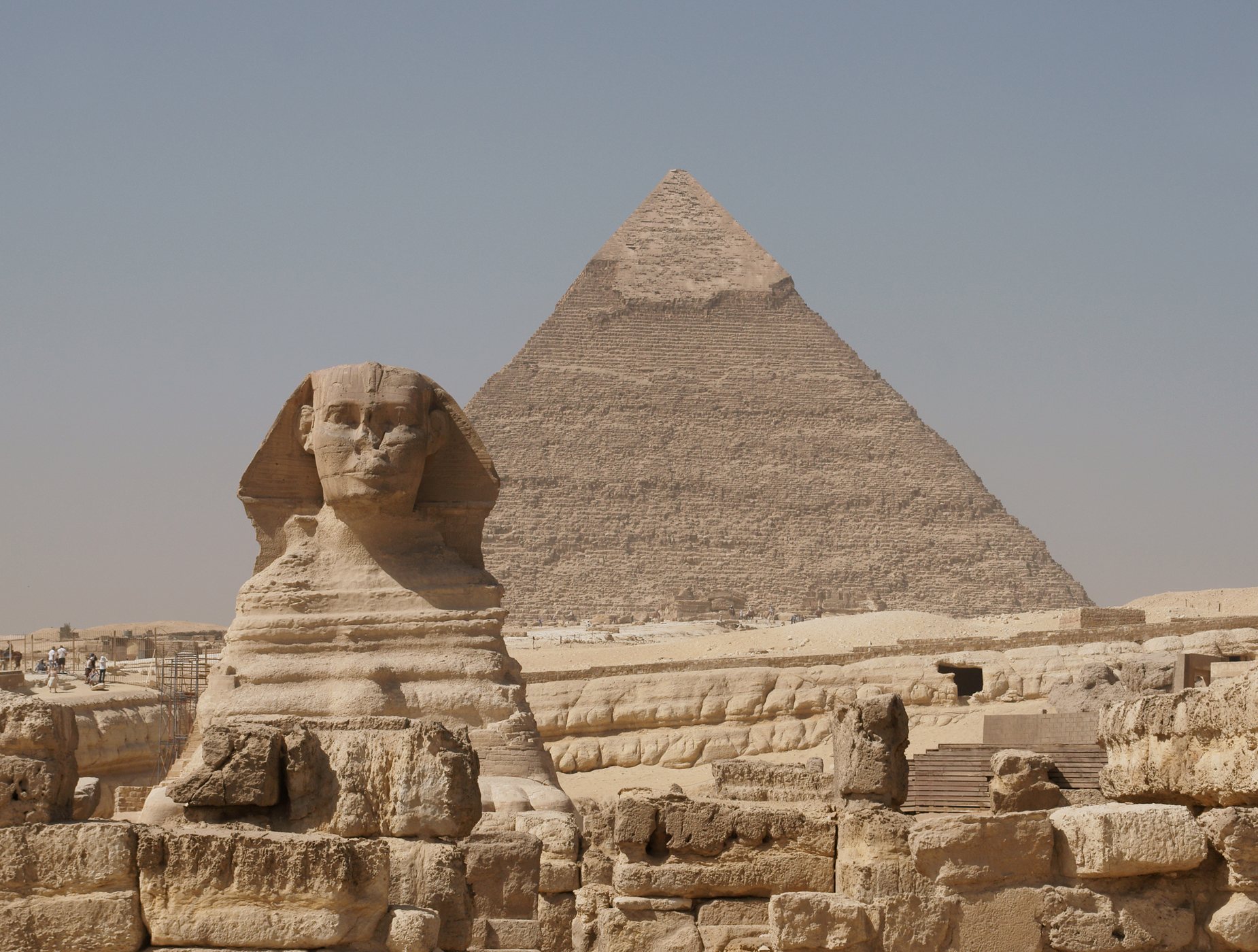
Kallerna / Wikimedia Commons. CC BY-SA 4.0.The Sphinx and Pyramid of KhafreThis image provides visual context. It does not establish cause, identity, date, or interpretation by itself.
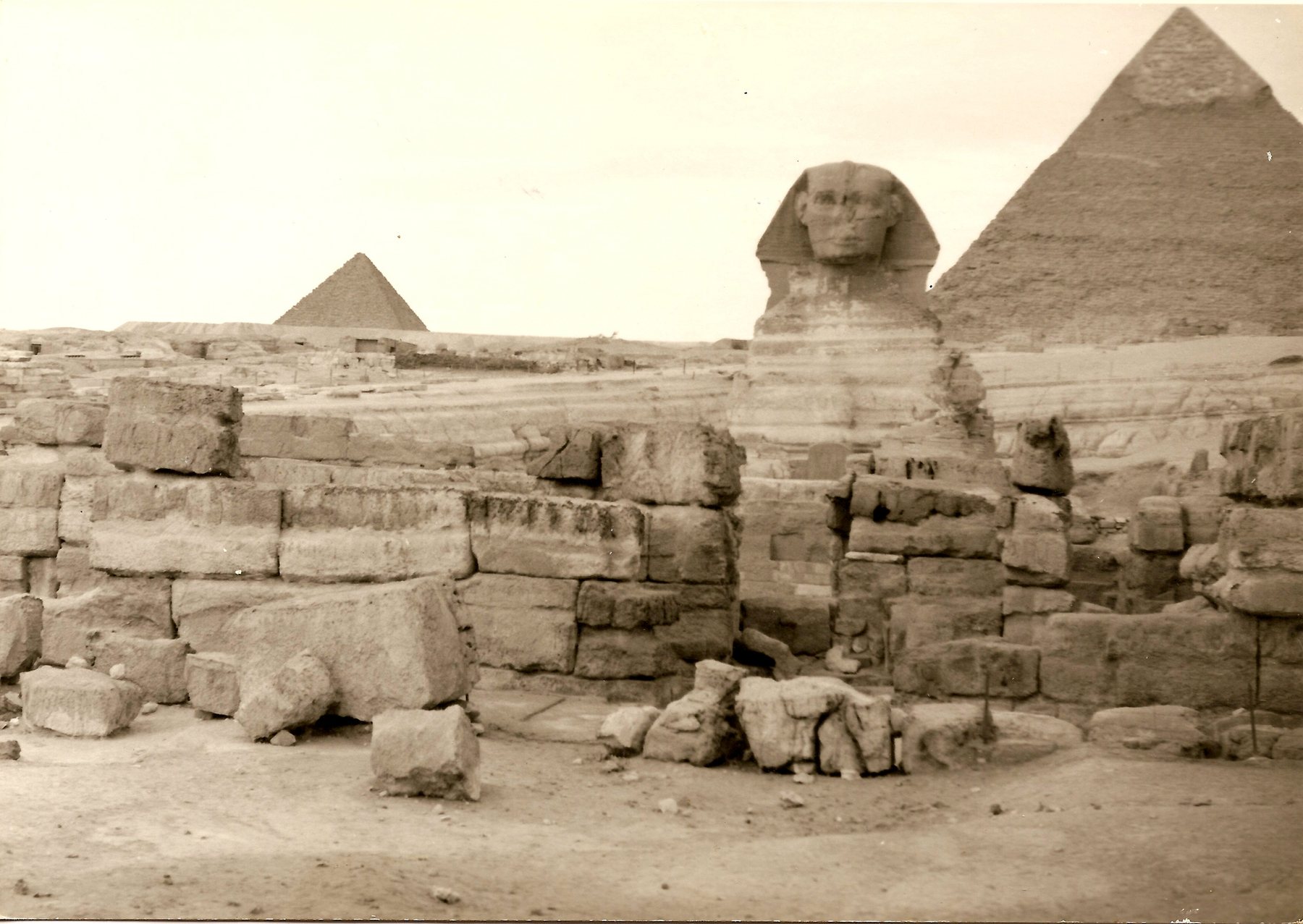
Vincent Brown / Wikimedia Commons. CC BY 2.0.The Sphinx, 1966This image provides visual context. It does not establish cause, identity, date, or interpretation by itself.
Mark Lehner / Wikimedia Commons. CC BY 4.0.Map of the Giza Plateau Emphasizing the Pyramid PrecinctsThis image provides visual context. It does not establish cause, identity, date, or interpretation by itself.
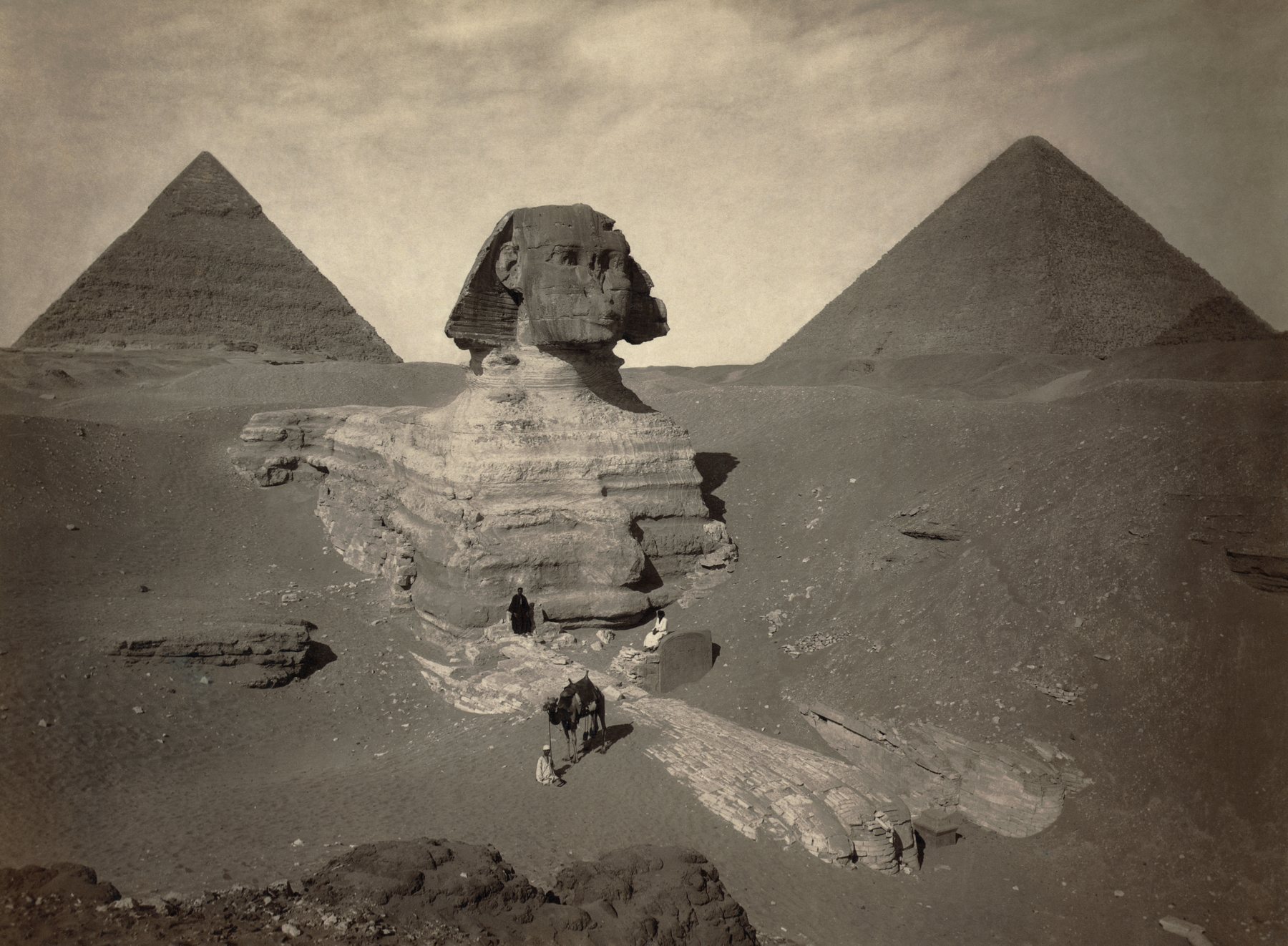
Maison Bonfils / Wikimedia Commons. Public domain.Sphinx Partially Excavated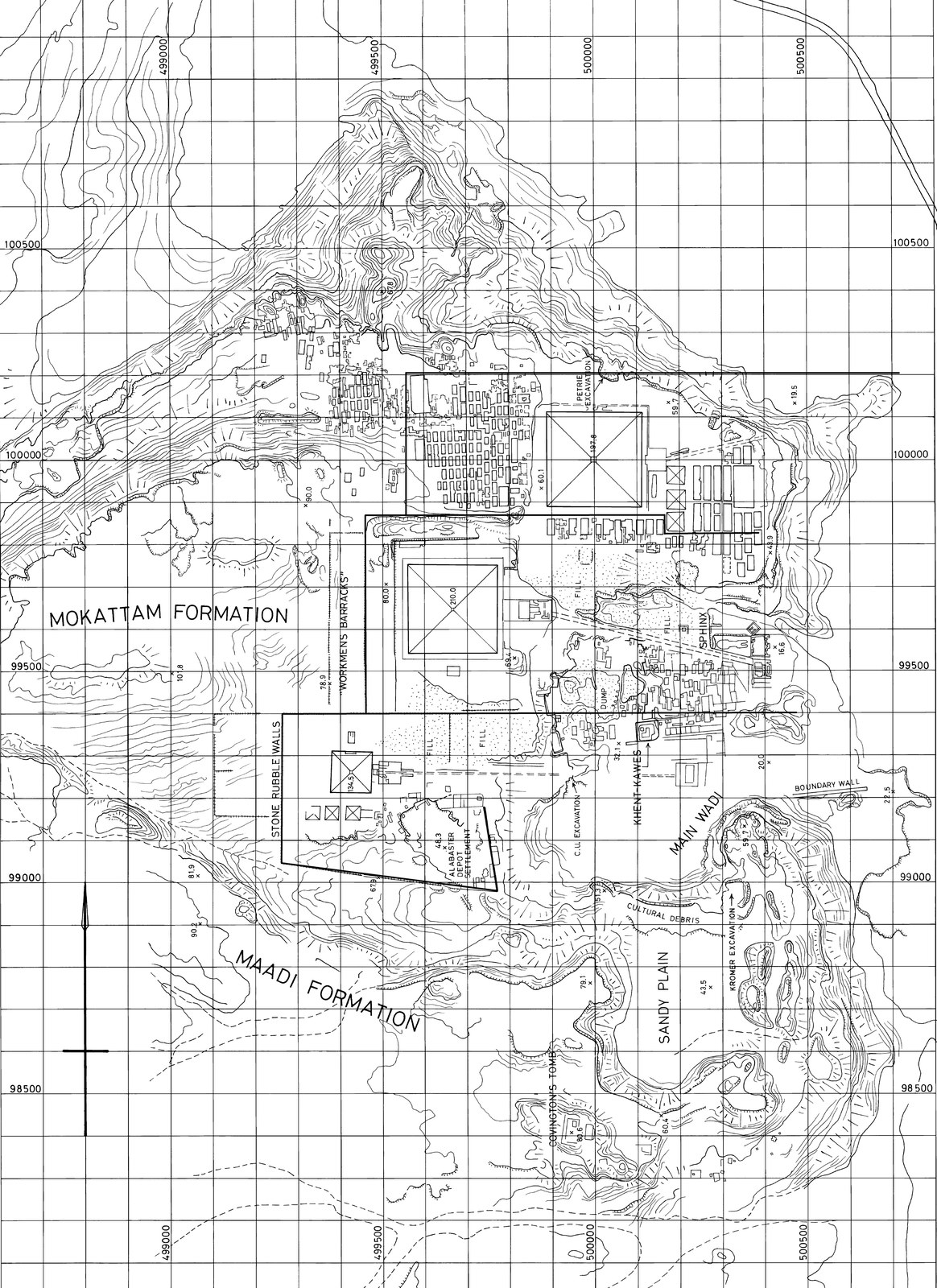
02Visual source
Map the possibilities
Which possibilities survive the pressure?
Give the accepted explanation and its strongest challengers the same hard questions: what fits, what fails, and what is still missing?Competing possibilities
The accepted account and its strongest alternatives.
Inclusion means a possibility is worth testing. It does not mean every possibility currently carries equal evidentiary weight.
Fourth Dynasty monument, most probably Khafre
The Sphinx and lower enclosure were created within the quarry-construction sequence that produced the Khafre Valley Temple and Sphinx Temple, then weathered under many interacting processes.
Current treatment
Leading interpretation. The integrated Old Kingdom construction record is stronger than the available case for a prehistoric monument, although the precise builder and full weathering history remain open.
Earlier dynastic or pre-Khufu monument
An earlier enclosure received runoff from a larger catchment before Khufu quarrying altered the landscape, and Fourth Dynasty builders later incorporated or expanded it.
Current treatment
Serious minority possibility. It addresses some runoff questions without requiring a lost prehistoric culture, but it currently lacks a directly dated earlier construction phase.
Substantially older prehistoric core
The oldest body and enclosure were carved during a wetter early-Holocene climate, then inherited, repaired, and recarved by dynastic Egyptians.
Current treatment
Not established. Water involvement is real, but the current evidence does not carry the argument from process to a substantially prehistoric date.
Multi-phase monument, first phase unresolved
The visible Sphinx combines major interventions from different periods, but an earlier core remains undated until a physical phase boundary and associated deposit are demonstrated.
Current treatment
Plausible as a framework because later repairs and alterations are certain, but it does not date an earlier core without a testable phase boundary.
Possibility map
Stress-test every serious explanation.
Select a possibility to see what would need to be true, what supports it, what weakens it, what is missing, and how seriously the current record allows PARALLAX to treat it.
Primary questionDoes the erosion evidence on the Great Sphinx support the conventional Old Kingdom dating, or does it indicate the monument may be significantly older than commonly accepted?
Fourth Dynasty monument, most probably Khafre
What would need to be true
The Sphinx and lower enclosure were created within the quarry-construction sequence that produced the Khafre Valley Temple and Sphinx Temple, then weathered under many interacting processes.
What supports it
- Sphinx quarry beds matched to Sphinx Temple core blocks
- Causeway, terrace, drainage, and unfinished-work sequence
- Third-millennium radiocarbon and luminescence from associated temples
- Dynastic royal form and known Fourth Dynasty monumental capacity
- No secure prehistoric construction context
What weakens it
- No contemporary builder inscription
- Some sequence steps are reconstructed rather than directly sealed
- Exact ruler remains debated
- No complete quantitative model reproduces all enclosure weathering
What evidence is missing
- A direct date or sealed construction context for the first bedrock cutting.
- A quantitative local weathering model that reproduces the full enclosure pattern.
How PARALLAX treats it now
Leading interpretation. The integrated Old Kingdom construction record is stronger than the available case for a prehistoric monument, although the precise builder and full weathering history remain open.
Discriminating evidenceOpen the categories that can move the assessment
These links lead to the underlying evidence reviews. Direction is kept separate from importance and is never converted into a score.
High impactSphinx Temple quarry-bed matches
Strongly favors Old Kingdom integrated construction
Open 010-AHigh impactCauseway, terrace, and wall sequence
Favors Khafre-era completion
Open 010-AHigh impactRounded profiles and deep channels
Supports substantial water and moisture involvement
Open 010-BHigh impactDifferential lithology and ancient karst
Keeps Old Kingdom chronology geologically viable
Open 010-BHigh impactWestern runoff concentration
Supports runoff and may favor pre-Khufu exposure
Open 010-CHigh impactOld Kingdom rain and sheet floods
Challenges a prehistoric-only runoff claim
Open 010-CThis map does not award points for novelty or authority. Compare serious possibilities, inspect what each one explains, and follow the evidence categories back to their detailed reviews.
Evidence matrix
Current direction by category.
Current direction shows what a category supports, challenges, or leaves unresolved. Evidence impact shows how important that category is to understanding the case, without turning uncertainty into a fake score.
How to read this
Current direction says what the evidence presently supports, challenges, or leaves unresolved. Evidence impact says how important that category is to understanding the case. Impact does not mean support for either side.
Evidence categoryCurrent directionEvidence impactKey limitation / note
Evidence categorySphinx Temple quarry-bed matches
Read review5 linked sources
Current directionStrongly favors Old Kingdom integrated construction
Evidence impactHigh impactCentral to the case or capable of materially changing the assessment.
Key limitation / note
Stone removal is linked directly; an older partial core is not logically excluded.
Evidence categoryCauseway, terrace, and wall sequence
Read review5 linked sources
Current directionFavors Khafre-era completion
Evidence impactHigh impactCentral to the case or capable of materially changing the assessment.
Key limitation / note
Complex contacts require transparent survey documentation and independent replication.
Evidence categoryRounded profiles and deep channels
Read review5 linked sources
Current directionSupports substantial water and moisture involvement
Evidence impactHigh impactCentral to the case or capable of materially changing the assessment.
Key limitation / note
The process mix is disputed and morphology is not a calibrated clock.
Evidence categoryDifferential lithology and ancient karst
Read review5 linked sources
Current directionKeeps Old Kingdom chronology geologically viable
Evidence impactHigh impactCentral to the case or capable of materially changing the assessment.
Key limitation / note
May not explain every spatial pattern by itself.
Evidence categoryWestern runoff concentration
Read review6 linked sources
Current directionSupports runoff and may favor pre-Khufu exposure
Evidence impactHigh impactCentral to the case or capable of materially changing the assessment.
Key limitation / note
Ancient catchment, spoil, drainage, and storm history are incompletely known.
Evidence categoryEarly-Holocene humid climate
Read review6 linked sources
Current directionMakes prehistoric exposure climatically plausible
Evidence impactMedium impactMeaningfully informs the case but is not decisive alone.
Key limitation / note
A climate window does not prove an artificial surface existed then.
Evidence categoryOld Kingdom rain and sheet floods
Read review6 linked sources
Current directionChallenges a prehistoric-only runoff claim
Evidence impactHigh impactCentral to the case or capable of materially changing the assessment.
Key limitation / note
Local cumulative at the enclosure remains unquantified.
Evidence categorySeismic low-velocity zones
Read review3 linked sources
Current directionAmbiguous; compatible with varied exposure
Evidence impactMedium impactMeaningfully informs the case but is not decisive alone.
Key limitation / note
, facies, fractures, and moisture are not separated by a direct age calibration.
Evidence categorySphinx Temple radiocarbon
Read review4 linked sources
Current directionFavors third-millennium complex activity
Evidence impactMedium impactMeaningfully informs the case but is not decisive alone.
Key limitation / note
Dates organic material associated with a temple, not the bedrock core.
Evidence categoryTemple surface luminescence
Read review4 linked sources
Current directionFavors dynastic temple construction
Evidence impactHigh impactCentral to the case or capable of materially changing the assessment.
Key limitation / note
The samples do not directly date first carving of the Sphinx body.
Evidence categoryNo contemporary builder inscription
Read review4 linked sources
Current directionLimits confidence in the named commissioner
Evidence impactMedium impactMeaningfully informs the case but is not decisive alone.
Key limitation / note
Absence of text does not remove converging physical context.
Evidence categoryPharaonic head and royal iconography
Read review4 linked sources
Current directionFavors a dynastic visible form
Evidence impactMedium impactMeaningfully informs the case but is not decisive alone.
Key limitation / note
Cannot by itself exclude an older body or head recarving.
Evidence categorySalt, dew, damp burial, and groundwater
Read review6 linked sources
Current directionSupports complex post-carving deterioration
Evidence impactMedium impactMeaningfully informs the case but is not decisive alone.
Key limitation / note
Their cumulative contribution to the ancient enclosure relief is not measured.
Evidence categoryRepeated restoration and incomplete original surfaces
Read review6 linked sources
Current directionLimits simple visual dating
Evidence impactHigh impactCentral to the case or capable of materially changing the assessment.
Key limitation / note
Masonry and repairs hide or alter parts of the original record.
Evidence categoryNo secure prehistoric construction horizon
Read review8 linked sources
Current directionFavors dynastic origin
Evidence impactHigh impactCentral to the case or capable of materially changing the assessment.
Key limitation / note
Later disturbance weakens but does not erase the archaeological absence.
Evidence categorySpecific 10,500 BC or Atlantean claims
Read review8 linked sources
Current directionNot supported by the reviewed evidence
Evidence impactLow impactAdds context but has little power to separate the interpretations.
Key limitation / note
Neither surface geology nor seismic data selects that date or builder.
Evidence reviews
The repeatable review structure for future cases.
Each category separates the core question, established observations, source quality, competing interpretations, assessment, unresolved issues, and sources.
010-A
Quarry and Construction Sequence
Current directionStrongly favors an Old Kingdom integrated construction phase
Question tested
Do the temple blocks, causeway, terrace, and unfinished work place the Sphinx inside Khafre construction program?
Current read
Geological bed matches tie much of the enclosure excavation to the Sphinx Temple, while causeway and terrace relationships place that work within the Khafre complex. An older partial core remains possible but requires a separate phase not yet directly demonstrated.
Established Observations
- FACTLarge Sphinx Temple core blocks preserve bed sequences that match limestone layers exposed in the Sphinx quarry.
- FACTThe Sphinx Temple, Valley Temple, causeway, enclosure, and prepared terrace have direct physical relationships.
- SUPPORTED INFERENCEExcavation of the lower Sphinx enclosure and construction of the Sphinx Temple formed one coordinated quarry-building operation.
- UNKNOWNWhether a smaller or partly carved monument existed before that operation is not directly resolved by the block match.
Evidence Quality
High for mapped fabric and ; moderate for assigning every step to one named king.
Accepted / Conventional Reading
- The causeway predates cutting of the lower enclosure, and temple blocks were removed as workers shaped the Sphinx late in Khafre program.
- Unfinished quarry and temple work are consistent with one interrupted royal building project.
- No earlier structure is required to explain the physical sequence.
Challenge / Alternative Reading
- Fourth Dynasty builders may have enlarged, completed, or monumentalized an inherited enclosure.
- A block match proves when stone was removed for the temple, not necessarily when every surviving surface was first carved.
- Reader argues that landscape relationships preserve a pre-Khufu phase despite later integration.
PARALLAX Current Read
HIGH-IMPACT EVIDENCE FOR OLD KINGDOM INTEGRATION; AN EARLIER PARTIAL CORE IS NOT DIRECTLY EXCLUDED
010-B
Surface Weathering and Limestone
Current directionSupports major water involvement; age direction remains mixed
Question tested
Are the rounded profiles and deep channels diagnostic of prolonged prehistoric rainfall?
Current read
The morphology is compatible with precipitation and , but variable limestone, ancient , salt, and other moisture-driven processes prevent the surface form from functioning as a unique dating signature.
Established Observations
- FACTThe enclosure contains rounded, undulating profiles and deep channels across alternating hard and soft limestone beds.
- FACTSphinx limestone beds differ materially in pore structure, composition, and durability.
- DISPUTEDWhether the major channels are mainly runoff-enhanced joints or pre-human karst exposed by quarrying remains contested.
- SUPPORTED INFERENCENo single visual weathering form presently supplies a calibrated construction age.
Evidence Quality
High for the existence of mapped features and material variation; mixed for assigning one dominant process and elapsed time.
Accepted / Conventional Reading
- Alternating beds recede differently and can form rounded profiles under arid weathering.
- Some deep channels are ancient karst features revealed when the enclosure was cut.
- Salt, moisture, runoff, burial, and exposure interacted over millennia after an Old Kingdom carving.
Challenge / Alternative Reading
- The dominant wall profile and fissure development are more consistent with prolonged precipitation from above than wind abrasion.
- Comparison with flatter nearby Old Kingdom surfaces suggests longer exposure.
- The morphology fits a substantially wetter pre-dynastic climate.
PARALLAX Current Read
WATER INVOLVEMENT ESTABLISHED; PREHISTORIC CHRONOLOGY NOT DIAGNOSTICALLY ESTABLISHED
010-C
Rainfall, Runoff, and Catchment
Current directionFavors runoff; chronology remains disputed
Question tested
Does the distribution of require a wetter prehistoric climate or preserve an earlier dynastic landscape?
Current read
Early Holocene North Africa was wetter, but consequential rainfall also occurred during dynastic Egypt. Reader -catchment model is more discriminating than climate alone and supports a serious pre-Khufu possibility without requiring a prehistoric date.
Established Observations
- FACTThe North African Humid Period supplied a wetter regional early-Holocene climate than modern Giza.
- FACTNorthern Egypt experienced occasional heavy rain and sheet floods during the Old Kingdom.
- SUPPORTED INFERENCERunoff likely contributed to concentrated western enclosure erosion.
- DISPUTEDWhether Khufu quarrying interrupted the catchment after the enclosure had already weathered remains a contested relative-sequence claim.
Evidence Quality
High for regional climate and the existence of dynastic storms; moderate for local ancient catchment reconstruction.
Accepted / Conventional Reading
- Episodic dynastic storms and runoff can operate in an overall arid climate.
- A drainage channel and causeway relationship places enclosure cutting late in Khafre work.
- Runoff evidence therefore does not require redating.
Challenge / Alternative Reading
- The western concentration tracks a larger pre-quarry catchment.
- Khufu quarrying later diverted or absorbed runoff, implying that erosion began earlier.
- A wetter prehistoric climate would amplify the same process over a longer interval.
PARALLAX Current Read
RUNOFF PROBABLE; PRE-KHUFU SEQUENCE PLAUSIBLE BUT UNCONFIRMED; PREHISTORIC DATE NOT REQUIRED
010-D
Seismic Weathering Depth
Current directionAmbiguous; supports heterogeneity, not a calendar date
Question tested
Do the seismic results provide an independent age for the Sphinx enclosure?
Current read
The peer-reviewed survey found nonuniform subsurface velocity zones. Their interpretation as different exposure durations is plausible but not uniquely established, and no local rate converts depth into years.
Established Observations
- FACTSeismic refraction, tomography, and reflection surveys were conducted around the Sphinx enclosure and temples.
- FACTThe survey found nonuniform low-velocity subsurface zones and possible cavities or structures.
- DISPUTEDWhether the low-velocity boundary records post-excavation weathering or depositional facies and fracture variation is unresolved.
- FACTNo radiometric or independently calibrated calendar age was measured by the seismic method.
Evidence Quality
High for the original survey existence and broad result; limited for calendar-age inference without raw-data reanalysis and coring.
Accepted / Conventional Reading
- Velocity changes may follow primary reef facies, dip, fracturing, moisture, or heterogeneous rock rather than elapsed exposure.
- Boundary picking and petrophysical assumptions limit a simple weathering-depth reading.
Challenge / Alternative Reading
- The shallower apparent alteration behind the Sphinx reflects a later rear excavation.
- Deeper alteration on other sides indicates a much longer earlier exposure.
PARALLAX Current Read
REAL GEOPHYSICAL ANOMALY; EXPOSURE HISTORY POSSIBLE; CONSTRUCTION AGE NOT MEASURED
010-E
Radiocarbon and Luminescence
Current directionFavors Old Kingdom complex activity; core age remains indirect
Question tested
Do scientific dates from the associated temples resolve when the Sphinx core was first carved?
Current read
Radiocarbon and surface-luminescence results place major temple work in the third millennium BC. They materially support the conventional complex chronology but sample organic material and temple surfaces, not the first Sphinx bedrock cut.
Established Observations
- FACTThree radiocarbon records are cataloged for Sphinx Temple charcoal or mortar contexts.
- FACTThe calibrated results fall broadly in the third millennium BC, with substantial spread and uncertainty.
- FACTSurface-luminescence samples from the Sphinx and Valley temples broadly concur with dynastic construction dates.
- UNKNOWNNo accepted direct scientific date currently fixes the first carving of the Sphinx core.
Evidence Quality
High-quality peer-reviewed archaeometry with important context limits.
Accepted / Conventional Reading
- Independent dating methods converge on third-millennium work around the monument.
- That convergence fits the quarry-construction sequence and weakens a wholly prehistoric complex.
Challenge / Alternative Reading
- A Fourth Dynasty temple can be constructed beside or from an inherited older core.
- Old wood, intrusion, repair, reuse, partial bleaching, and sampled-surface context prevent a direct core date.
PARALLAX Current Read
THIRD-MILLENNIUM CONSTRUCTION ACTIVITY SUPPORTED; FIRST CORE CARVING NOT DIRECTLY DATED
010-F
Texts, Iconography, and Builder
Current directionFavors a dynastic royal monument; exact commissioner remains inferential
Question tested
How much confidence should be placed in Khafre when no contemporary builder inscription survives?
Current read
The present head and complex are pharaonic, and Khafre is the best contextual fit. The Dream Stela is much later and damaged, so it cannot carry the attribution alone.
Established Observations
- FACTNo surviving Old Kingdom inscription explicitly names the Sphinx builder.
- FACTThe Dream Stela was erected by Thutmose IV roughly a millennium after the conventional construction date.
- DISPUTEDIts damaged Khafre reference does not preserve enough context to function as an unambiguous builder statement.
- SUPPORTED INFERENCEThe royal headdress and pharaonic head place the visible form within dynastic kingship.
Evidence Quality
High for the inscription chronology and architectural context; moderate for portrait and commissioner inference.
Accepted / Conventional Reading
- Khafre is the most probable commissioner because physical context converges on his complex.
- The lack of text reflects stripping, incompletion, and the sparse Fourth Dynasty record rather than an older origin.
Challenge / Alternative Reading
- The absence of a builder inscription leaves inheritance or recarving open.
- Khufu or Djedefre proposals show that the exact royal attribution is not settled even within the Fourth Dynasty.
- A dynastic head could have been cut onto an older body.
PARALLAX Current Read
KHAFRE MOST PROBABLE BY CONTEXT; NO DIRECT CONTEMPORARY BUILDER TEXT
010-G
Conservation, Burial, and Restoration
Current directionLimits simple visual dating
Question tested
How much has the monument changing exposure history altered the record?
Current read
Repeated burial, clearance, moisture exposure, salt cycling, and extensive repair make the Sphinx a changing engineered surface rather than an untouched outcrop.
Established Observations
- FACTThe Sphinx body contains extensive ancient and modern repair masonry.
- FACTThe enclosure has repeatedly filled with sand and been cleared.
- FACTModern monitoring found substantial temperature, humidity, and wind variation around the monument.
- SUPPORTED INFERENCEBurial can both protect surfaces from abrasion and retain damaging moisture and salts.
Evidence Quality
High for mapped restoration and modern environmental stress; uncertain for cumulative ancient contribution.
Accepted / Conventional Reading
- Long post-carving deterioration under changing moisture regimes can produce severe damage within an Old Kingdom chronology.
- Restoration obscures original surfaces and defeats simple visual rate estimates.
Challenge / Alternative Reading
- Burial may have protected much of the monument, leaving insufficient exposed time under the conventional date.
- Some repairs may cover much older deterioration rather than cause it.
PARALLAX Current Read
COMPLEX EXPOSURE HISTORY ESTABLISHED; SIMPLE WEATHERING-RATE EXTRAPOLATION UNSAFE
010-H
Chronology Synthesis
Current directionFavors Old Kingdom origin; earlier dynastic phase remains open
Question tested
Which chronology explains the most evidence with the fewest unsupported steps?
Current read
Old Kingdom integration explains the quarry, temples, architecture, and associated dates while allowing complex water-driven deterioration. Earlier dynastic exposure has a testable argument. A prehistoric date lacks a direct clock and a local construction horizon.
Established Observations
- SUPPORTED INFERENCEAn Old Kingdom origin currently explains more independent evidence with fewer unverified phases than a prehistoric origin.
- DISPUTEDA pre-Khufu or Early Dynastic enclosure remains a serious minority interpretation.
- UNKNOWNThe public record does not directly date the first artificial cut in the Sphinx core.
- SPECULATIONA specific 10,500 BC date or Atlantean builder is not established by the evidence reviewed.
Evidence Quality
Cross-source synthesis; confidence depends on the direct evidence reviewed in 010-A through 010-G.
Accepted / Conventional Reading
- One main Fourth Dynasty quarry-construction phase plus long complex deterioration fits the total record.
- Khafre is the most probable commissioner, with limited room for a Khufu start.
Challenge / Alternative Reading
- Reader earlier-dynastic phase can fit known cultural development and deserves targeted testing.
- Schoch prehistoric phase remains physically possible but needs a direct date and associated archaeology.
- A multi-phase model should be retained only where actual phase boundaries can be demonstrated.
PARALLAX Current Read
OLD KINGDOM BETTER SUPPORTED; EARLIER DYNASTIC POSSIBLE; SUBSTANTIALLY PREHISTORIC NOT ESTABLISHED
03Visual source
Name what remains
What still does not sit right?
Keep the stubborn gaps visible. Then state what the record can presently carry without pretending suspicion is proof or authority is closure.Open questions / What still does not sit right
The unanswered questions that matter.
- Can the complete seismic travel-time data and survey geometry be released and reprocessed?
- Can conservation-safe cores distinguish weathering from primary depositional facies?
- Can the full temple block-bed matching dataset be independently replicated?
- What was the pre-Khufu catchment, and how did each quarry phase alter runoff?
- Can causeway and enclosure contacts be documented at survey-grade resolution?
- Do any sealed deposits preserve an earlier Sphinx construction phase?
- Can original tool-cut surfaces be identified beneath repair masonry?
- Can historical photography measure surface loss by bed and orientation?
- How much local rain and runoff occurred during the Fourth and Fifth Dynasties?
- Can new luminescence methods date a secure original cut surface?
- Is there physical evidence for a major recarving of the head or body?
- Can a coupled hydrology, salt, lithology, and exposure model reproduce the enclosure morphology?
What would change the picture
Evidence must be allowed to move the assessment.
- A sealed early-Holocene construction layer or tool assemblage tied to first carving would strongly support a prehistoric origin.
- A directly dated original cut surface substantially predating dynastic Egypt would overturn the current weighting.
- Demonstrated recutting boundaries with separately datable deposits would strengthen a multi-phase model.
- Proof that Khufu quarrying interrupted the catchment responsible for the oldest erosion would strengthen the earlier dynastic interpretation.
- Replicated contacts showing all enclosure excavation followed the Khafre causeway would strengthen the standard sequence.
- A locally calibrated seismic weathering-age relationship would make the geophysical depth chronologically useful.
- A validated Old Kingdom-and-later process model reproducing the observed morphology would weaken the need for earlier exposure.
- A model showing known dynastic conditions cannot produce the relief despite lithology, salts, burial, and storms would strengthen substantial redating.
- A contemporary construction text naming the commissioner would materially resolve the builder question.
Why this case matters
Why this conflict deserves scrutiny.
A monument belongs to more than one discipline
Geology identifies processes; archaeology reconstructs culture and sequence; archaeometry supplies dates. None can answer the whole case alone.
A process is not a date
The inference from water-shaped stone to a specific prehistoric year contains several testable steps. Making those steps visible is the central reasoning lesson of the case.
Revision does not require spectacle
A pre-Khufu Sphinx would revise the development of Giza without proving Atlantis or a vanished global civilization. Evidence should be allowed to move only as far as it supports.
Legitimate uncertainty survives a leading conclusion
Old Kingdom origin can be better supported while the missing builder inscription, first-cut date, and runoff sequence remain genuinely open.
What the evidence currently suggests
Where the record points - v0.1.1
Water and moisture materially affected the Sphinx and its enclosure. Rainfall runoff probably helped shape parts of the enclosure, especially where topography concentrated flow.
The erosion evidence does not independently date the monument. Differential limestone, ancient karst, salts, dew, damp burial, groundwater, wind, restoration, and episodic storms create a multi-process record whose rates are not calibrated.
The total evidence better supports an Old Kingdom origin, most probably within Khafre Fourth Dynasty building program. Quarry-to-temple bed matches, architectural sequence, associated third-millennium dates, and cultural context carry the greatest weight.
A pre-Khufu or earlier dynastic phase remains a serious minority interpretation because Reader runoff and catchment argument is testable and does not require an unknown prehistoric monumental culture.
A substantially older 7000-5000 BC core is not established by the surface morphology or seismic survey. A specific 10,500 BC date, Atlantean builder, or astronomical extension is unsupported by the evidence reviewed.
The case remains open to direct dating, better hydrological reconstruction, modern seismic reanalysis, and discovery of securely documented construction phases.
04Visual source
Inspect the record
Follow the evidence back to its sources.
Trace the sources, shared foundations, definitions, corrections, and revision history behind the public assessment.Source record
Inspect the material.
- Technical / scientific analysissphinx-lehner-thesis
Archaeology of an Image: The Great Sphinx of Giza
Technical sourceScientific, engineering, forensic, or specialist analysis; weight follows method and reproducibility.- Provenance
- Yale doctoral dissertation cataloged and distributed as a complete PDF by the Harvard Digital Giza Project.
- Directness
- Detailed specialist synthesis grounded in direct monument mapping and study of the adjoining temples.
- Method
- Stone-by-stone survey, architectural sequencing, historical analysis, restoration mapping, comparative iconography, and collaboration with geologist Thomas Aigner.
- Corroboration
- Its core quarry and temple relationships are presented in later AERA mapping and construction-sequence publications.
- Limit
- The Khafre attribution remains a contextual inference, and some later fieldwork and scientific dates postdate the dissertation.
- Verification
- Catalog metadata and complete PDF reviewed.
A 534-page archaeological, architectural, textual, geological, and restoration study of the Sphinx complex based partly on the 1979-1983 ARCE mapping project.
- Primary evidencesphinx-hassan
The Sphinx: Its History in the Light of Recent Excavations
Primary evidenceDirect material, dataset, exhibit, transcript, or record; directness does not remove context checks.- Provenance
- Government Press monograph by the Egyptian archaeologist who led a major clearance and excavation of the Sphinx complex, preserved by Digital Giza.
- Directness
- Primary excavation-era account and historical synthesis.
- Limit
- Excavation and recording standards predate modern geoarchaeological practice, and the text does not settle the geological process debate.
- Verification
- Digital Giza catalog and searchable scan verified.
Major excavator synthesis favoring Khafre while explicitly describing the attribution as circumstantial because no contemporary inscription names the builder.
- Technical / scientific analysissphinx-aera-who
Who Built the Sphinx? The Sphinx Temple Has the Answer
Technical sourceScientific, engineering, forensic, or specialist analysis; weight follows method and reproducibility.- Provenance
- Research organization publication by the project director, with mapped figures and field photographs from the ARCE Sphinx Project.
- Directness
- Direct analysis of mapped stone fabric and architectural relationships.
- Method
- Lithological classification of temple blocks, bed matching, distribution mapping, and architectural sequencing.
- Corroboration
- Consistent with the dissertation, Aigner geological work, and AERA sequence summary.
- Limit
- Several steps are explicitly reconstructed as hypotheses; the complete underlying block database is not supplied as an independent machine-readable dataset.
- Verification
- Article and illustrated PDF reviewed.
Presents bed-by-bed matching between the Sphinx quarry and giant Sphinx Temple core blocks and reconstructs the quarry-construction sequence.
- Technical / scientific analysissphinx-aera-unit
Khafre's Monuments as a Unit
Technical sourceScientific, engineering, forensic, or specialist analysis; weight follows method and reproducibility.- Provenance
- AERA field-research synthesis with explicit relative-sequence claims.
- Directness
- Directly addresses the archaeological relationships most relevant to the conventional chronology.
- Limit
- A summary article rather than the full excavation and survey archive; some conclusions depend on reconstructed sequence.
- Verification
- Article and stated sequence reviewed.
Summarizes causeway, terrace, drainage, temple, quarry, and unfinished-work relationships used to place the Sphinx late in Khafre construction.
- Primary evidencesphinx-open-context
Sphinx Mapping Digital Database
Primary evidenceDirect material, dataset, exhibit, transcript, or record; directness does not remove context checks.- Provenance
- Open archaeological data repository record for the original mapping project.
- Directness
- Primary project-level provenance for surveys used in later syntheses.
- Limit
- Not every observation, image, or block correlation is exposed in one immediately reusable dataset.
- Verification
- ARCE project record, scope, dates, and archive description verified.
Digital project record for the architectural and archaeological Sphinx survey led by Mark Lehner.
- Technical / scientific analysissphinx-dobecki-schoch
Seismic Investigations in the Vicinity of the Great Sphinx of Giza, Egypt
Technical sourceScientific, engineering, forensic, or specialist analysis; weight follows method and reproducibility.- Provenance
- Journal article by the geophysicist and geologist who conducted the survey.
- Directness
- Original instrument study of the enclosure subsurface.
- Method
- Seismic refraction, refraction tomography, and high-resolution reflection around the enclosure and temples.
- Limit
- The survey did not directly date the rock. Calendar-age inference depends on interpreting low velocity as post-excavation weathering and assuming a defensible local rate.
- Verification
- Publisher abstract, DOI, scope, and conclusions verified.
Peer-reviewed seismic refraction, tomography, and reflection study reporting nonuniform subsurface velocity structure and varied apparent weathering depth.
- Technical / scientific analysissphinx-gauri
Geologic Weathering and Its Implications on the Age of the Sphinx
Technical sourceScientific, engineering, forensic, or specialist analysis; weight follows method and reproducibility.- Provenance
- Journal article by a Sphinx conservation geologist and coauthors.
- Directness
- Direct response to the Schoch-West geological interpretation.
- Method
- Field geology, lithological interpretation, weathering-process analysis, and comparison with karst and arid-environment deterioration.
- Limit
- Keeps a pharaonic date viable but does not quantitatively reproduce every enclosure feature or independently identify a builder.
- Verification
- Publisher abstract, DOI, and article metadata verified.
Peer-reviewed geological rebuttal arguing that arid weathering across variable beds can produce rounded profiles and that deep channels expose ancient karst features.
- Independent technical analysissphinx-reader-2001
A Geomorphological Study of the Giza Necropolis, with Implications for the Development of the Site
Independent critiqueTechnical analysis outside the principal institution; judged by methods and source trail, not outsider status.- Provenance
- Independent engineering-geology analysis published by Archaeometry.
- Directness
- Direct examination of geomorphology, hydrology, and necropolis spatial sequence.
- Method
- Field geomorphology, runoff-path analysis, quarry and catchment reconstruction, and archaeological landscape comparison.
- Corroboration
- Agrees with Schoch that water runoff matters but with conventional paleoclimate evidence that runoff continued into dynastic times.
- Limit
- Ancient catchment, quarry spoil, drainage, rainfall intensity, and the proposed earlier construction horizon remain incompletely constrained.
- Verification
- Publisher abstract, DOI, and accessible article scan reviewed.
Peer-reviewed argument that rainfall runoff explains the nonuniform enclosure erosion and that catchment relationships may place the Sphinx before Khufu.
- Independent technical analysissphinx-reader-2005
The Age of the Sphinx and the Development of the Giza Necropolis
Independent critiqueTechnical analysis outside the principal institution; judged by methods and source trail, not outsider status.- Provenance
- Conference proceedings paper distributed through the Digital Giza media archive.
- Directness
- Author clarification of the intermediate chronology and its climatic basis.
- Limit
- Interpretive synthesis; no direct calendar date for first carving is produced.
- Verification
- Digital Giza catalog record, publication details, and linked proceedings text verified.
Expanded explanation of why runoff does not itself require a prehistoric Sphinx and why Reader nevertheless argues for pre-Khufu development.
- Independent technical analysissphinx-reader-jacf
Giza Before the Fourth Dynasty
Independent critiqueTechnical analysis outside the principal institution; judged by methods and source trail, not outsider status.- Provenance
- Published article available from the author geology archive.
- Limit
- The proposed Early Dynastic placement remains inferential and lacks a sealed Sphinx construction deposit.
- Verification
- Complete scan and bibliographic identity verified.
Long-form case for pre-Fourth-Dynasty activity and an earlier Sphinx, with explicit criticism of both standard and substantially prehistoric chronologies.
- Technical / scientific analysissphinx-harrell
The Sphinx Controversy: Another Look at the Geological Evidence
Technical sourceScientific, engineering, forensic, or specialist analysis; weight follows method and reproducibility.- Provenance
- Authorized reproduction of a KMT article by a specialist in Egyptian stone and quarries.
- Directness
- Technical critique of the Schoch model rather than a primary excavation report.
- Limit
- Published in a specialist popular magazine rather than a peer-reviewed geology journal; several wet-sand and flood contributions remain model-dependent.
- Verification
- Reproduction, original issue citation, and argument reviewed.
Geologist response proposing damp sand, Nile and rain wetting, salt and clay effects, elevation, lithology, and depositional facies as alternatives to a prehistoric chronology.
- Advocacy / interpretivesphinx-schoch
The Great Sphinx
Interpretive sourcePopular, advocacy, or explanatory presentation; useful for framing claims, not establishing them.- Provenance
- First-person summary by the principal geological advocate of substantial redating.
- Directness
- Direct source for Schoch current public position, not independent validation.
- Corroboration
- Underlying seismic survey is separately cited from the peer-reviewed Geoarchaeology paper.
- Limit
- Advocacy summary mixes original observations with later broad historical interpretation and is not itself a peer-reviewed dating study.
- Verification
- Author page and stated claims reviewed.
Author presentation of the precipitation-weathering argument, seismic interpretation, and claim that the oldest core dates to 5000 BC or earlier.
- Technical / scientific analysissphinx-chowdhury
Weathering of Limestone Beds at the Great Sphinx
Technical sourceScientific, engineering, forensic, or specialist analysis; weight follows method and reproducibility.- Provenance
- Peer-reviewed conservation-geology paper by the University of Louisville Sphinx team.
- Directness
- Directly addresses material properties controlling deterioration.
- Limit
- Durability differences explain process susceptibility, not construction date by themselves.
- Verification
- DOI, journal record, authors, and scope verified.
Materials study of pore systems, bed durability, and differential limestone weathering at the Sphinx.
- Technical / scientific analysissphinx-bonani
Radiocarbon Dates of Old and Middle Kingdom Monuments in Egypt
Technical sourceScientific, engineering, forensic, or specialist analysis; weight follows method and reproducibility.- Provenance
- Peer-reviewed project report with sample collection, pretreatment, measurement, screening, and calibration methods.
- Directness
- Original dating study for associated temple construction material.
- Method
- Conventional and accelerator mass spectrometry radiocarbon dating with documented pretreatment and calibration.
- Limit
- Dates organic material rather than bedrock carving; old wood, intrusive material, reuse, and repair context can shift the relationship to construction.
- Verification
- Complete open PDF and methodology reviewed.
Large radiocarbon program sampling organic inclusions and mortar-associated charcoal from Old and Middle Kingdom monuments, including the Sphinx Temple.
- Primary evidencesphinx-intchron
Giza Sphinx Temple Radiocarbon Dataset
Primary evidenceDirect material, dataset, exhibit, transcript, or record; directness does not remove context checks.- Provenance
- Chronological data repository record linked to the Egyptian monuments dating project.
- Directness
- Direct sample-level values for the associated temple.
- Limit
- Context labels are concise, and none of the samples directly dates the Sphinx bedrock core.
- Verification
- Sample values and context fields inspected.
Machine-readable listing of three Sphinx Temple radiocarbon results, laboratory codes, material, contexts, conventional ages, and calibrated estimates.
- Technical / scientific analysissphinx-liritzis
Surface Luminescence Dating of Some Egyptian Monuments
Technical sourceScientific, engineering, forensic, or specialist analysis; weight follows method and reproducibility.- Provenance
- Peer-reviewed original archaeometric study.
- Directness
- Attempts to date last light exposure of fitted stone surfaces more directly than associated charcoal.
- Method
- Thermoluminescence and optically stimulated luminescence measurements with field and laboratory dose-rate estimation.
- Limit
- Partial bleaching, dose reconstruction, surface disturbance, reuse, and sample relationship to first construction remain important; the Sphinx core was not directly sampled.
- Verification
- Publisher full-text page, methods, sample list, and conclusion reviewed.
Applies surface luminescence methods to Sphinx Temple, Valley Temple, and other Egyptian monument stone surfaces, broadly finding dynastic ages.
- Technical / scientific analysissphinx-welc-marks
Climate Change at the End of the Old Kingdom in Egypt around 4200 BP: New Geoarchaeological Evidence
Technical sourceScientific, engineering, forensic, or specialist analysis; weight follows method and reproducibility.- Provenance
- Peer-reviewed geoarchaeological synthesis based partly on excavations at Saqqara.
- Directness
- Strong regional evidence that dynastic northern Egypt was not free of consequential rainfall.
- Limit
- Saqqara and regional evidence does not quantify cumulative runoff at the Sphinx enclosure.
- Verification
- Publisher abstract, DOI, and stated findings reviewed.
Documents late Old Kingdom aridification alongside occasional heavy rainfall and widespread sheet-flood deposits in northern Egypt.
- Technical / scientific analysissphinx-nature-floods
Climatic Pacing of Extreme Nile Floods during the North African Humid Period
Technical sourceScientific, engineering, forensic, or specialist analysis; weight follows method and reproducibility.- Provenance
- Peer-reviewed paleoclimate study with open manuscript access.
- Directness
- Regional climate context rather than direct evidence from the Giza catchment.
- Limit
- Nile-source rainfall and flood behavior cannot be converted directly into local Sphinx enclosure precipitation or construction age.
- Verification
- Article, DOI, and scope reviewed.
Reconstructs extreme Nile-flood pacing during the North African Humid Period and supports a substantially wetter early-Holocene regional context.
- Technical / scientific analysissphinx-getty
Great Sphinx Monitoring
Technical sourceScientific, engineering, forensic, or specialist analysis; weight follows method and reproducibility.- Provenance
- Institutional conservation project conducted with the Egyptian Antiquities Organization.
- Directness
- Primary summary of measured modern microenvironmental conditions.
- Method
- Autonomous environmental monitoring around the monument over multiple years.
- Limit
- Modern monitoring identifies active stresses but cannot be extrapolated unchanged across ancient exposure history.
- Verification
- Getty project record, dates, approach, and summary findings verified.
Environmental monitoring project measuring temperature, relative humidity, and wind to improve understanding of ongoing Sphinx deterioration.
- Archival materialsphinx-dream-stela
Dream Stela
Archival recordHistorical or FOIA/source-file material; relevance depends on provenance, completeness, and context.- Provenance
- Harvard museum object and interpretation page based on a cast and study of the original monument.
- Directness
- Context for the earliest prominent surviving textual history at the Sphinx.
- Limit
- The stela postdates the conventional construction by roughly a millennium and its damaged Khafre passage is not direct builder evidence.
- Verification
- Museum context and date relationship verified.
Museum context for the New Kingdom stela placed between the Sphinx paws, recording Thutmose IV clearance and royal legitimation story.
- Technical / scientific analysissphinx-materials
Mineralogical, Petrological and Radioactivity Aspects of Some Building Material from Egyptian Old Kingdom Monuments
Technical sourceScientific, engineering, forensic, or specialist analysis; weight follows method and reproducibility.- Provenance
- Publisher record for a peer-reviewed materials study.
- Directness
- Supports sample characterization and dose-rate context rather than a standalone Sphinx date.
- Limit
- Material properties do not independently resolve first carving of the Sphinx core.
- Verification
- Publisher abstract, DOI, and bibliographic metadata verified.
Mineralogical and petrological characterization supporting later luminescence work on Egyptian monument building materials.
Source relationships
Where the argument shares a foundation.
This view identifies records reused across observations, evidence reviews, or other PARALLAX investigations. It prevents citation volume from being mistaken for independent confirmation.
Repeated citation is not independent corroboration.
A record is counted once even when several sections rely on it. This audit shows the sources carrying more than one part of the public argument.
Archaeology of an Image: The Great Sphinx of Giza
Technical / scientific analysis
- Review reuse
- 4 evidence reviews
- Observation reuse
- 9 established observations
- Cross-case reuse
- 0 other investigations
A Geomorphological Study of the Giza Necropolis, with Implications for the Development of the Site
Independent technical analysis
- Review reuse
- 4 evidence reviews
- Observation reuse
- 7 established observations
- Cross-case reuse
- 0 other investigations
Geologic Weathering and Its Implications on the Age of the Sphinx
Technical / scientific analysis
- Review reuse
- 2 evidence reviews
- Observation reuse
- 6 established observations
- Cross-case reuse
- 0 other investigations
Khafre's Monuments as a Unit
Technical / scientific analysis
- Review reuse
- 4 evidence reviews
- Observation reuse
- 3 established observations
- Cross-case reuse
- 0 other investigations
Seismic Investigations in the Vicinity of the Great Sphinx of Giza, Egypt
Technical / scientific analysis
- Review reuse
- 2 evidence reviews
- Observation reuse
- 5 established observations
- Cross-case reuse
- 0 other investigations
The Great Sphinx
Advocacy / interpretive
- Review reuse
- 3 evidence reviews
- Observation reuse
- 4 established observations
- Cross-case reuse
- 0 other investigations
Radiocarbon Dates of Old and Middle Kingdom Monuments in Egypt
Technical / scientific analysis
- Review reuse
- 2 evidence reviews
- Observation reuse
- 4 established observations
- Cross-case reuse
- 1 other investigations
Same underlying URL also used byThe Great Pyramids of Giza
The Sphinx: Its History in the Light of Recent Excavations
Primary evidence
- Review reuse
- 2 evidence reviews
- Observation reuse
- 4 established observations
- Cross-case reuse
- 0 other investigations
Who Built the Sphinx? The Sphinx Temple Has the Answer
Technical / scientific analysis
- Review reuse
- 2 evidence reviews
- Observation reuse
- 4 established observations
- Cross-case reuse
- 0 other investigations
The Sphinx Controversy: Another Look at the Geological Evidence
Technical / scientific analysis
- Review reuse
- 3 evidence reviews
- Observation reuse
- 3 established observations
- Cross-case reuse
- 0 other investigations
Surface Luminescence Dating of Some Egyptian Monuments
Technical / scientific analysis
- Review reuse
- 2 evidence reviews
- Observation reuse
- 4 established observations
- Cross-case reuse
- 0 other investigations
The Age of the Sphinx and the Development of the Giza Necropolis
Independent technical analysis
- Review reuse
- 2 evidence reviews
- Observation reuse
- 3 established observations
- Cross-case reuse
- 0 other investigations
Glossary
Plain-English terms for this case.
Definitions focus on words that materially affect how the evidence is understood.
Erosion
Removal or transport of weathered material by water, wind, gravity, sand, or human action.
Water can weather the stone and runoff can remove weakened material; those are related but distinct steps.
Karst
Dissolution features, cavities, and channels formed in soluble rock such as limestone.
Gauri and colleagues argue that some enclosure channels are ancient karst exposed by human excavation.
Related evidence
Lithology
The physical character and composition of rock, including grain, cement, fossils, clay, and pore structure.
The Sphinx crosses beds with sharply different durability, so equal exposure need not produce equal retreat.
Member II
The alternating softer and harder lagoonal limestone beds forming much of the Sphinx body and enclosure.
Mapped Member II beds are central to both weathering arguments and Sphinx Temple block matching.
Radiocarbon dating
Dating once-living material from the decay of carbon-14.
Sphinx Temple charcoal dates organic material associated with construction, not limestone carving.
Related evidence
Relative sequence
Evidence that one feature predates or postdates another without assigning an exact calendar year.
Causeway contacts, quarry cuts, drainage, block extraction, and catchment changes are competing relative-sequence evidence.
Runoff
Rainwater flowing over the ground after infiltration capacity is exceeded or flow is concentrated.
Reader argues that the western enclosure preserves the effect of an upslope catchment later altered by quarrying.
Related evidence
Salt crystallization
Growth or hydration of salts inside pores, producing stress, flaking, and granular loss.
It is an established active deterioration mechanism but its total contribution to ancient morphology is not measured.
Seismic refraction
A geophysical method using travel times of waves through materials with different velocities.
Low velocity can indicate weathering, but also fractures, porosity, saturation, or primary facies.
Related evidence
Subaerial exposure
A period when rock is exposed at or near the land surface rather than buried or submerged.
Exposure duration is central to the redating claim, but the seismic survey did not measure it directly.
Surface luminescence dating
A method estimating when a stone surface was last effectively exposed to light before placement or burial.
Published temple results broadly support dynastic dates but do not directly date the Sphinx core.
Related evidence
Weathering
Physical or chemical breakdown of rock in place, before or without transport.
Salt growth, dissolution, wetting and drying, and temperature cycling all matter at the Sphinx.
Challenge tools
PARALLAX can be challenged.
Challenges are evaluated by evidentiary quality, not ideological alignment.
Revision history
Important changes remain traceable.
Reframed the public case around the accepted account, the reasons for doubt, and an explicit possibility map without changing the assessment.
September 1, 2026
- Added the story readers are usually given and the strongest reasons it is questioned.
- Added missing-evidence requirements and a current standing for every interpretation.
- Replaced conclusion-first status wording with the site-wide current-read language.
Opened INV-010 with separate process, exposure, chronology, and builder assessments.
September 1, 2026
- Compared Fourth Dynasty, earlier dynastic, prehistoric, and multi-phase interpretations.
- Reviewed quarry sequencing, surface morphology, runoff, paleoclimate, seismic evidence, scientific dating, texts, and conservation history.
- Added eight evidence reviews, sixteen evidence-impact categories, twelve glossary terms, open questions, and change criteria.
- Published a state of evidence favoring an Old Kingdom origin while preserving the serious pre-Khufu question.