Does the available historical and scientific evidence better support the Shroud of Turin being a medieval artifact, or an authentic ancient burial cloth whose image formation remains unexplained?
The Shroud of Turin
Does the available historical and scientific evidence better support the Shroud of Turin being a medieval artifact, or an authentic ancient burial cloth whose image formation remains unexplained?
ArchaeologyHistorical ControversyTextile ScienceImage Formation
- Category
- Archaeology / Historical Controversy
- Source record
- 25 sources
- Evidence reviews
- 08
- Current version
- v0.1.5
PARALLAX does not frame this as a religious argument, a debunking article, or advocacy for authenticity. The investigation separates dating, , image formation, chemistry, and biological claims so each can be weighed on its own evidence.
Authority does not receive automatic closure, and dissent does not receive automatic credibility. This case remains open to stronger records, technical correction, and good-faith challenge.
Case briefing
Enter the conflict before the conclusion.
The accepted account is documented as a claim to test, not a truth to inherit. Serious alternatives face the same standard.
The standard historical and scientific account treats the Shroud as a medieval artifact: its first secure documentation appears in fourteenth-century France, and the 1988 radiocarbon tests dated the sampled linen to AD 1260-1390. The image may be unusual without being ancient or miraculous.
People disagree because direct dating and secure history lean medieval, while image characteristics, sample critiques, and biological claims keep some technical questions genuinely open.
- The radiocarbon program sampled one corner area rather than multiple representative locations.
- Chemical and statistical critiques argue that the dated material may be heterogeneous, repaired, or otherwise unrepresentative.
- No accepted medieval production method reproduces every reported image characteristic, and proposed earlier links remain contested rather than conclusively eliminated.
At a glance
What is firmly established
- The Shroud of Turin is a linen cloth preserved in Turin and normally kept in a controlled conservation case.
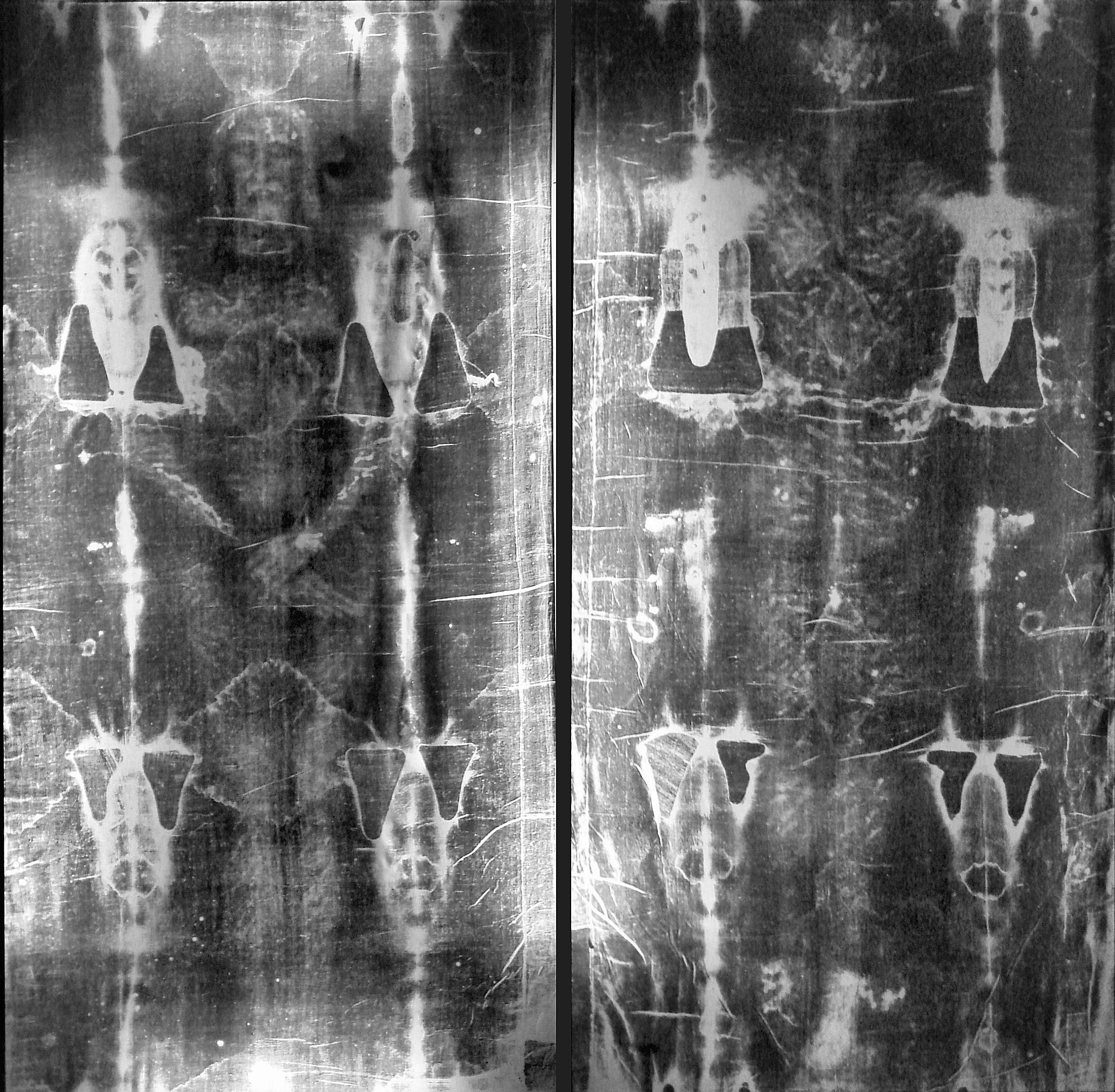
- The cloth bears faint front and dorsal images of a man and apparent blood-image areas, along with fire damage, water stains, and repair history.
- The textile is woven in a 3/1 herringbone twill.
- The object is securely documented in Europe from the mid-fourteenth century onward.
- It passed to the House of Savoy in 1453 and was moved to Turin in 1578.
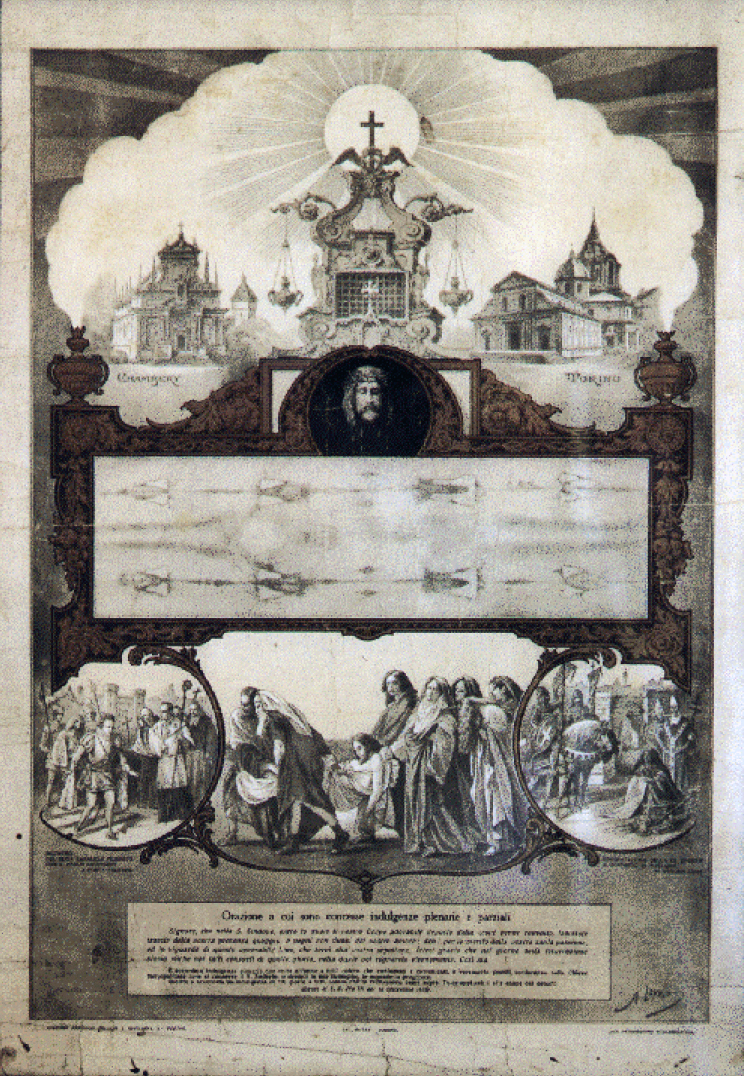
- It was damaged in the 1532 Chambery fire and repaired afterward.
- In 1988, three AMS laboratories dated Shroud samples from one area of the cloth.
- The 1989 Nature paper reported a calibrated radiocarbon range of AD 1260-1390 at 95% confidence.
- STURP-associated researchers and Walter McCrone disagreed over whether the image and red stains are best explained by cellulose discoloration/blood chemistry or pigment/tempera.
- No universally accepted image-formation mechanism currently reproduces all reported Shroud image characteristics.
Still open
What remains disputed or unresolved
- Whether any pre-fourteenth-century source can be securely tied to the same cloth now in Turin.
- Whether the 1988 radiocarbon sample was fully representative of the whole cloth.
- How much weight statistical heterogeneity in the 1988 radiocarbon measurements should carry.
- Whether Rogers's 2005 chemistry claims establish a repaired or chemically distinct sample area.
- Whether the 2010 and 2026 Arizona fragment analyses sufficiently answer sample-representativeness critiques.
- Whether the body image is pigment-mediated, chemically formed, thermally formed, contact-transferred, photographically produced, or created by another process.
- Whether pollen, DNA, and blood-related claims preserve historical signal or mainly reflect contamination and handling.
Evidence snapshot
Where the major categories currently point.
Current direction and evidence impact are separate. Open any review for the complete observations, interpretations, source quality, and unresolved questions.
How to read this
Current direction says what the evidence presently supports, challenges, or leaves unresolved. Evidence impact says how important that category is to understanding the case. Impact does not mean support for either side.
Evidence categoryCurrent directionEvidence impactKey limitation / note
Evidence categoryDocumented provenance after 1350
Read review5 linked sources
Current directionSupports medieval provenance
Evidence impactHigh impactCentral to the case or capable of materially changing the assessment.
Key limitation / note
The post-medieval chain through Lirey, Savoy, Chambery, and Turin is secure.
Evidence categoryPre-1350 provenance
Read review2 linked sources
Current directionLimits the ancient-provenance case
Evidence impactHigh impactCentral to the case or capable of materially changing the assessment.
Key limitation / note
Edessa, Mandylion, and Constantinople theories remain identity-gap arguments.
Evidence category1988 radiocarbon dating
Read review2 linked sources
Current directionStrongly favors medieval origin
Evidence impactHigh impactCentral to the case or capable of materially changing the assessment.
Key limitation / note
Direct reported AD 1260-1390 for the sampled linen.
Evidence categorySample representativeness
Read review6 linked sources
Current directionDisputed; leans medieval
Evidence impactHigh impactCentral to the case or capable of materially changing the assessment.
Key limitation / note
Rogers and statistical critiques matter, but 2010 and 2026 fragment work did not confirm repair or major .
Evidence categoryTextile structure
Read review5 linked sources
Current directionMildly favors medieval / not decisive
Evidence impactMedium impactMeaningfully informs the case but is not decisive alone.
Key limitation / note
The textile is atypical; recent fragment work supports consistency with the main cloth.
Evidence categoryImage formation
Read review6 linked sources
Current directionUnresolved
Evidence impactMedium impactMeaningfully informs the case but is not decisive alone.
Key limitation / note
No accepted mechanism reproduces all reported features, but this does not date the cloth.
Evidence categoryPigment and chemistry
Read review5 linked sources
Current directionMixed
Evidence impactMedium impactMeaningfully informs the case but is not decisive alone.
Key limitation / note
McCrone and -associated researchers reached conflicting technical interpretations.
Evidence categoryPollen, DNA, and blood claims
Read review7 linked sources
Current directionAmbiguous
Evidence impactLimited impactRelevant, but too indirect or constrained to carry much of the case.
Key limitation / note
Biological traces show complexity and more clearly than origin.
Current read
Where the record points after review.
PARALLAX does not require the reader to adopt a conclusion.
Based on the material reviewed so far, the available evidence more strongly supports the Shroud of Turin being a medieval artifact than an authenticated ancient burial cloth.
The strongest reasons are the 1988 radiocarbon dating, the secure medieval documentary starting point, and the lack of currently decisive evidence that the dated sample was non-representative.
However, image formation remains unresolved, radiocarbon sample questions deserve careful technical scrutiny, and future representative testing could materially change the assessment.
The expanded source audit did not add weaker popular advocacy material because the strongest serious unconventional and skeptical technical sources were already represented in the case record.
The case remains open without turning uncertainty into proof for either side.
What would change it
The assessment remains revisable.
- Transparent multi-site radiocarbon dating of representative areas would be the most important evidence either way.
- Direct proof that the 1988 dated subsamples were repaired or foreign material would materially weaken the medieval assessment.
- Authenticated pre-1350 documents tying the same physical cloth to an earlier location would strengthen ancient-origin claims.
- A replicated image-formation mechanism matching both macro and micro characteristics would clarify whether image mystery is actually discriminatory.
- Modern forensic testing of tightly controlled samples could narrow claims about blood, pollen, DNA, and contamination.
01Visual source
Enter the conflict
What story were we given, and why is it questioned?
Begin with the account most people receive, then inspect why it remains contested before testing every serious possibility.The story we were given
The accepted account, stated without caricature.
The standard historical and scientific account treats the Shroud as a medieval artifact: its first secure documentation appears in fourteenth-century France, and the 1988 radiocarbon tests dated the sampled linen to AD 1260-1390. The image may be unusual without being ancient or miraculous.
Why people question it
The pressure points that keep this case open.
A contradiction is not proof of a preferred theory. It is a reason to keep asking better questions.
- 01
The radiocarbon program sampled one corner area rather than multiple representative locations.
- 02
Chemical and statistical critiques argue that the dated material may be heterogeneous, repaired, or otherwise unrepresentative.
- 03
No accepted medieval production method reproduces every reported image characteristic, and proposed earlier links remain contested rather than conclusively eliminated.
At a glance
What is firmly established
- The Shroud of Turin is a linen cloth preserved in Turin and normally kept in a controlled conservation case.
- The cloth bears faint front and dorsal images of a man and apparent blood-image areas, along with fire damage, water stains, and repair history.
- The textile is woven in a 3/1 herringbone twill.
- The object is securely documented in Europe from the mid-fourteenth century onward.
- It passed to the House of Savoy in 1453 and was moved to Turin in 1578.
- It was damaged in the 1532 Chambery fire and repaired afterward.
- In 1988, three AMS laboratories dated Shroud samples from one area of the cloth.
- The 1989 Nature paper reported a calibrated radiocarbon range of AD 1260-1390 at 95% confidence.
- STURP-associated researchers and Walter McCrone disagreed over whether the image and red stains are best explained by cellulose discoloration/blood chemistry or pigment/tempera.
- No universally accepted image-formation mechanism currently reproduces all reported Shroud image characteristics.
Still open
What remains disputed or unresolved
- Whether any pre-fourteenth-century source can be securely tied to the same cloth now in Turin.
- Whether the 1988 radiocarbon sample was fully representative of the whole cloth.
- How much weight statistical heterogeneity in the 1988 radiocarbon measurements should carry.
- Whether Rogers's 2005 chemistry claims establish a repaired or chemically distinct sample area.
- Whether the 2010 and 2026 Arizona fragment analyses sufficiently answer sample-representativeness critiques.
- Whether the body image is pigment-mediated, chemically formed, thermally formed, contact-transferred, photographically produced, or created by another process.
- Whether pollen, DNA, and blood-related claims preserve historical signal or mainly reflect contamination and handling.
Scope
What this investigation is, and is not, asking.
This investigation asks whether historical and scientific evidence better supports medieval origin or authentic ancient burial-cloth origin.
It reviews provenance, textile evidence, radiocarbon dating, sample critiques, image formation, chemistry, pigment and scorch hypotheses, biological traces, and conservation history.
It does not attempt to adjudicate theological claims, devotional meaning, miraculous causation, or the identity of the image subject beyond what material evidence can support.
Timeline
Case chronology.
A compact record of the events, tests, publications, and review moments that define the current investigation.
Secure European documentation begins
The Shroud is securely documented in medieval France from the Lirey period onward; earlier identifications remain disputed.
Chambery fire and later repairs
A fire damages the cloth, adding conservation history that future testing must account for.
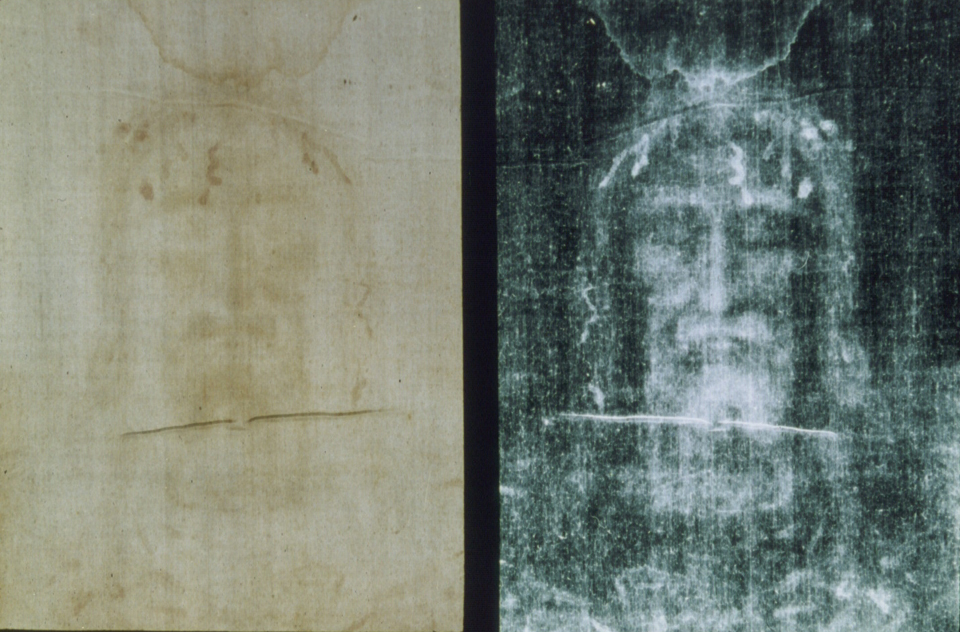
Secondo Pia photographs the cloth
Pia's photographic negative intensifies modern public and technical interest in the image characteristics.
STURP direct examination
STURP-associated researchers conduct major photographic, chemical, microscopy, and spectroscopy work that still shapes image-formation debate.
Radiocarbon dating published
Arizona, Oxford, and Zurich AMS measurements are published with a calibrated medieval range of AD 1260-1390 for the sampled material.
Sample-representativeness debate continues
Rogers and later statistical critiques challenge the sample; Arizona-fragment analyses argue against major repair or contamination in studied material.
PARALLAX state-of-evidence review
PARALLAX opens INV-002 with medieval origin currently stronger, while image formation and representative retesting remain open questions.
Gallery
Visual context for the evidence.
These images are included as source-linked context, not as proof by themselves. Captions describe what the image can help inspect.
This image provides visual context. It does not establish cause, identity, date, or interpretation by itself.
Wikimedia Commons public-domain reproduction. Public domain mark.Wikimedia Commons file pageThis image provides visual context. It does not establish cause, identity, date, or interpretation by itself.
Wikimedia Commons public-domain reproduction. Public domain mark.Wikimedia Commons file pageThis image provides visual context. It does not establish cause, identity, date, or interpretation by itself.
Secondo Pia. Public domain, out-of-copyright photograph.Wikimedia Commons file pageThis image provides visual context. It does not establish cause, identity, date, or interpretation by itself.
Catholic Church / historical poster reproduction. Public domain mark.Wikimedia Commons file page
02Visual source
Map the possibilities
Which possibilities survive the pressure?
Give the accepted explanation and its strongest challengers the same hard questions: what fits, what fails, and what is still missing?Competing possibilities
The accepted account and its strongest alternatives.
Inclusion means a possibility is worth testing. It does not mean every possibility currently carries equal evidentiary weight.
Interpretation A - Medieval artifact
The cloth originated in the medieval period, probably in or before the mid-fourteenth century, and its image was produced by a human or material process that remains incompletely reconstructed.
Current treatment
Leading explanation. Direct dating and secure provenance favor medieval origin, while the single sampling area and unresolved image formation prevent clean closure.
Interpretation B - Authentic ancient burial cloth / unexplained image
The cloth is an ancient burial linen, plausibly from a first-century context, and the body image formed through an unusual or still-unexplained physical or chemical process.
Current treatment
Open but secondary. The image problem and sample debate are real; an ancient burial-cloth origin is not established against the current dating and provenance record.
Possibility map
Stress-test every serious explanation.
Select a possibility to see what would need to be true, what supports it, what weakens it, what is missing, and how seriously the current record allows PARALLAX to treat it.
Primary questionDoes the available historical and scientific evidence better support the Shroud of Turin being a medieval artifact, or an authentic ancient burial cloth whose image formation remains unexplained?
Interpretation A - Medieval artifact
What would need to be true
The cloth originated in the medieval period, probably in or before the mid-fourteenth century, and its image was produced by a human or material process that remains incompletely reconstructed.
What supports it
- The 1988 AMS radiocarbon tests dated the sampled linen to AD 1260-1390 at 95% confidence.
- The date range aligns with the first secure documentary appearance of the Shroud in medieval France.
- No continuous pre-fourteenth-century provenance securely identifies the Turin cloth.
- Recent Arizona radiocarbon-fragment analyses reported no repair, dye, coating, or significant contamination in studied fragments.
- Biological and pollen evidence is contamination-prone and does not independently date the cloth.
What weakens it
- No medieval maker, workshop, or complete production method has been established.
- The 1988 test sampled one edge/corner area rather than multiple representative areas.
- Image formation remains unresolved, and simple painting explanations are technically disputed.
What evidence is missing
- Representative multi-site dating from securely documented areas of the cloth.
- A reproducible medieval image-production process matching the reported macro- and micro-characteristics.
How PARALLAX treats it now
Leading explanation. Direct dating and secure provenance favor medieval origin, while the single sampling area and unresolved image formation prevent clean closure.
Discriminating evidenceOpen the categories that can move the assessment
These links lead to the underlying evidence reviews. Direction is kept separate from importance and is never converted into a score.
High impactDocumented provenance after 1350
Supports medieval provenance
Open evidence matrixHigh impactPre-1350 provenance
Limits the ancient-provenance case
Open evidence matrixHigh impact1988 radiocarbon dating
Strongly favors medieval origin
Open evidence matrixHigh impactSample representativeness
Disputed; leans medieval
Open evidence matrixMedium impactTextile structure
Mildly favors medieval / not decisive
Open evidence matrixMedium impactImage formation
Unresolved
Open evidence matrixThis map does not award points for novelty or authority. Compare serious possibilities, inspect what each one explains, and follow the evidence categories back to their detailed reviews.
Evidence matrix
Current direction by category.
Current direction shows what a category supports, challenges, or leaves unresolved. Evidence impact shows how important that category is to understanding the case, without turning uncertainty into a fake score.
How to read this
Current direction says what the evidence presently supports, challenges, or leaves unresolved. Evidence impact says how important that category is to understanding the case. Impact does not mean support for either side.
Evidence categoryCurrent directionEvidence impactKey limitation / note
Evidence categoryDocumented provenance after 1350
Read review5 linked sources
Current directionSupports medieval provenance
Evidence impactHigh impactCentral to the case or capable of materially changing the assessment.
Key limitation / note
The post-medieval chain through Lirey, Savoy, Chambery, and Turin is secure.
Evidence categoryPre-1350 provenance
Read review2 linked sources
Current directionLimits the ancient-provenance case
Evidence impactHigh impactCentral to the case or capable of materially changing the assessment.
Key limitation / note
Edessa, Mandylion, and Constantinople theories remain identity-gap arguments.
Evidence category1988 radiocarbon dating
Read review2 linked sources
Current directionStrongly favors medieval origin
Evidence impactHigh impactCentral to the case or capable of materially changing the assessment.
Key limitation / note
Direct reported AD 1260-1390 for the sampled linen.
Evidence categorySample representativeness
Read review6 linked sources
Current directionDisputed; leans medieval
Evidence impactHigh impactCentral to the case or capable of materially changing the assessment.
Key limitation / note
Rogers and statistical critiques matter, but 2010 and 2026 fragment work did not confirm repair or major .
Evidence categoryTextile structure
Read review5 linked sources
Current directionMildly favors medieval / not decisive
Evidence impactMedium impactMeaningfully informs the case but is not decisive alone.
Key limitation / note
The textile is atypical; recent fragment work supports consistency with the main cloth.
Evidence categoryImage formation
Read review6 linked sources
Current directionUnresolved
Evidence impactMedium impactMeaningfully informs the case but is not decisive alone.
Key limitation / note
No accepted mechanism reproduces all reported features, but this does not date the cloth.
Evidence categoryPigment and chemistry
Read review5 linked sources
Current directionMixed
Evidence impactMedium impactMeaningfully informs the case but is not decisive alone.
Key limitation / note
McCrone and -associated researchers reached conflicting technical interpretations.
Evidence categoryPollen, DNA, and blood claims
Read review7 linked sources
Current directionAmbiguous
Evidence impactLimited impactRelevant, but too indirect or constrained to carry much of the case.
Key limitation / note
Biological traces show complexity and more clearly than origin.
Evidence reviews
The repeatable review structure for future cases.
Each category separates the core question, established observations, source quality, competing interpretations, assessment, unresolved issues, and sources.
002-A
Historical Provenance
Current directionFavors medieval origin
Question tested
Can the cloth now in Turin be securely traced before its medieval appearance in France?
Current read
The Shroud is historically secure from the mid-fourteenth century onward; proposed pre-medieval identifications remain possible but not securely tied to the same physical cloth.
Established Observations
- FACTThe object is firmly documented in Europe from the mid-fourteenth century onward.
- FACTThe cloth passed to the House of Savoy in 1453 and was moved to Turin in 1578.
- FACTThe Shroud was damaged in the 1532 Chambery fire and repaired afterward.
- DISPUTEDPre-1350 links to Edessa, Constantinople, the Mandylion, or other burial-cloth traditions are argued but not securely established as the same cloth.
Evidence Quality
High for post-1350 ; mixed for pre-1350 identity claims because references to cloths, icons, or relics do not by themselves identify the Turin object.
Accepted / Conventional Reading
- The first secure appearance of the Turin Shroud belongs to the medieval period.
- Medieval relic culture and early ecclesiastical dispute provide a plausible context for its exhibition.
- A late documentary starting point matches the 1988 radiocarbon date range.
Challenge / Alternative Reading
- An ancient cloth could have moved through poorly documented or disrupted contexts.
- References to Edessa, Constantinople, or burial cloths may preserve fragments of a lost chain of custody.
- Absence of continuous documentation is not proof that the cloth did not exist earlier.
PARALLAX Current Read
Historical provenance currently favors medieval origin, or at least supports only a secure medieval starting point for the Turin object.
002-B
Textile Evidence
Current directionMildly favors medieval origin; not decisive
Question tested
Does the weave, thread structure, and textile quality distinguish medieval from ancient origin?
Current read
The textile is unusual and high quality, but unusual does not equal ancient. Recent fragment work supports consistency between radiocarbon fragments and the known Shroud textile.
Established Observations
- FACTThe Shroud is a linen textile woven in a 3/1 herringbone twill.
- FACTThe 2026 analysis found radiocarbon fragments A1A and A1B consistent with published descriptions of the main Shroud textile.
- FACTThe 2026 analysis reported no signs of repair and no significant contamination in the examined fragments.
- DISPUTEDThe rarity of the weave and z-twist yarns has been used both to question first-century placement and to argue that surviving comparanda are incomplete.
Evidence Quality
High for direct fragment observations; limited by small sample size and sparse comparable ancient linen twill controls.
Accepted / Conventional Reading
- Atypical textile features are compatible with a high-quality medieval object.
- The 2026 Arizona fragment analysis weakens claims that the studied radiocarbon fragments were obvious repair material.
- Textile structure does not independently establish first-century origin.
Challenge / Alternative Reading
- Rare textile structures can be underrepresented in surviving archaeological samples.
- An unusual textile could be older than currently documented if comparanda are sparse.
- Textile evidence should not be collapsed into radiocarbon evidence without broader sampling.
PARALLAX Current Read
Textile evidence is important but currently not decisive. It mildly favors the medieval case by supporting sample consistency, while preserving questions about rarity and comparanda.
002-C
1988 Radiocarbon Dating
Current directionStrongly favors medieval origin of sampled material
Question tested
Does the 1988 AMS establish a medieval date for the sampled linen?
Current read
Three AMS laboratories dated Shroud material to AD 1260-1390 at 95% confidence. This is the strongest single piece of evidence in the case.
Established Observations
- FACTArizona, Oxford, and Zurich dated Shroud samples by accelerator mass spectrometry.
- FACTThe published result reported a calibrated range of AD 1260-1390 at 95% confidence.
- FACTAll Shroud subsamples came from one sampling area rather than multiple representative areas of the cloth.
- SUPPORTED INFERENCEThe radiocarbon range aligns closely with the object's first secure medieval documentary appearance.
Evidence Quality
High, because it is direct physical dating by multiple laboratories with controls; limited by using one sampling region from an edge/corner area.
Accepted / Conventional Reading
- The tested linen is medieval and probably dates the object itself.
- The match between radiocarbon dating and medieval provenance is mutually reinforcing.
- Unresolved image formation does not invalidate direct dating.
Challenge / Alternative Reading
- The test dates only the sampled material, not necessarily the whole cloth.
- If the sample was repaired, chemically altered, or otherwise non-representative, the result could be misleading.
- The single-site sampling design leaves a legitimate path for further testing.
PARALLAX Current Read
The 1988 radiocarbon result strongly favors a medieval date for the sampled linen. Treating it as overturned is not currently justified.
002-D
Radiocarbon Critiques and Defenses
Current directionDisputed; currently leans medieval
Question tested
Do later sample, , repair, and statistical critiques materially weaken the medieval assessment?
Current read
Rogers and later statistical critiques raise legitimate questions, but 2010 and 2026 Arizona fragment analyses report no repair, coating, dye, or significant in studied material.
Established Observations
- DISPUTEDRogers reported cotton fibers, gum/dye/mordant coating, and vanillin differences in threads associated with the radiocarbon area.
- FACTFreer-Waters and Jull reported no evidence for coatings or dyes and only minor contaminants in the Arizona fragment they studied.
- DISPUTEDSeveral statistical reanalyses argue that the 1988 Shroud measurements show heterogeneity.
- FACTThe 2026 fragment analysis found no significant contamination or repair signs in the examined 1988 sample fragments while acknowledging small-sample limits.
Evidence Quality
Mixed but serious. The critiques are technical and relevant; the defense is strengthened by direct study of retained Arizona radiocarbon fragments.
Accepted / Conventional Reading
- Later direct fragment studies weaken the claim that the dated material was obviously repaired or chemically foreign.
- Statistical heterogeneity may reflect minor offsets, lab pretreatment differences, or small sample variation without moving the result by centuries enough to support first-century origin.
- Ordinary contamination has not been shown sufficient to dominate the measured carbon after pretreatment.
Challenge / Alternative Reading
- The 1988 date relies on a single sampling area, so non-representativeness remains the key vulnerability.
- Rogers's chemistry claims, if confirmed on unquestioned material, would materially affect confidence.
- Statistical heterogeneity weakens the strongest "conclusive for the whole cloth" wording.
PARALLAX Current Read
The critiques are legitimate and weaken overconfident language, but the current record still leans toward the 1988 sample being meaningful medieval evidence.
002-E
Image Characteristics and Formation
Current directionUnresolved / weakly discriminatory
Question tested
Do the image characteristics establish medieval manufacture, ancient burial use, or an unresolved formation mechanism?
Current read
The Shroud image remains technically unresolved, but unresolved image formation does not by itself establish ancient origin.
Established Observations
- FACTThe Shroud bears faint front and dorsal body images that become visually clearer in photographic negative.
- DISPUTEDSTURP-associated researchers argued that the image is not explained by conventional painting.
- DISPUTEDImage intensity has been argued to correlate with body-cloth distance, but the significance of this 3D behavior remains debated.
- UNKNOWNNo single image-formation hypothesis has achieved broad consensus as reproducing all reported macro- and micro-characteristics.
Evidence Quality
Moderate to high for direct -era observations; more limited for mechanism proposals because many reproduce only selected features.
Accepted / Conventional Reading
- The image may be the product of a medieval technique not yet fully reconstructed, a contact-transfer process, low relief, chemical aging, pigment enhancement, or mixed mechanism.
- A hard-to-reproduce image is not automatically an ancient image.
- The age question should remain separate from the mechanism question.
Challenge / Alternative Reading
- The body image has unusual features that simple painting, ordinary scorch, and direct contact do not fully explain.
- STURP conclusions keep the image-formation question genuinely open.
- The lack of a known mechanism is one of the strongest reasons the case remains disputed.
PARALLAX Current Read
The image remains unresolved and weakens simplistic painting claims, but it does not currently overcome the radiocarbon and historical evidence for medieval origin.
002-F
Chemistry, Pigment, Scorch, and Photography
Current directionMixed / unresolved
Question tested
Do material studies identify a medieval mechanism or exclude one?
Current read
McCrone argued for and tempera; -associated researchers disputed that and emphasized cellulose discoloration. Scorch, contact, photography, and radiation models remain partial.
Established Observations
- DISPUTEDMcCrone identified red ocher, vermilion, and collagen tempera as image and blood-image materials.
- DISPUTEDSTURP-associated researchers argued that pigments do not account for the body image.
- SUPPORTED INFERENCEScorch, bas-relief, rubbing, contact-transfer, photographic, Maillard, and radiation hypotheses each reproduce some features but have not achieved consensus as complete explanations.
- UNKNOWNThe exact image-forming process remains unresolved in the reviewed literature.
Evidence Quality
High for the existence of competing technical analyses; unresolved for final mechanism because sampling access, methods, and interpretations conflict.
Accepted / Conventional Reading
- A medieval image could have been produced by a technique or combination of techniques not yet fully replicated.
- McCrone's pigment findings, if correct, provide a direct medieval-artifact mechanism.
- Partial mechanism gaps are not enough to reject a medieval date.
Challenge / Alternative Reading
- STURP findings challenge the claim that the body image is simply paint on linen.
- No proposed medieval method has become the accepted full explanation.
- Image chemistry remains one of the strongest unresolved features of the Shroud.
PARALLAX Current Read
Chemistry and mechanism evidence remains mixed. It supports caution about simple painting claims but does not establish ancient authenticity.
002-G
Biological Material
Current directionAmbiguous / weakly discriminatory
Question tested
Do , DNA, or blood-related claims establish ancient origin or burial use?
Current read
Biological traces show complexity and possible historical signal, but they are highly vulnerable to handling, conservation, and environmental .
Established Observations
- DISPUTEDPollen claims have been used to argue for a Near Eastern itinerary, but identification and sample-chain limitations reduce their weight.
- FACTDNA studies report plant, animal, microbial, fungal, and human traces from Shroud-related samples.
- FACTThe 2026 metagenomic study states that metagenomics cannot determine whether the Shroud is medieval or two thousand years old.
- DISPUTEDClaims that the Shroud blood is scientifically demonstrated as human, primate, male, or AB are not securely established according to recent forensic review.
Evidence Quality
Moderate. Some recent work is peer-reviewed and technical, but interpretation is limited by , sample history, and chain-of-custody questions.
Accepted / Conventional Reading
- Biological diversity is expected on a centuries-handled textile.
- Mixed DNA and pollen traces are more consistent with accumulated contamination than a clean ancient provenance signal.
- Blood-type and sex claims have often been publicly overstated.
Challenge / Alternative Reading
- Some botanical and biological findings may preserve traces of non-European history or burial-related substances.
- Blood-related chemistry reported by STURP-associated researchers remains relevant to whether the cloth contacted a wounded body.
- Biological evidence should be retested with modern chain-of-custody controls.
PARALLAX Current Read
Biological evidence is interesting but currently weakly discriminatory. It does not overturn the stronger dating and provenance evidence.
002-H
Conservation and Contamination
Current directionDisputed; currently leans medieval
Question tested
Could repair, fire damage, handling, or explain the conflict between dating and authenticity arguments?
Current read
The Shroud has a complex conservation history, but ordinary has not been shown sufficient to shift a first-century cloth into the medieval radiocarbon range.
Established Observations
- FACTThe Shroud was damaged by fire in Chambery in 1532 and repaired afterward.
- FACTThe cloth has been exposed to centuries of handling, exhibition, storage, and conservation interventions.
- SUPPORTED INFERENCESurface contamination is expected, but the relevant question is whether it could dominate the measured carbon after pretreatment.
- DISPUTEDRepair/reweaving claims matter more than light contamination, but direct Arizona fragment studies have not confirmed repair in the studied pieces.
Evidence Quality
High for the existence of fire, repair, and handling history; mixed for proposed mechanisms that would materially alter the 1988 radiocarbon result.
Accepted / Conventional Reading
- Fire, handling, and biological contamination are real but insufficiently demonstrated as explanations for a thirteen-century dating shift.
- Repair claims remain possible in principle, but direct study of retained fragments has not confirmed them.
- Conservation history justifies caution, not rejection of radiocarbon dating.
Challenge / Alternative Reading
- The sample area could have been more handled, repaired, or contaminated than the rest of the cloth.
- The Shroud's complex history makes sample representativeness the critical issue.
- Future testing should explicitly address repairs, edge effects, and contamination gradients.
PARALLAX Current Read
Conservation history keeps the case open to better testing, but current evidence still leans toward the radiocarbon date being materially meaningful.
03Visual source
Name what remains
What still does not sit right?
Keep the stubborn gaps visible. Then state what the record can presently carry without pretending suspicion is proof or authority is closure.Open questions / What still does not sit right
The unanswered questions that matter.
- Can a modern multi-site radiocarbon protocol test representative Shroud areas with transparent chain of custody?
- Would representative testing reproduce the medieval date outside the 1988 corner?
- Can retained radiocarbon fragments be publicly mapped, imaged, and chemically characterized?
- Can Rogers's chemical findings be replicated on unquestionably provenanced radiocarbon material?
- What explains statistical heterogeneity in the 1988 radiocarbon measurements?
- Can any pre-1350 document be securely linked to the same physical cloth now in Turin?
- Can any proposed image-formation mechanism reproduce the image at macro and micro scales without special pleading?
- Are pigment particles image-forming material, later contamination, retouching, or textile impurities?
- What is the strongest defensible claim about the red-image areas: blood, blood-related material, pigment, mixture, or unresolved?
- Can pollen and DNA evidence distinguish historical signal from handling and environmental contamination?
What would change the picture
Evidence must be allowed to move the assessment.
- Transparent multi-site radiocarbon dating of representative areas would be the most important evidence either way.
- Direct proof that the 1988 dated subsamples were repaired or foreign material would materially weaken the medieval assessment.
- Authenticated pre-1350 documents tying the same physical cloth to an earlier location would strengthen ancient-origin claims.
- A replicated image-formation mechanism matching both macro and micro characteristics would clarify whether image mystery is actually discriminatory.
- Modern forensic testing of tightly controlled samples could narrow claims about blood, pollen, DNA, and contamination.
Why this case matters
Why this conflict deserves scrutiny.
Evidence before identity
The Shroud is culturally and historically important, but the investigation does not require a theological conclusion.
PARALLAX treats the cloth as a physical and historical object whose claims can be separated into dating, provenance, image formation, chemistry, and biology.
A useful test of uncertainty
This case shows why unexplained does not automatically mean authentic, and medieval does not automatically mean every technical question is solved.
It is a high-value example of why source quality, sample provenance, and careful wording matter.
Why it matters to PARALLAX
Public discussion of the Shroud often jumps from one evidence category to a total conclusion. PARALLAX instead shows which evidence actually discriminates between interpretations.
The reader should be able to see why the medieval assessment is currently stronger while also seeing why image formation and sample questions remain legitimate areas for review.
What the evidence currently suggests
Where the record points - v0.1.5
PARALLAX does not require the reader to adopt a conclusion.
Based on the material reviewed so far, the available evidence more strongly supports the Shroud of Turin being a medieval artifact than an authenticated ancient burial cloth.
The strongest reasons are the 1988 radiocarbon dating, the secure medieval documentary starting point, and the lack of currently decisive evidence that the dated sample was non-representative.
However, image formation remains unresolved, radiocarbon sample questions deserve careful technical scrutiny, and future representative testing could materially change the assessment.
The expanded source audit did not add weaker popular advocacy material because the strongest serious unconventional and skeptical technical sources were already represented in the case record.
The case remains open without turning uncertainty into proof for either side.
04Visual source
Inspect the record
Follow the evidence back to its sources.
Trace the sources, shared foundations, definitions, corrections, and revision history behind the public assessment.Source record
Inspect the material.
- Technical / scientific analysisshroud-nature-1989
Radiocarbon dating of the Shroud of Turin
Technical sourceScientific, engineering, forensic, or specialist analysis; weight follows method and reproducibility.- Limit
- Technical publication does not remove limits in method, data access, replication, or later criticism.
The 1989 publication of the Arizona, Oxford, and Zurich AMS radiocarbon tests, reporting a calibrated medieval range of AD 1260-1390 at 95% confidence.
- Technical / scientific analysisshroud-rogers-2005
Studies on the radiocarbon sample from the Shroud of Turin
Technical sourceScientific, engineering, forensic, or specialist analysis; weight follows method and reproducibility.- Directness
- Technical analysis of thread material attributed to the radiocarbon sample area.
- Limit
- Thread provenance and vanillin-aging assumptions remain disputed; not a multi-site redating of the cloth.
- Verification
- Published technical critique; interpretation contested by later fragment studies.
A major critique arguing that radiocarbon-area threads were chemically different from main-body Shroud fibers and may not have been representative.
- Technical / scientific analysisshroud-jull-2010
Investigating a Dated Piece of the Shroud of Turin
Technical sourceScientific, engineering, forensic, or specialist analysis; weight follows method and reproducibility.- Limit
- Technical publication does not remove limits in method, data access, replication, or later criticism.
Microscopy of an Arizona radiocarbon fragment reporting no evidence of coatings, dyes, major contaminants, or contradiction that the sample came from the main Shroud textile.
- Technical / scientific analysisshroud-freer-jull-2026
Analysis of textile fragments from the 1988 radiocarbon samples of the Turin Shroud
Technical sourceScientific, engineering, forensic, or specialist analysis; weight follows method and reproducibility.- Directness
- Direct microscopy/textile analysis of retained Arizona radiocarbon fragments.
- Limit
- Small fragment sample; does not by itself test every part of the full cloth.
- Verification
- Published 2026 technical analysis; strongest current defense of sample representativeness in the source set.
Recent analysis of 1988 radiocarbon fragments reporting Shroud-consistent textile features and no significant contamination or repair signs in the studied fragments.
- Technical / scientific analysisshroud-casabianca-2019
Radiocarbon Dating of the Turin Shroud: New Evidence from Raw Data
Technical sourceScientific, engineering, forensic, or specialist analysis; weight follows method and reproducibility.- Method
- Statistical reassessment of released radiocarbon data and published measurements.
- Limit
- Data heterogeneity weakens overconfident whole-cloth claims, but does not by itself establish an ancient date.
Statistical critique using British Museum material released in 2017, arguing that homogeneity is lacking and that the 1988 procedure should be reconsidered.
- Technical / scientific analysisshroud-walsh-2020
An instructive inter-laboratory comparison: The 1988 radiocarbon dating of the Shroud of Turin
Technical sourceScientific, engineering, forensic, or specialist analysis; weight follows method and reproducibility.- Limit
- Technical publication does not remove limits in method, data access, replication, or later criticism.
Reanalysis concluding that the Shroud measurements show statistical heterogeneity while cautioning that the cause remains speculative.
- Technical / scientific analysisshroud-dilazzaro-2020
Statistical and Proactive Analysis of an Inter-Laboratory Comparison: The Radiocarbon Dating of the Shroud of Turin
Technical sourceScientific, engineering, forensic, or specialist analysis; weight follows method and reproducibility.- Limit
- Technical publication does not remove limits in method, data access, replication, or later criticism.
Review of sampling and radiocarbon results emphasizing inter-laboratory heterogeneity and possible monotone spatial variation.
- Secondary analysisshroud-sturp-bib
STURP's Published Papers
Context sourceUseful synthesis or historical framing; claims should be traced back when possible.- Limit
- Synthesis depends on source selection and should not replace inspection of the underlying record.
Bibliography and links for STURP-era papers, useful as a source trail to original image, chemistry, spectroscopy, and microscopy work.
- Technical / scientific analysisshroud-schwalbe-rogers-1982
Physics and chemistry of the Shroud of Turin: A summary of the 1978 investigation
Technical sourceScientific, engineering, forensic, or specialist analysis; weight follows method and reproducibility.- Limit
- Technical publication does not remove limits in method, data access, replication, or later criticism.
STURP-associated summary of the 1978 investigation and a central source for image chemistry claims.
- Technical / scientific analysisshroud-jackson-1984
Correlation of image intensity on the Turin Shroud with the 3-D structure of a human body shape
Technical sourceScientific, engineering, forensic, or specialist analysis; weight follows method and reproducibility.- Limit
- Technical publication does not remove limits in method, data access, replication, or later criticism.
Frequently cited image-analysis paper arguing that Shroud image intensity correlates with body-cloth distance information.
- Technical / scientific analysisshroud-heller-adler-1980
Blood on the Shroud of Turin
Technical sourceScientific, engineering, forensic, or specialist analysis; weight follows method and reproducibility.- Limit
- Technical publication does not remove limits in method, data access, replication, or later criticism.
STURP-associated blood-chemistry paper reporting blood-related spectroscopic and chemical test results in apparent blood areas.
- Technical / scientific analysisshroud-mccrone
Shroud of Turin Research at McCrone
Technical sourceScientific, engineering, forensic, or specialist analysis; weight follows method and reproducibility.- Limit
- Technical publication does not remove limits in method, data access, replication, or later criticism.
Summary of Walter McCrone and colleagues microscopy work arguing for red ocher, vermilion, and collagen tempera in image and blood-image areas.
- Technical / scientific analysisshroud-mccrone-1990
The Shroud of Turin: Blood or Artist's Pigment?
Technical sourceScientific, engineering, forensic, or specialist analysis; weight follows method and reproducibility.- Limit
- Technical publication does not remove limits in method, data access, replication, or later criticism.
Peer-reviewed statement of McCrone's pigment interpretation, important to the strongest medieval-artifact case.
- Technical / scientific analysisshroud-dilazzaro-2012
Superficial and Shroud-like coloration of linen by short laser pulses in the vacuum ultraviolet
Technical sourceScientific, engineering, forensic, or specialist analysis; weight follows method and reproducibility.- Limit
- Technical publication does not remove limits in method, data access, replication, or later criticism.
Laser/ultraviolet image-formation experiments producing superficial Shroud-like coloration under narrow irradiation parameters.
- Technical / scientific analysisshroud-de-caro-2022
X-ray Dating of a Turin Shroud's Linen Sample
Technical sourceScientific, engineering, forensic, or specialist analysis; weight follows method and reproducibility.- Limit
- Technical publication does not remove limits in method, data access, replication, or later criticism.
Wide-angle X-ray scattering dating claim finding compatibility with a much older linen age under specific conservation-condition assumptions.
- Technical / scientific analysisshroud-cnr-xray
X-ray dating
Technical sourceScientific, engineering, forensic, or specialist analysis; weight follows method and reproducibility.- Limit
- Technical publication does not remove limits in method, data access, replication, or later criticism.
Institutional overview of the WAXS Shroud sample work and its stated dependence on long-term temperature and humidity assumptions.
- Technical / scientific analysisshroud-fanti-malfi-2014
Multi-parametric micro-mechanical dating of single fibers coming from ancient flax textiles
Technical sourceScientific, engineering, forensic, or specialist analysis; weight follows method and reproducibility.- Limit
- Technical publication does not remove limits in method, data access, replication, or later criticism.
Alternative mechanical dating method for flax fibers; relevant but less established than radiocarbon dating and calibration-limited.
- Technical / scientific analysisshroud-boi-2017
Pollen on the Shroud of Turin: The Probable Trace Left by Anointing and Embalming
Technical sourceScientific, engineering, forensic, or specialist analysis; weight follows method and reproducibility.- Limit
- Technical publication does not remove limits in method, data access, replication, or later criticism.
Peer-reviewed botanical reinterpretation of Shroud pollen, relevant but limited by sample history and pollen-identification uncertainties.
- Technical / scientific analysisshroud-barcaccia-2015
Uncovering the sources of DNA found on the Turin Shroud
Technical sourceScientific, engineering, forensic, or specialist analysis; weight follows method and reproducibility.- Limit
- Technical publication does not remove limits in method, data access, replication, or later criticism.
DNA analysis of plant and human traces from Shroud-related samples, useful mainly for biological complexity and contamination context.
- Technical / scientific analysisshroud-barcaccia-2026
DNA signatures preserved in the official 1978 sample collection of the Shroud of Turin
Technical sourceScientific, engineering, forensic, or specialist analysis; weight follows method and reproducibility.- Limit
- Technical publication does not remove limits in method, data access, replication, or later criticism.
Recent metagenomic study finding diverse biological traces while explicitly stating that metagenomics cannot determine medieval versus ancient age.
- Technical / scientific analysisshroud-kearse-2025
The Aggrandizement of Scientific Data in the Media: The Shroud of Turin blood marks as a case example
Technical sourceScientific, engineering, forensic, or specialist analysis; weight follows method and reproducibility.- Limit
- Technical publication does not remove limits in method, data access, replication, or later criticism.
Forensic caution against overclaiming human, primate, male, or AB blood conclusions from Shroud blood-mark studies.
- Secondary analysisshroud-sarzeaud-2025
A New Document on the Appearance of the Shroud of Turin from Nicole Oresme
Context sourceUseful synthesis or historical framing; claims should be traced back when possible.- Limit
- Synthesis depends on source selection and should not replace inspection of the underlying record.
Recent medieval-history paper identifying an early hostile reference to the Shroud as clerical fraud in a 1355-1382 context.
- Official recordshroud-official-location
Where is the Shroud now
Official recordInstitutional record; weight depends on evidence, method, provenance, corroboration, and limits.- Directness
- Direct custodian-linked location and conservation-context source.
- Limit
- Useful for custody and storage status, not for dating or image-formation claims.
Custodian-linked public information about the Shroud being preserved in Turin Cathedral within a conservation case.
- Official recordshroud-official-fire
The Fire
Official recordInstitutional record; weight depends on evidence, method, provenance, corroboration, and limits.- Directness
- Custodian-linked historical/conservation overview.
- Limit
- Documents conservation context; does not determine whether contamination changed radiocarbon results.
Custodian-linked overview of the 1532 Chambery fire and its damage to the linen.
- Secondary analysisshroud-karapanagiotis-2025
The Shroud of Turin: An Overview of the Archaeological Scientific Studies
Context sourceUseful synthesis or historical framing; claims should be traced back when possible.- Limit
- Synthesis depends on source selection and should not replace inspection of the underlying record.
Recent review article useful for source mapping across dating, textile, pigment, blood, and image-formation literature.
Source relationships
Where the argument shares a foundation.
This view identifies records reused across observations, evidence reviews, or other PARALLAX investigations. It prevents citation volume from being mistaken for independent confirmation.
Repeated citation is not independent corroboration.
A record is counted once even when several sections rely on it. This audit shows the sources carrying more than one part of the public argument.
The Shroud of Turin: An Overview of the Archaeological Scientific Studies
Secondary analysis
- Review reuse
- 4 evidence reviews
- Observation reuse
- 8 established observations
- Cross-case reuse
- 0 other investigations
Analysis of textile fragments from the 1988 radiocarbon samples of the Turin Shroud
Technical / scientific analysis
- Review reuse
- 3 evidence reviews
- Observation reuse
- 6 established observations
- Cross-case reuse
- 0 other investigations
DNA signatures preserved in the official 1978 sample collection of the Shroud of Turin
Technical / scientific analysis
- Review reuse
- 3 evidence reviews
- Observation reuse
- 6 established observations
- Cross-case reuse
- 0 other investigations
Radiocarbon dating of the Shroud of Turin
Technical / scientific analysis
- Review reuse
- 2 evidence reviews
- Observation reuse
- 5 established observations
- Cross-case reuse
- 0 other investigations
Investigating a Dated Piece of the Shroud of Turin
Technical / scientific analysis
- Review reuse
- 3 evidence reviews
- Observation reuse
- 3 established observations
- Cross-case reuse
- 0 other investigations
STURP's Published Papers
Secondary analysis
- Review reuse
- 2 evidence reviews
- Observation reuse
- 3 established observations
- Cross-case reuse
- 0 other investigations
Studies on the radiocarbon sample from the Shroud of Turin
Technical / scientific analysis
- Review reuse
- 2 evidence reviews
- Observation reuse
- 2 established observations
- Cross-case reuse
- 0 other investigations
Radiocarbon Dating of the Turin Shroud: New Evidence from Raw Data
Technical / scientific analysis
- Review reuse
- 2 evidence reviews
- Observation reuse
- 2 established observations
- Cross-case reuse
- 0 other investigations
Physics and chemistry of the Shroud of Turin: A summary of the 1978 investigation
Technical / scientific analysis
- Review reuse
- 2 evidence reviews
- Observation reuse
- 2 established observations
- Cross-case reuse
- 0 other investigations
Shroud of Turin Research at McCrone
Technical / scientific analysis
- Review reuse
- 2 evidence reviews
- Observation reuse
- 2 established observations
- Cross-case reuse
- 0 other investigations
Superficial and Shroud-like coloration of linen by short laser pulses in the vacuum ultraviolet
Technical / scientific analysis
- Review reuse
- 2 evidence reviews
- Observation reuse
- 2 established observations
- Cross-case reuse
- 0 other investigations
A New Document on the Appearance of the Shroud of Turin from Nicole Oresme
Secondary analysis
- Review reuse
- 2 evidence reviews
- Observation reuse
- 2 established observations
- Cross-case reuse
- 0 other investigations
Glossary
Plain-English terms for this case.
Definitions focus on words that materially affect how the evidence is understood.
AMS datingaccelerator mass spectrometry
Accelerator mass spectrometry dating, a radiocarbon method that measures carbon isotopes in very small samples.
The 1988 Shroud test used AMS at Arizona, Oxford, and Zurich.
Cellulose
The main structural material in plant fibers such as linen flax.
Many image-chemistry debates focus on whether the Shroud image is discoloration of cellulose fibers or added pigment.
Contamination
Material added after an object was made, such as smoke, oils, microbes, dust, handling residue, or repair material.
Contamination matters, but ordinary surface contamination has not been shown sufficient to erase the medieval radiocarbon result.
Herringbone twill3/1 herringbone twill, textile weave
A textile weave that creates a repeated V-shaped or chevron pattern.
The Shroud has a 3/1 herringbone twill, a technically important but not decisive textile feature.
Related evidence
Metagenomics
The study of mixed genetic material recovered from many organisms in a sample.
Shroud metagenomic studies show biological complexity and contamination history, but they do not determine whether the cloth is medieval or ancient.
Related evidence
Microscopy
Examination of material under magnification to inspect fibers, particles, coatings, or surface changes.
Microscopy is central to disputes over pigment, repair, fiber chemistry, and sample representativeness.
Mordant
A substance used to help dye or coloring material bind to fibers.
Rogers argued that radiocarbon-area threads contained gum/dye/mordant material, a claim disputed by later fragment studies.
Related evidence
Pigment
A colored material used to create paint, stain, or visible coloration.
McCrone argued that pigment explained image and blood areas; STURP-associated researchers disputed that interpretation.
Related evidence
Pollen analysispollen
The identification and interpretation of pollen grains found on or near an object.
Pollen may preserve travel or handling clues, but chain-of-custody and contamination problems limit its dating value.
Related evidence
Provenance
The documented ownership, custody, or location history of an object.
The Shroud is securely documented from the medieval period onward; earlier identity continuity remains disputed.
Related evidence
Radiocarbon datingcarbon dating, C14 dating
A method that estimates the age of once-living material by measuring remaining carbon-14.
This is the strongest direct dating evidence in the Shroud case, but its force depends on sample representativeness.
Sample representativeness
Whether the tested sample accurately reflects the larger object or population it is being used to judge.
This is the strongest technical challenge to treating the 1988 radiocarbon result as a whole-cloth date.
Spectroscopy
A family of methods that study how material absorbs, emits, or reflects light or other radiation to infer composition.
Spectroscopy appears in the image, chemistry, and alternative dating debates.
Statistical heterogeneity
Variation in measurements that is larger or more patterned than expected under a simple uniform-sample model.
Later analyses argue the 1988 radiocarbon data show heterogeneity, weakening overconfident whole-cloth claims without proving ancient origin.
Related evidence
STURPShroud of Turin Research Project
The Shroud of Turin Research Project, the team that directly examined the cloth in 1978.
STURP work still shapes image-formation, chemistry, and pigment disputes.
Vanillin
A chemical compound associated with lignin degradation that has been proposed as an aging clue in linen fibers.
Rogers used vanillin differences as part of his sample-area critique; the assumptions behind that argument remain disputed.
Related evidence
Challenge tools
PARALLAX can be challenged.
Challenges are evaluated by evidentiary quality, not ideological alignment.
Revision history
Important changes remain traceable.
Added the accepted-account conflict frame and case-specific possibility map.
September 1, 2026
- Separated the standard medieval account from the reasons readers continue to question it.
- Added missing-evidence and current-standing tests for both origin possibilities.
- Preserved the medieval-leaning assessment while moving it behind the evidence review.
Audited source balance under the expanded sourcing principle.
August 30, 2026
- Added source-limitation metadata to key radiocarbon critique, fragment-analysis, and official custody sources.
- Confirmed that the strongest material unconventional sources remain technical rather than popular advocacy sources.
- Preserved the medieval-leaning state-of-evidence assessment while keeping image formation and sample representativeness open.
Added dossier, chronology, source-quality, and reading-orientation upgrades.
August 30, 2026
- Added a case-file stat strip to the investigation masthead.
- Reworked evidence reviews into clearer question, current-read, source-quality, interpretation, and assessment zones.
- Added source-quality labels and a reading-progress indicator to improve long-form navigation.
Upgraded the public investigation presentation without changing the evidentiary assessment.
August 30, 2026
- Added case chronology, image-led visual hierarchy, and a denser evidence-direction matrix.
- Improved archive-card and source-library presentation for faster scanning.
- Preserved the published state-of-evidence conclusion and unresolved-question ledger.
Added gallery and table-of-contents navigation to the public investigation page.
August 29, 2026
- Added sourced public-domain imagery for the case.
- Added jump links to major investigation sections and evidence reviews.
- Preserved the v0.1 state-of-evidence assessment without substantive evidentiary change.
Initial state-of-evidence report for the Shroud of Turin under the PARALLAX protocol.
August 29, 2026
- Opened INV-002 as an active investigation.
- Published the first evidence map and eight evidence reviews.
- Added radiocarbon dating, textile, image-formation, chemistry, biological, historical, and conservation sources to the public source library.
- Recorded unresolved questions and evidence that would materially change the assessment.