What does the surviving evidence establish about 's scope, methods, results, and human harm, and how much remains unknowable because the CIA destroyed key records?
MKULTRA: Experimentation, Secrecy, and the Destroyed Record
What does the surviving evidence establish about 's scope, methods, results, and human harm, and how much remains unknowable because the CIA destroyed key records?
Intelligence HistoryHuman ExperimentationMedical EthicsPublic RecordsInstitutional Accountability
- Category
- Intelligence History / Human Experimentation / Public Records
- Source record
- 18 sources
- Evidence reviews
- 08
- Current version
- v0.1.2
The CIA is an interested source in this investigation. Its documents are primary evidence for what it authorized and recorded, not automatic proof of completeness or innocence. Record destruction supports lower-bound reasoning without proving every later allegation.
Authority does not receive automatic closure, and dissent does not receive automatic credibility. This case remains open to stronger records, technical correction, and good-faith challenge.
Case briefing
Enter the conflict before the conclusion.
The accepted account is documented as a claim to test, not a truth to inherit. Serious alternatives face the same standard.
The retrospective institutional account acknowledges an unethical Cold War research program but emphasizes that many experiments failed, useful results were limited, later safeguards were adopted, and the most expansive mind-control claims are unsupported.
The best operational files were destroyed, earlier documentation was deliberately sparse, subjects were often unnamed, cryptonyms changed, and surviving sources mix direct records with interested retrospective testimony and later interpretation.
- The CIA deliberately minimized documentation and destroyed key files after the program had already operated for years.
- Accidentally preserved finance records radically expanded the known scope in 1977, demonstrating that the earlier public record was not a reliable boundary.
- Nonconsensual testing, operational use, covert institutional funding, serious harm, and uneven accountability are documented rather than speculative.
At a glance
What is firmly established
- MKULTRA was authorized at the highest CIA level in 1953 as a behavior-control and clandestine-capabilities R&D umbrella.
- Normal approval, audit, contracting, and documentation controls were reduced for the program.
- The surviving financial record identifies 149 subprojects, at least 80 institutions, and 185 nongovernment researchers or assistants.
- The CIA used foundations and intermediaries to conceal sponsorship.
- Human subjects included volunteers, people with incomplete information, patients, prisoners, and people covertly dosed without consent.
- Safehouses in New York and San Francisco were used for unwitting drug tests in ordinary social settings.
- The CIA funded Ewen Cameron work at the Allan Memorial Institute under Subproject 68.
- Frank Olson was secretly given LSD and died days later during a psychiatric crisis.
- The CIA considered and used behavioral materials operationally, although the complete operational record does not survive.
- The 1963 inspector general documented legal, ethical, control, documentation, and citizen-rights concerns.
- Richard Helms and Sidney Gottlieb supported continued unwitting testing after the internal challenge.
- Key MKULTRA drug and related files were deliberately destroyed in 1973.
- The 1977 discovery of seven surviving finance boxes substantially expanded the public record.
- The full number of subjects, harms, and operations cannot now be reconstructed.
Still open
What remains disputed or unresolved
- How many distinct people were tested without meaningful informed consent?
- How far did operational use extend and what results did it produce?
- Which researchers and institutions knew the true sponsor or intelligence purpose?
- How much did the CIA direct Cameron methods rather than fund compatible work he independently developed?
- Did Cameron know that the ultimate sponsor was the CIA?
- What were the full long-term outcomes for patients, prisoners, and safehouse subjects?
- Was Frank Olson death suicide, accident, or homicide?
- Which techniques entered later interrogation doctrine and through what documentary path?
- Did unwitting testing continue after the 1963 domestic restriction under different labels or locations?
- What is contained in records described during the 2026 hearing as newly located?
Evidence snapshot
Where the major categories currently point.
Current direction and evidence impact are separate. Open any review for the complete observations, interpretations, source quality, and unresolved questions.
How to read this
Current direction says what the evidence presently supports, challenges, or leaves unresolved. Evidence impact says how important that category is to understanding the case. Impact does not mean support for either side.
Evidence categoryCurrent directionEvidence impactKey limitation / note
Evidence categoryAuthorization and program structure
Read review4 linked sources
Current directionEstablishes centrally approved behavior-control R&D
Evidence impactHigh impactCentral to the case or capable of materially changing the assessment.
Key limitation / note
CIA records and Senate findings converge, although cryptonyms and organizational boundaries changed over time.
Evidence categorySurviving finance and subproject files
Read review4 linked sources
Current directionEstablishes broad institutional reach
Evidence impactHigh impactCentral to the case or capable of materially changing the assessment.
Key limitation / note
Finance records map known projects better than operations, individual subjects, or outcomes.
Evidence categoryCovert institutional funding
Read review4 linked sources
Current directionEstablishes concealed sponsorship
Evidence impactHigh impactCentral to the case or capable of materially changing the assessment.
Key limitation / note
Knowledge varied among CIA officers, cutouts, researchers, institutions, clinicians, and subjects.
Evidence categoryUnwitting human testing
Read review4 linked sources
Current directionEstablishes nonconsensual experimentation
Evidence impactHigh impactCentral to the case or capable of materially changing the assessment.
Key limitation / note
Many subjects were never named, preventing a complete count or notification effort.
Evidence categorySafehouses and vulnerable subjects
Read review4 linked sources
Current directionEstablishes covert dosing and serious exploitation concerns
Evidence impactHigh impactCentral to the case or capable of materially changing the assessment.
Key limitation / note
Logs were destroyed and consent conditions varied across prisons, hospitals, and clinics.
Evidence categorySubproject 68 / Ewen Cameron
Read review5 linked sources
Current directionCIA funding and severe harm established; sponsor knowledge disputed
Evidence impactHigh impactCentral to the case or capable of materially changing the assessment.
Key limitation / note
Cameron knowledge of the ultimate sponsor and CIA direction of individual treatments remain contested.
Evidence categoryFrank Olson
Read review4 linked sources
Current directionUnwitting dose and causal contribution established; death unresolved
Evidence impactHigh impactCentral to the case or capable of materially changing the assessment.
Key limitation / note
Later forensic review raised homicide concerns but did not scientifically prove murder.
Evidence categoryOperational effectiveness
Read review4 linked sources
Current directionMixed: some use and interrogation progress; reliable total control not established
Evidence impactHigh impactCentral to the case or capable of materially changing the assessment.
Key limitation / note
The strongest operational audit is impossible because key files were destroyed.
Evidence category1963 internal oversight
Read review8 linked sources
Current directionEstablishes known legal, ethical, and control failures
Evidence impactHigh impactCentral to the case or capable of materially changing the assessment.
Key limitation / note
The review often emphasized exposure and risk to the CIA alongside harm to subjects.
Evidence category1973 record destruction
Read review8 linked sources
Current directionStrongly supports concealment and an incomplete lower-bound record
Evidence impactHigh impactCentral to the case or capable of materially changing the assessment.
Key limitation / note
Destruction cannot identify each missing act, but the Agency cannot use the gap as exonerating evidence.
Evidence categoryNotification and legal redress
Read review8 linked sources
Current directionShows partial accountability with major gaps
Evidence impactMedium impactMeaningfully informs the case but is not decisive alone.
Key limitation / note
Unknown subjects, secrecy rules, statutes, contractor issues, and military immunity limited remedy.
Evidence categoryExpansive total mind-control claims
Read review4 linked sources
Current directionNot established by the public record
Evidence impactMedium impactMeaningfully informs the case but is not decisive alone.
Key limitation / note
Some claims cannot be absolutely excluded because the archive is incomplete; positive support still requires evidence.
Evidence categoryRecords reported newly located in 2026
Read review8 linked sources
Current directionUnresolved disclosure lead
Evidence impactMedium impactMeaningfully informs the case but is not decisive alone.
Key limitation / note
The significance cannot be assessed before public release and document-level review.
Current read
Where the record points after review.
PARALLAX does not require the reader to adopt a conclusion.
MKULTRA was a broad, centrally authorized CIA effort to research and operationalize methods for altering human behavior. Nonconsensual testing, covert funding, weak safeguards, vulnerable subjects, operational use, and serious harm are established.
The CIA later position that the program produced few useful results is partly supported by contemporaneous evidence of unpredictability and failed desired capabilities. It is not a complete audit: some operational use and interrogation value are documented, and the best operational files were destroyed.
The stronger claim that the CIA perfected reliable total mind control, personality programming, or controllable assassins is not established by the public record. Rejecting that unsupported capability claim does not minimize the documented abuse.
The full scope is unknowable under the present archive because the program practiced minimum documentation and senior officials deliberately destroyed key records. Known counts are lower bounds. Specific additional allegations still require specific evidence.
The case remains open, particularly for records described in the 2026 House hearing as newly located and undergoing declassification. Their significance should be assessed only after document-level public review.
What would change it
The assessment remains revisable.
- Authenticated operational logs identifying additional unwitting tests, subjects, outcomes, or authorization chains would expand the established scope.
- New records showing reliable, repeatable behavior programming under controlled conditions would materially strengthen the expansive-capability interpretation.
- Complete records showing that claimed operational uses were proposed but never executed would weaken the current operational-use assessment.
- Institution-level correspondence establishing true sponsor knowledge would refine responsibility for individual subprojects.
- Contemporaneous consent forms and disclosure scripts would distinguish meaningful volunteers from nominal or misinformed participants.
- Long-term medical follow-up records would improve the harm assessment.
- Direct documentary evidence linking a specific later event or person to an MKULTRA operation would justify a case-specific finding; association alone would not.
- Authenticated records or forensic evidence identifying the cause and responsible actor in Olson death would resolve the principal disputed incident.
- Independent audit evidence showing current human-subject compliance would update the safeguards assessment.

01Visual source
Enter the conflict
What story were we given, and why is it questioned?
Begin with the account most people receive, then inspect why it remains contested before testing every serious possibility.The story we were given
The accepted account, stated without caricature.
The retrospective institutional account acknowledges an unethical Cold War research program but emphasizes that many experiments failed, useful results were limited, later safeguards were adopted, and the most expansive mind-control claims are unsupported.
Why people question it
The pressure points that keep this case open.
A contradiction is not proof of a preferred theory. It is a reason to keep asking better questions.
- 01
The CIA deliberately minimized documentation and destroyed key files after the program had already operated for years.
- 02
Accidentally preserved finance records radically expanded the known scope in 1977, demonstrating that the earlier public record was not a reliable boundary.
- 03
Nonconsensual testing, operational use, covert institutional funding, serious harm, and uneven accountability are documented rather than speculative.
At a glance
What is firmly established
- MKULTRA was authorized at the highest CIA level in 1953 as a behavior-control and clandestine-capabilities R&D umbrella.
- Normal approval, audit, contracting, and documentation controls were reduced for the program.
- The surviving financial record identifies 149 subprojects, at least 80 institutions, and 185 nongovernment researchers or assistants.
- The CIA used foundations and intermediaries to conceal sponsorship.
- Human subjects included volunteers, people with incomplete information, patients, prisoners, and people covertly dosed without consent.
- Safehouses in New York and San Francisco were used for unwitting drug tests in ordinary social settings.
- The CIA funded Ewen Cameron work at the Allan Memorial Institute under Subproject 68.
- Frank Olson was secretly given LSD and died days later during a psychiatric crisis.
- The CIA considered and used behavioral materials operationally, although the complete operational record does not survive.
- The 1963 inspector general documented legal, ethical, control, documentation, and citizen-rights concerns.
- Richard Helms and Sidney Gottlieb supported continued unwitting testing after the internal challenge.
- Key MKULTRA drug and related files were deliberately destroyed in 1973.
- The 1977 discovery of seven surviving finance boxes substantially expanded the public record.
- The full number of subjects, harms, and operations cannot now be reconstructed.
Still open
What remains disputed or unresolved
- How many distinct people were tested without meaningful informed consent?
- How far did operational use extend and what results did it produce?
- Which researchers and institutions knew the true sponsor or intelligence purpose?
- How much did the CIA direct Cameron methods rather than fund compatible work he independently developed?
- Did Cameron know that the ultimate sponsor was the CIA?
- What were the full long-term outcomes for patients, prisoners, and safehouse subjects?
- Was Frank Olson death suicide, accident, or homicide?
- Which techniques entered later interrogation doctrine and through what documentary path?
- Did unwitting testing continue after the 1963 domestic restriction under different labels or locations?
- What is contained in records described during the 2026 hearing as newly located?
Scope
What this investigation is, and is not, asking.
This investigation asks what the surviving record establishes about authorization, methods, human subjects, institutional funding, operational results, harm, record destruction, and accountability.
It distinguishes BLUEBIRD, ARTICHOKE, MKULTRA, MKDELTA, MKSEARCH, and related military testing rather than treating every Cold War drug experiment as one project.
It treats the CIA as an interested party, records destruction as evidence with bounded implications, and specific expansive claims as requiring specific support.
Timeline
Case chronology.
A compact record of the events, tests, publications, and review moments that define the current investigation.
BLUEBIRD formalizes drug and hypnosis interrogation research
CIA planning creates teams combining polygraph, drugs, hypnosis, psychiatry, and covert interrogation.
ARTICHOKE expands the behavior-control objective
The Agency explores chemicals, hypnosis, sleep, electroshock, amnesia, and coercive interrogation before MKULTRA receives its own authorization.
MKULTRA is authorized
Director Allen Dulles approves a highly compartmented R&D umbrella with reduced normal project, contracting, audit, and documentation controls.
Frank Olson is secretly dosed and dies
Olson receives LSD without his knowledge at a CIA-Army retreat, enters a crisis, and dies after falling from a New York hotel window days later.
Unwitting domestic field tests become a formal practice
The later inspector-general report says the CIA begins covert testing on unwitting U.S. citizens to obtain reactions outside accepted laboratory procedures.
Subproject 68 funds Ewen Cameron
CIA funds pass through a concealed intermediary to support psychic-driving and depatterning research at the Allan Memorial Institute.
Inspector general challenges control and unwitting testing
The internal review documents minimum records, legal and ethical concerns, and citizen-rights risks. Helms and Gottlieb argue to continue unwitting tests.
Remaining work continues through MKSEARCH
The original MKULTRA umbrella is reduced or renamed while nonterminated work continues under follow-on funding and operational structures.
Key records are deliberately destroyed
Drug and related files held by TSD and archives are destroyed on Gottlieb instructions, with CIA witnesses attributing the order to Director Richard Helms.
Oversight exposes the program and surviving files expand it
Congressional and presidential inquiries document unwitting tests and Olson. Seven misfiled finance boxes then expose most of the known 149-subproject network.
Safeguards and legal battles define an incomplete remedy
Executive Order 12333 requires documented consent; Sims, Stanley, and Orlikow show major limits and openings in disclosure and compensation.
Congress reopens public inquiry
A House task force examines accountability and reports that newly located MKULTRA records related to a forgery program are undergoing declassification.
Gallery
Visual context for the evidence.
These images are included as source-linked context, not as proof by themselves. Captions describe what the image can help inspect.
This image provides visual context. It does not establish cause, identity, date, or interpretation by itself.
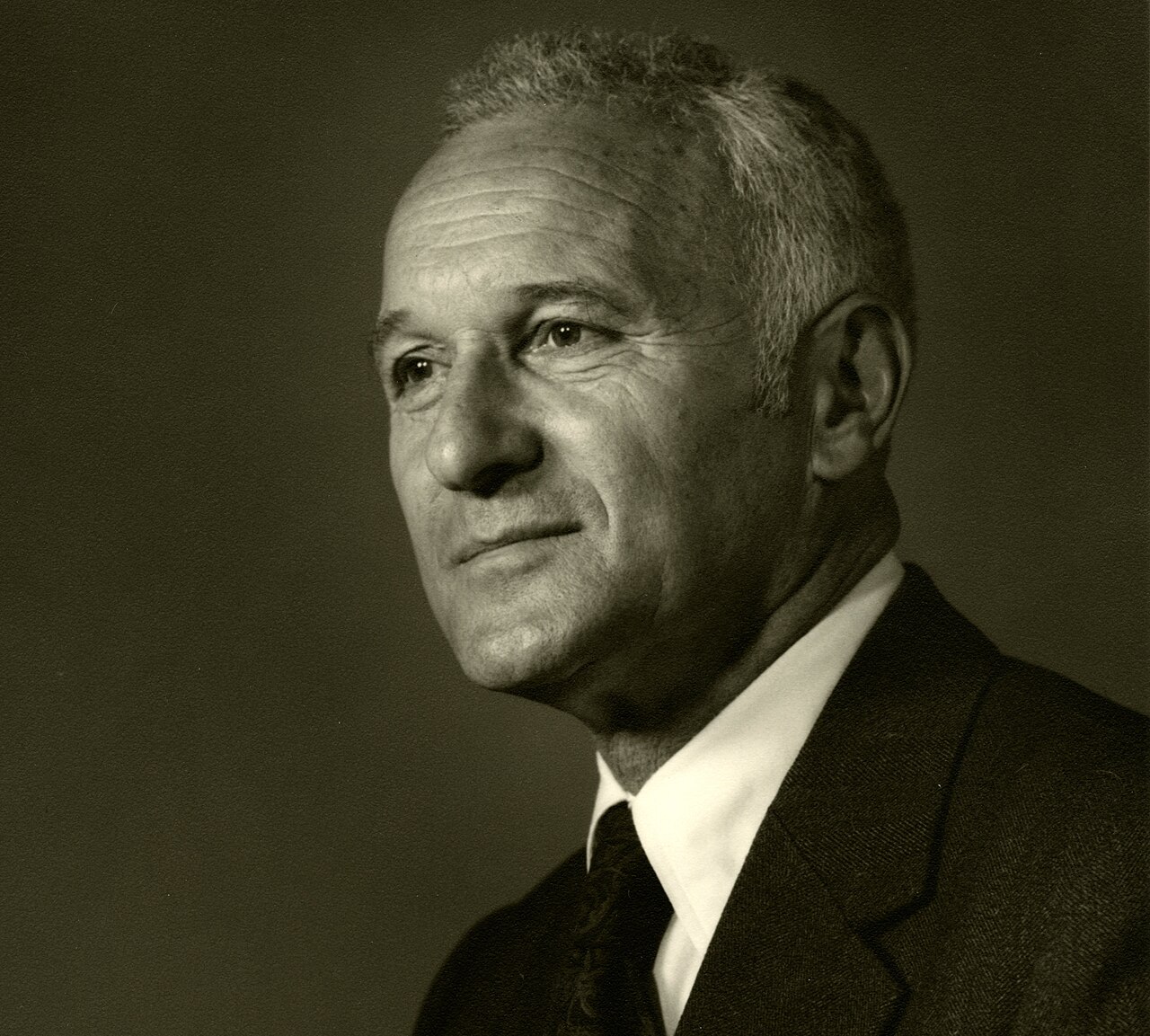
U.S. federal government. Public domain, U.S. federal government work.Sidney Gottlieb photoThis image provides visual context. It does not establish cause, identity, date, or interpretation by itself.
Thomas1313 / Wikimedia Commons. CC BY-SA 3.0.Allan Memorial Institute (T Building)This image provides visual context. It does not establish cause, identity, date, or interpretation by itself.
Central Intelligence Agency / National Security Archive scan. U.S. federal government record.Report of Inspection of MKULTRA/TSDThis image provides visual context. It does not establish cause, identity, date, or interpretation by itself.
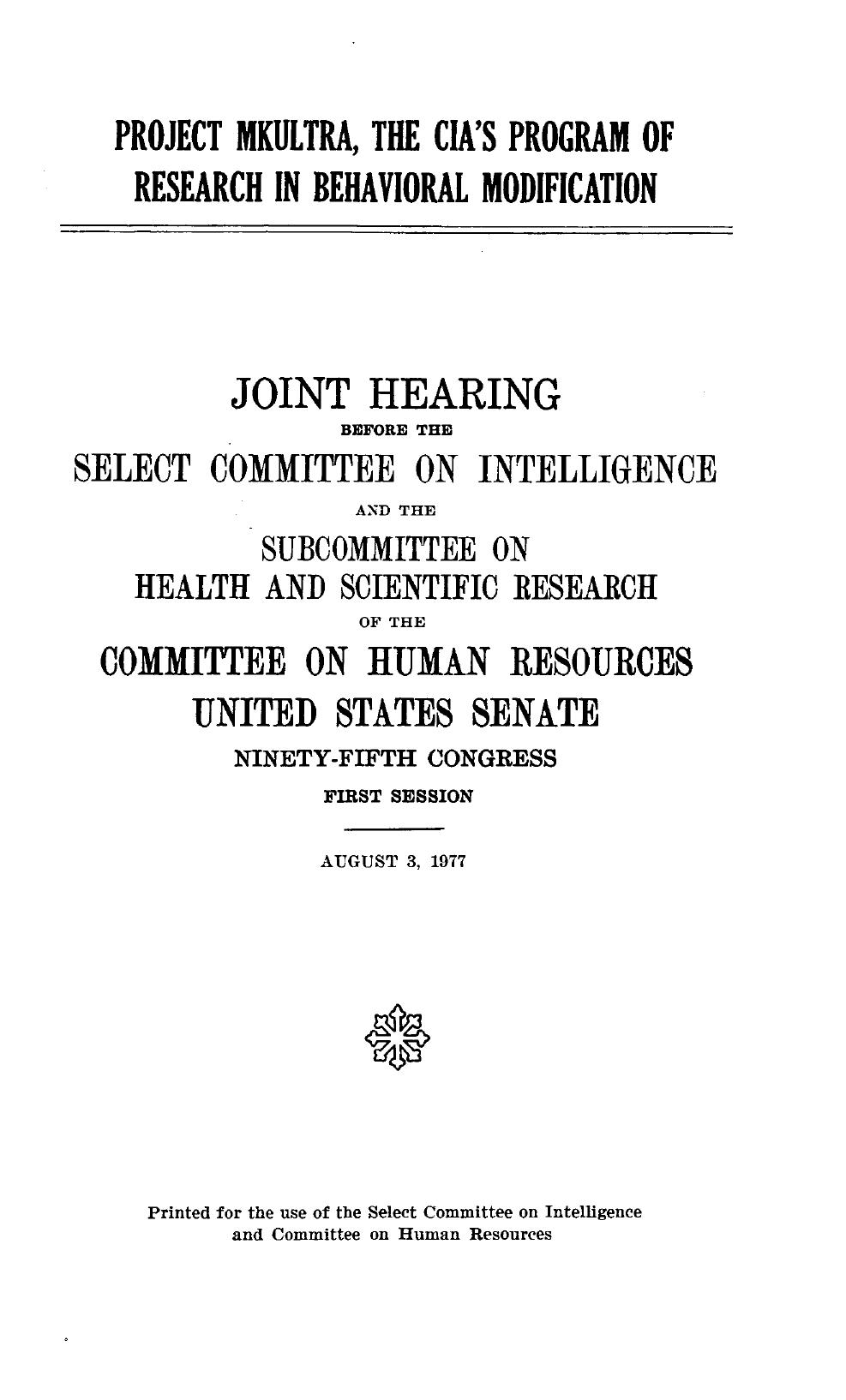
U.S. Senate / Government Printing Office. U.S. federal government record.Project MKULTRA, the CIA's Program of Research in Behavioral Modification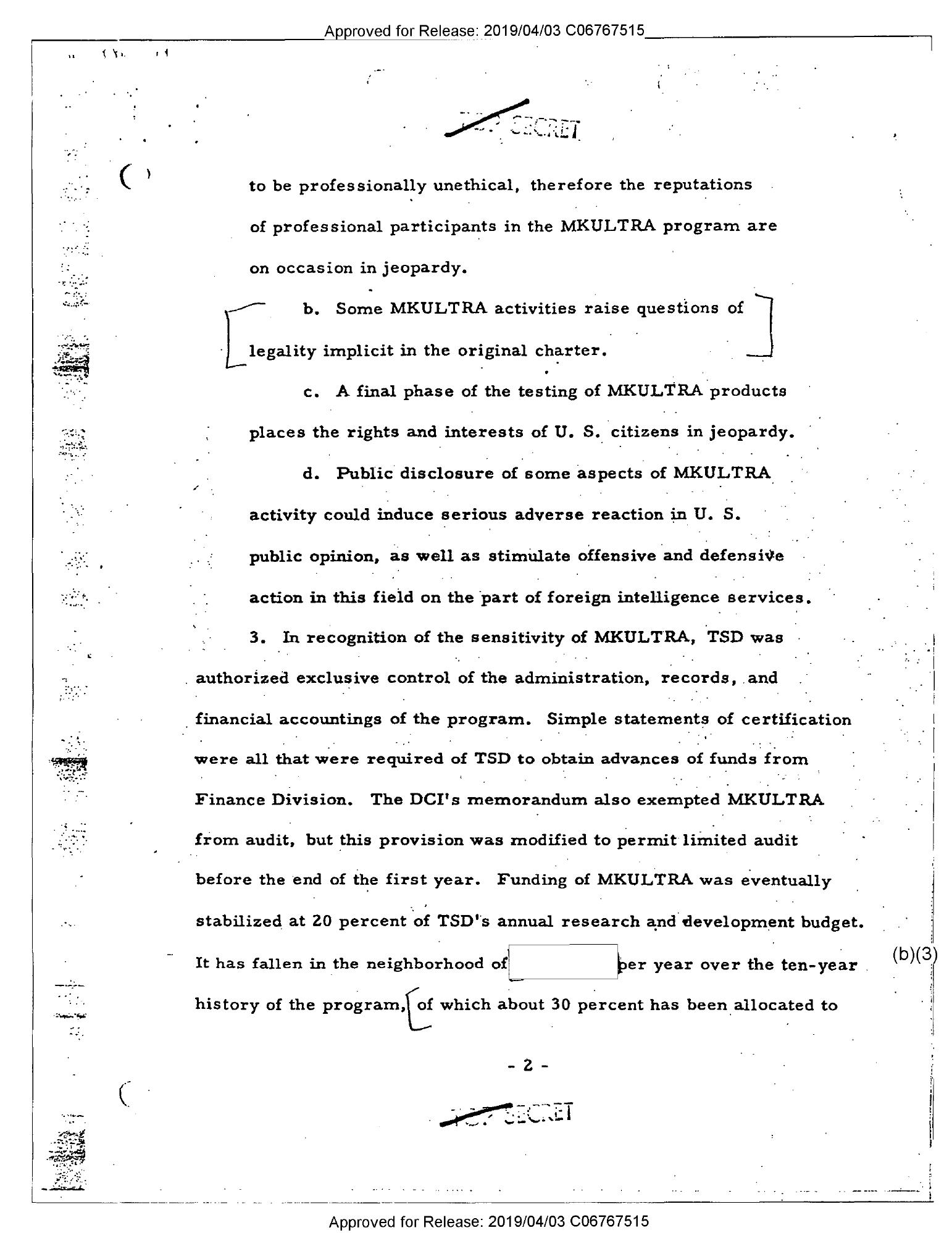
02Visual source
Map the possibilities
Which possibilities survive the pressure?
Give the accepted explanation and its strongest challengers the same hard questions: what fits, what fails, and what is still missing?Competing possibilities
The accepted account and its strongest alternatives.
Inclusion means a possibility is worth testing. It does not mean every possibility currently carries equal evidentiary weight.
Interpretation A - Documented, bounded abusive R&D program
MKULTRA was a broad and unethical behavior-control program with serious human harm, but it did not achieve reliable total mind control. The surviving record captures its major categories even though details are missing.
Current treatment
Supported only as a minimum description. Documented abuse is clear, but the surviving archive cannot establish a reassuring upper boundary.
Interpretation B - Materially broader program obscured by concealment
Minimum documentation and deliberate destruction mean the surviving record understates victim count, operational reach, harm, and institutional connections. Known figures are lower bounds.
Current treatment
Strongly supported as lower-bound reasoning. The program was broader than the surviving public record can measure; the contents of each missing file remain unknown.
Interpretation C - Reliable or expansive mind-control capability
MKULTRA produced dependable methods for erasing, programming, or controlling people, with later events or individuals reflecting those capabilities.
Current treatment
Not established. The program sought extreme capabilities and caused profound damage, but reliable total control is not demonstrated by the public record.
Interpretation D - Fragmented network with unequal knowledge
CIA officers, cutout managers, researchers, institutions, clinicians, and subjects possessed different information. Some research predated CIA support; responsibility varies by actual knowledge and conduct.
Current treatment
Strongly supported and essential to fair accountability. Unequal knowledge existed, but compartmentation does not erase institutional responsibility.
Possibility map
Stress-test every serious explanation.
Select a possibility to see what would need to be true, what supports it, what weakens it, what is missing, and how seriously the current record allows PARALLAX to treat it.
Primary questionWhat does the surviving evidence establish about MKULTRA's scope, methods, results, and human harm, and how much remains unknowable because the CIA destroyed key records?
Interpretation A - Documented, bounded abusive R&D program
What would need to be true
MKULTRA was a broad and unethical behavior-control program with serious human harm, but it did not achieve reliable total mind control. The surviving record captures its major categories even though details are missing.
What supports it
- CIA internal records, hearings, court opinions, and subproject files converge on structure and abuse.
- The 149-subproject archive establishes breadth while preserving project-level variation.
- Internal assessments describe drugs and desired capabilities as unpredictable or unrealized.
- No public evidence demonstrates a reproducible personality-programming capability.
What weakens it
- Bounded can become artificially reassuring when the boundary comes from a damaged archive.
- The surviving material is weighted toward finance and administration rather than operations and victim outcomes.
What evidence is missing
- A complete operational and subject-level archive capable of testing the claimed boundaries.
- Long-term outcome records for known and unidentified subjects.
How PARALLAX treats it now
Supported only as a minimum description. Documented abuse is clear, but the surviving archive cannot establish a reassuring upper boundary.
Discriminating evidenceOpen the categories that can move the assessment
These links lead to the underlying evidence reviews. Direction is kept separate from importance and is never converted into a score.
High impactAuthorization and program structure
Establishes centrally approved behavior-control R&D
Open 008-AHigh impactSurviving finance and subproject files
Establishes broad institutional reach
Open 008-AHigh impactCovert institutional funding
Establishes concealed sponsorship
Open 008-BHigh impactUnwitting human testing
Establishes nonconsensual experimentation
Open 008-CHigh impactSafehouses and vulnerable subjects
Establishes covert dosing and serious exploitation concerns
Open 008-DHigh impactSubproject 68 / Ewen Cameron
CIA funding and severe harm established; sponsor knowledge disputed
Open 008-EThis map does not award points for novelty or authority. Compare serious possibilities, inspect what each one explains, and follow the evidence categories back to their detailed reviews.
Evidence matrix
Current direction by category.
Current direction shows what a category supports, challenges, or leaves unresolved. Evidence impact shows how important that category is to understanding the case, without turning uncertainty into a fake score.
How to read this
Current direction says what the evidence presently supports, challenges, or leaves unresolved. Evidence impact says how important that category is to understanding the case. Impact does not mean support for either side.
Evidence categoryCurrent directionEvidence impactKey limitation / note
Evidence categoryAuthorization and program structure
Read review4 linked sources
Current directionEstablishes centrally approved behavior-control R&D
Evidence impactHigh impactCentral to the case or capable of materially changing the assessment.
Key limitation / note
CIA records and Senate findings converge, although cryptonyms and organizational boundaries changed over time.
Evidence categorySurviving finance and subproject files
Read review4 linked sources
Current directionEstablishes broad institutional reach
Evidence impactHigh impactCentral to the case or capable of materially changing the assessment.
Key limitation / note
Finance records map known projects better than operations, individual subjects, or outcomes.
Evidence categoryCovert institutional funding
Read review4 linked sources
Current directionEstablishes concealed sponsorship
Evidence impactHigh impactCentral to the case or capable of materially changing the assessment.
Key limitation / note
Knowledge varied among CIA officers, cutouts, researchers, institutions, clinicians, and subjects.
Evidence categoryUnwitting human testing
Read review4 linked sources
Current directionEstablishes nonconsensual experimentation
Evidence impactHigh impactCentral to the case or capable of materially changing the assessment.
Key limitation / note
Many subjects were never named, preventing a complete count or notification effort.
Evidence categorySafehouses and vulnerable subjects
Read review4 linked sources
Current directionEstablishes covert dosing and serious exploitation concerns
Evidence impactHigh impactCentral to the case or capable of materially changing the assessment.
Key limitation / note
Logs were destroyed and consent conditions varied across prisons, hospitals, and clinics.
Evidence categorySubproject 68 / Ewen Cameron
Read review5 linked sources
Current directionCIA funding and severe harm established; sponsor knowledge disputed
Evidence impactHigh impactCentral to the case or capable of materially changing the assessment.
Key limitation / note
Cameron knowledge of the ultimate sponsor and CIA direction of individual treatments remain contested.
Evidence categoryFrank Olson
Read review4 linked sources
Current directionUnwitting dose and causal contribution established; death unresolved
Evidence impactHigh impactCentral to the case or capable of materially changing the assessment.
Key limitation / note
Later forensic review raised homicide concerns but did not scientifically prove murder.
Evidence categoryOperational effectiveness
Read review4 linked sources
Current directionMixed: some use and interrogation progress; reliable total control not established
Evidence impactHigh impactCentral to the case or capable of materially changing the assessment.
Key limitation / note
The strongest operational audit is impossible because key files were destroyed.
Evidence category1963 internal oversight
Read review8 linked sources
Current directionEstablishes known legal, ethical, and control failures
Evidence impactHigh impactCentral to the case or capable of materially changing the assessment.
Key limitation / note
The review often emphasized exposure and risk to the CIA alongside harm to subjects.
Evidence category1973 record destruction
Read review8 linked sources
Current directionStrongly supports concealment and an incomplete lower-bound record
Evidence impactHigh impactCentral to the case or capable of materially changing the assessment.
Key limitation / note
Destruction cannot identify each missing act, but the Agency cannot use the gap as exonerating evidence.
Evidence categoryNotification and legal redress
Read review8 linked sources
Current directionShows partial accountability with major gaps
Evidence impactMedium impactMeaningfully informs the case but is not decisive alone.
Key limitation / note
Unknown subjects, secrecy rules, statutes, contractor issues, and military immunity limited remedy.
Evidence categoryExpansive total mind-control claims
Read review4 linked sources
Current directionNot established by the public record
Evidence impactMedium impactMeaningfully informs the case but is not decisive alone.
Key limitation / note
Some claims cannot be absolutely excluded because the archive is incomplete; positive support still requires evidence.
Evidence categoryRecords reported newly located in 2026
Read review8 linked sources
Current directionUnresolved disclosure lead
Evidence impactMedium impactMeaningfully informs the case but is not decisive alone.
Key limitation / note
The significance cannot be assessed before public release and document-level review.
Evidence reviews
The repeatable review structure for future cases.
Each category separates the core question, established observations, source quality, competing interpretations, assessment, unresolved issues, and sources.
008-A
Origins, Scope, and Program Boundaries
Current directionCentrally authorized broad program established
Question tested
What was , how broad was it, and where do predecessor, successor, and operational programs fit?
Current read
was a 1953 CIA behavior-control R&D umbrella that inherited BLUEBIRD and ARTICHOKE work, operated alongside controls for operational use, and continued in reduced form through MKSEARCH. The known 149 subprojects are a documented map, not a proven ceiling.
Established Observations
- FACTCIA Director Allen Dulles authorized MKULTRA in 1953 to develop chemical, biological, and related capabilities for clandestine operations.
- FACTNormal project approval, contracting, audit, and documentation controls were reduced or waived for the program.
- FACTThe surviving financial record identifies 149 subprojects, at least 80 institutions, and 185 nongovernment researchers or assistants.
- FACTMKDELTA governed operational employment, while MKSEARCH later funded nonterminated portions of MKULTRA work.
- SUPPORTED INFERENCEThe broader behavior-control enterprise continued across cryptonym changes more smoothly than the project labels imply.
Evidence Quality
Strong. Contemporaneous CIA authorization and inspector-general records converge with Senate hearings, successor-project statements, and surviving subproject files.
Accepted / Conventional Reading
- The major program categories and documented subprojects provide a workable account of the core history.
- Cold War fear of adversary interrogation and brainwashing drove both defensive and offensive research.
Challenge / Alternative Reading
- The cryptonym boundary can understate continuity across predecessor, successor, military, and operational compartments.
- A finance-derived count cannot define the full number of operations or subjects.
PARALLAX Current Read
BROAD, CENTRALLY AUTHORIZED BEHAVIOR-CONTROL PROGRAM ESTABLISHED; OUTER BOUNDARY INCOMPLETE
008-B
Covert Funding and the Institutional Network
Current directionHidden sponsorship and broad reach established; knowledge varied
Question tested
How did CIA money move through universities, hospitals, foundations, prisons, and private researchers, and who knew the true sponsor?
Current read
CIA funds moved through cutouts and intermediaries to conceal sponsorship. Some researchers and managers were witting, some institutions knew only an intermediary, and some projects supported outside work already underway. Responsibility must be assigned project by project without using fragmented knowledge to erase the CIA funding decision.
Established Observations
- FACTKnown MKULTRA relationships included colleges and universities, research foundations and companies, hospitals and clinics, and penal institutions.
- FACTThe CIA used foundations and intermediaries to conceal its financial role from institutions, researchers, or subjects.
- FACTA concealed CIA contribution helped finance a Georgetown medical facility with space and access relevant to sensitive research.
- DISPUTEDThe degree of sponsor knowledge and intelligence-purpose awareness varied across researchers and institutions and remains unresolved for some projects.
Evidence Quality
Strong for the funding structure and known institutional counts; uneven for the exact knowledge of every researcher because names, contracts, and correspondence remain withheld or incomplete.
Accepted / Conventional Reading
- Covert sponsorship protected sensitive intelligence relationships in a Cold War research environment.
- Some grants supported legitimate outside science rather than CIA-directed experimental protocols.
Challenge / Alternative Reading
- Cutouts prevented ethical review and shielded the sponsor from institutions, subjects, Congress, and later liability.
- Fragmented knowledge was not merely accidental; it was part of how the program achieved deniability.
PARALLAX Current Read
COVERT FUNDING NETWORK ESTABLISHED; KNOWLEDGE AND CULPABILITY VARIED BY PROJECT
008-C
Human Experimentation and Consent
Current directionNonconsensual experimentation established
Question tested
What does the record establish about volunteers, partly informed subjects, patients, and people who never knew they were being tested?
Current read
The archive contains witting volunteers, consent of uncertain quality, patients unaware of research purpose or sponsor, and people covertly dosed without any consent. The desired realistic test sometimes depended on defeating subject awareness, which also defeated ordinary medical safety and follow-up.
Established Observations
- FACTThe CIA inspector general described progressive human testing followed by covert administration to unwitting subjects in normal life settings.
- FACTThe Agency began a program of covert testing on unwitting U.S. citizens in 1955.
- FACTThe inspector general said the final phase placed the rights and interests of U.S. citizens in jeopardy.
- SUPPORTED INFERENCEDescriptions of volunteers cannot be assumed to represent modern informed consent without disclosure of sponsor, purpose, substance, dose, risk, and a meaningful ability to refuse.
- UNKNOWNThe total number of unwitting subjects and the full long-term harm cannot be reconstructed from surviving records.
Evidence Quality
Strong for the existence and rationale of unwitting testing. Incomplete for total subject count, doses, outcomes, and consent quality in every institutional project.
Accepted / Conventional Reading
- Some subprojects used volunteers and reflected the research norms and threat perceptions of their period.
- Modern consent rules were less institutionalized during the 1950s.
Challenge / Alternative Reading
- The CIA knowingly designed tests in which lack of consent was the method, not an oversight.
- Cold War context explains motive but cannot excuse practices officers already recognized as legally and ethically dangerous.
PARALLAX Current Read
NONCONSENSUAL TESTING IS ESTABLISHED; FULL SUBJECT COUNT AND HARM ARE UNKNOWN
008-D
Safehouses, Prisons, and Vulnerable Subjects
Current directionCovert field testing and exploitation concerns established
Question tested
What do safehouse and institutional records show about covert field tests and the use of people with reduced power to refuse?
Current read
CIA-supported safehouses covertly dosed and observed people in social settings. Other work involved prisoners, psychiatric patients, people receiving addiction treatment, and confined populations. The evidence establishes the pattern but not a complete count or uniform consent condition.
Established Observations
- FACTCIA safehouses in New York and San Francisco were used to administer substances covertly to unwitting people and observe their reactions.
- FACTThe safehouse observers were not operating as an ordinary clinical research team, and reliable medical follow-up was often impossible.
- FACTKnown program relationships included penal institutions, hospitals, clinics, and projects involving prisoners or psychiatric populations.
- DISPUTEDLater CIA estimates of identifiable unwitting subjects and Gottlieb recollections of safehouse tests do not agree.
Evidence Quality
Strong for safehouse existence and purpose through CIA internal records and Senate findings; variable at the subject level because names and logs were absent or destroyed.
Accepted / Conventional Reading
- The Agency wanted real-world reactions that controlled laboratory tests could not reproduce.
- Some institutional subjects may have volunteered under the standards used at the time.
Challenge / Alternative Reading
- Realism was achieved by removing consent, medical knowledge, and the subjects ability to recognize an emergency.
- Vulnerable populations made secrecy and recruitment easier while weakening meaningful refusal.
PARALLAX Current Read
COVERT SAFEHOUSE TESTING ESTABLISHED; VICTIM COUNT AND FULL OUTCOMES UNRECOVERED
008-E
Ewen Cameron and Subproject 68
Current directionCIA funding and severe harm established; sponsor knowledge disputed
Question tested
What did the CIA fund at the Allan Memorial Institute, what happened to patients, and what did Cameron know?
Current read
The CIA covertly funded Cameron's psychic-driving and work from 1957 to 1960. Severe methods and lasting patient harm are well documented. Cameron may not have known the ultimate sponsor and developed the theory before CIA support; those points limit direct-control claims but do not erase Agency funding or clinical responsibility.
Established Observations
- FACTMKULTRA Subproject 68 funded Ewen Cameron work at the Allan Memorial Institute from 1957 to 1960 through a concealed intermediary.
- FACTThe treatment and research program used repeated recorded messages, drug-induced sleep, intensive electroshock, drugs, and isolation in efforts to disrupt and reshape behavior.
- FACTPatients did not know they were participating in CIA-funded research and later described severe, enduring harm.
- DISPUTEDCameron knowledge of the ultimate CIA sponsor and the degree of Agency direction over individual treatment decisions remain contested.
- SUPPORTED INFERENCEA fragmented-responsibility model best fits the record: CIA selected and concealed funding for aligned research, while Cameron controlled clinical methods and retained independent duties to patients.
Evidence Quality
Strong through CIA records, Cameron publications, litigation, and peer-reviewed historical analysis. Individual patient outcomes and sponsor-knowledge details remain incomplete.
Accepted / Conventional Reading
- Cameron's work began as an independent psychiatric theory and was not scripted treatment by treatment by CIA officers.
- Historical professional context helps explain why extreme methods could be framed as innovative treatment.
Challenge / Alternative Reading
- The CIA deliberately financed research aligned with its behavior-control aims while hiding sponsorship from patients and possibly from the researcher.
- Secret funding and fragmented control distributed responsibility without protecting subjects.
PARALLAX Current Read
CIA FUNDING AND PATIENT HARM ESTABLISHED; CAMERON SPONSOR KNOWLEDGE AND DIRECT AGENCY CONTROL DISPUTED
008-F
Frank Olson
Current directionUnwitting dose and causal contribution established; manner of death unresolved
Question tested
What is established about Olson unwitting LSD dose and death, and what remains unresolved about the fall?
Current read
The CIA covertly gave Olson LSD, he entered a crisis, and he died days later after falling from a hotel window. The government acknowledged causal contribution and compensated his family. Later forensic work raised serious questions but did not scientifically prove homicide.
Established Observations
- FACTSidney Gottlieb covertly administered LSD to Frank Olson at a CIA-Army retreat in November 1953.
- FACTOlson experienced a severe crisis and died after falling from a New York hotel window days later.
- FACTThe U.S. government acknowledged that the unwitting dose appeared to contribute to the death and provided the family $750,000 through private relief legislation.
- DISPUTEDThe available evidence does not resolve whether Olson fall was suicide, accident, or homicide.
- SUPPORTED INFERENCEAgency secrecy, incomplete disclosure, and physical questions make continued homicide scrutiny reasonable even though murder is not established.
Evidence Quality
Strong for the dose, crisis, death, acknowledgment, and payment. Mixed for the manner of death because the original investigation, later forensic review, missing records, and circumstantial evidence do not converge on a final answer.
Accepted / Conventional Reading
- Olson suffered a drug-associated psychiatric crisis and died by suicide.
- The government later disclosed the covert dose, apologized, and compensated the family.
Challenge / Alternative Reading
- Inconsistencies, the later head-injury finding, CIA motive and access, and record gaps support a possible homicide interpretation.
- The official disclosures came only after outside investigation and were not complete at the start.
PARALLAX Current Read
UNWITTING LSD EXPOSURE AND GOVERNMENT CONTRIBUTION ESTABLISHED; MANNER OF DEATH UNRESOLVED
008-G
Results, Operational Use, and Mind-Control Claims
Current directionSome operational use established; reliable total control not established
Question tested
Did produce useful capabilities, and does the evidence establish reliable total mind control?
Current read
Internal records describe drugs as unpredictable, many desired pills as unrealized, and interrogation outcomes as uneven. They also record progress in drug-supported interrogation and operational use. The evidence rejects both complete-success and harmless-total-failure narratives.
Established Observations
- FACTThe 1963 inspector-general record said no effective truth, knockout, aphrodisiac, or recruitment pill was known as of 1960.
- FACTThe same internal record reported progress in drugs supporting interrogation and described operational employment as real but unpredictable.
- FACTSurviving records document consideration and use of behavioral materials in operations under separate approval controls.
- UNVERIFIED CLAIMThe public record does not demonstrate a reproducible capability to erase and program a controllable personality or create reliable programmed assassins.
- UNKNOWNThe full scale, outcomes, and later transfer of operational use cannot be audited because key files were destroyed.
Evidence Quality
Moderate to strong for broad limits and some operational use. The destroyed operational files prevent a complete effectiveness audit and make retrospective CIA minimization an interested claim.
Accepted / Conventional Reading
- The program failed to find the reliable, controllable mind-control breakthrough its strongest ambitions sought.
- Psychoactive drugs were too variable to function as dependable truth or recruitment tools.
Challenge / Alternative Reading
- A program can fail at total control while still producing useful knowledge about coercion, disorientation, amnesia, dependency, and interrogation.
- Agency claims of few useful results cannot serve as a full audit after the operational record was destroyed.
PARALLAX Current Read
SOME OPERATIONAL VALUE AND USE ESTABLISHED; RELIABLE TOTAL MIND CONTROL NOT ESTABLISHED
008-H
Record Destruction, Disclosure, and Accountability
Current directionDeliberate concealment and an incomplete lower-bound archive established
Question tested
What did the CIA destroy, what survived, and how should the missing record affect present conclusions?
Current read
The program practiced minimum documentation before Helms and Gottlieb ordered destruction of key drug and related files in 1973. Seven boxes of misfiled financial material survived and substantially expanded the known scope. Destruction supports lower-bound reasoning but cannot prove each allegation about missing contents.
Established Observations
- FACTMKULTRA management followed a philosophy of minimum documentation and concentrated full substantive knowledge in very few people.
- FACTCIA drug and MKULTRA files were deliberately destroyed in January 1973 on Gottlieb instructions, with witness statements attributing the order to Helms.
- FACTSeven boxes of finance and budget records escaped destruction and revealed most of the 149-subproject map in 1977.
- SUPPORTED INFERENCEKnown subject, operation, and harm counts are lower bounds because the most relevant files were minimized, omitted, or destroyed.
- UNKNOWNThe contents of each missing file and the program maximum cannot be reconstructed from destruction alone.
- UNKNOWNRecords described at the June 2026 House hearing as newly located cannot be assessed until declassification and public release.
Evidence Quality
Strong. Contemporaneous CIA inspector-general records, records-center material, congressional testimony, and the later accidental discovery converge on deliberate destruction and incompleteness.
Accepted / Conventional Reading
- Helms and Gottlieb described destruction in terms of program closure and protecting sensitive outside relationships.
- The surviving financial files are sufficient to establish the major program categories even if they cannot answer every question.
Challenge / Alternative Reading
- The purge was concealment by senior officials and directly caused the uncertainty that now protects them from complete reconstruction.
- The unexpected 1977 discovery demonstrates that earlier official accounts materially understated scope.
PARALLAX Current Read
DELIBERATE RECORD DESTRUCTION ESTABLISHED; KNOWN SCOPE IS A LOWER BOUND, NOT A LICENSE FOR UNSOURCED CLAIMS
03Visual source
Name what remains
What still does not sit right?
Keep the stubborn gaps visible. Then state what the record can presently carry without pretending suspicion is proof or authority is closure.Open questions / What still does not sit right
The unanswered questions that matter.
- What newly located MKULTRA records described at the June 2026 House hearing will be released, and do they change known program boundaries?
- Which operational files survive under different office, cryptonym, military, contractor, or foreign-partner holdings?
- Can payment, travel, medical, or facility records identify additional subjects while protecting victim privacy?
- How many safehouse tests and distinct subjects were involved, and what substances and doses were used?
- What did senior CIA leadership know about each category of nonconsensual testing after Frank Olson death?
- Which researchers knew the true sponsor, which knew an intelligence purpose, and which were unwitting?
- What degree of informed consent existed in prison, psychiatric, addiction-treatment, and military settings?
- What were the long-term outcomes for subjects not included in later litigation?
- Which methods entered later interrogation doctrine, and through which documents and personnel?
- Were domestic unwitting tests fully ended after 1963 or moved into different programs, locations, or operational categories?
- What explains conflicting CIA estimates of identifiable unwitting subjects and Gottlieb recollections?
- Can the Olson record be expanded with authenticated evidence that discriminates among suicide, accident, and homicide?
- Why were no program leaders criminally prosecuted for record destruction or nonconsensual experimentation?
- What independent system today verifies intelligence-community compliance with human-subject research rules?
What would change the picture
Evidence must be allowed to move the assessment.
- Authenticated operational logs identifying additional unwitting tests, subjects, outcomes, or authorization chains would expand the established scope.
- New records showing reliable, repeatable behavior programming under controlled conditions would materially strengthen the expansive-capability interpretation.
- Complete records showing that claimed operational uses were proposed but never executed would weaken the current operational-use assessment.
- Institution-level correspondence establishing true sponsor knowledge would refine responsibility for individual subprojects.
- Contemporaneous consent forms and disclosure scripts would distinguish meaningful volunteers from nominal or misinformed participants.
- Long-term medical follow-up records would improve the harm assessment.
- Direct documentary evidence linking a specific later event or person to an MKULTRA operation would justify a case-specific finding; association alone would not.
- Authenticated records or forensic evidence identifying the cause and responsible actor in Olson death would resolve the principal disputed incident.
- Independent audit evidence showing current human-subject compliance would update the safeguards assessment.
Why this case matters
Why this conflict deserves scrutiny.
Secrecy changes the ethics of research
An experiment designed to defeat subject awareness cannot preserve informed consent, ordinary medical self-reporting, or a meaningful ability to leave.
Institutional authority is not self-verifying
Some of the strongest evidence against CIA conduct comes from CIA records. Official archives matter; official interpretation still requires audit.
Recordkeeping is accountability
Destroying records prevents subjects from learning what happened, courts from assigning responsibility, Congress from overseeing power, and the public from measuring harm.
Failure and abuse can coexist
A program need not perfect mind control to cause severe harm or develop operational knowledge about coercion, disorientation, amnesia, and interrogation.
Uncertainty belongs with its cause
When an institution minimizes and destroys its own record, the resulting uncertainty should not become a presumption that its narrowest account is true.
What the evidence currently suggests
Where the record points - v0.1.2
PARALLAX does not require the reader to adopt a conclusion.
MKULTRA was a broad, centrally authorized CIA effort to research and operationalize methods for altering human behavior. Nonconsensual testing, covert funding, weak safeguards, vulnerable subjects, operational use, and serious harm are established.
The CIA later position that the program produced few useful results is partly supported by contemporaneous evidence of unpredictability and failed desired capabilities. It is not a complete audit: some operational use and interrogation value are documented, and the best operational files were destroyed.
The stronger claim that the CIA perfected reliable total mind control, personality programming, or controllable assassins is not established by the public record. Rejecting that unsupported capability claim does not minimize the documented abuse.
The full scope is unknowable under the present archive because the program practiced minimum documentation and senior officials deliberately destroyed key records. Known counts are lower bounds. Specific additional allegations still require specific evidence.
The case remains open, particularly for records described in the 2026 House hearing as newly located and undergoing declassification. Their significance should be assessed only after document-level public review.
04Visual source
Inspect the record
Follow the evidence back to its sources.
Trace the sources, shared foundations, definitions, corrections, and revision history behind the public assessment.Source record
Inspect the material.
- Official recordmkultra-1977-hearing
Project MKULTRA, the CIA's Program of Research in Behavioral Modification
Official recordInstitutional record; weight depends on evidence, method, provenance, corroboration, and limits.- Provenance
- Official Senate hearing transcript with prepared statements, testimony, exhibits, and appended Church Committee material.
- Directness
- Primary oversight record for what CIA officials told Congress and what surviving files showed in 1977.
- Corroboration
- Core figures and program features converge with CIA inspector-general records, subproject files, and later court opinions.
- Limit
- The hearing occurred after key files had been destroyed. Witness memory, institutional self-interest, redactions, and the finance-heavy surviving record limit completeness.
- Verification
- Official transcript and PDF verified.
Joint hearing prompted by the discovery of seven boxes of surviving financial records. It describes 149 subprojects, the institutional network, unwitting testing, funding cutouts, and the 1973 destruction of files.
- Primary evidencemkultra-1963-ig
Report of Inspection of MKULTRA/TSD
Primary evidenceDirect material, dataset, exhibit, transcript, or record; directness does not remove context checks.- Provenance
- Declassified CIA inspector-general report, preserved in the John Marks Collection and published with scan and OCR.
- Directness
- Direct internal assessment written while MKULTRA personnel and operations were active.
- Method
- Inspector-general review of TSD program structure, administration, human testing, and operational employment.
- Corroboration
- Its descriptions of unwitting testing, funding, and control problems align with the 1975-1977 congressional record.
- Limit
- An internal institutional review that often frames harm as risk to the Agency. Significant names, sums, and program details remain redacted.
- Verification
- Declassified scan and OCR verified.
Contemporaneous internal inspection documenting minimum records, weak controls, legal and ethical concerns, covert testing on unwitting U.S. citizens, and mixed operational results.
- Primary evidencemkultra-destruction-memo
Destruction of Records on Drugs and Toxins
Primary evidenceDirect material, dataset, exhibit, transcript, or record; directness does not remove context checks.- Provenance
- Declassified CIA inspector-general memorandum with attached records-center and witness material.
- Directness
- Direct institutional inquiry into how and when drug and toxin records disappeared.
- Limit
- The review was deliberately limited and concluded that more fragments might exist while a major intact repository was unlikely.
- Verification
- OCR matched to the declassified document scan.
CIA internal investigation tracing destruction of MKULTRA drug records to Sidney Gottlieb instructions and statements that Richard Helms ordered the purge.
- Primary evidencemkultra-1963-meeting
Memorandum for the Record: MKULTRA Program
Primary evidenceDirect material, dataset, exhibit, transcript, or record; directness does not remove context checks.- Provenance
- Declassified contemporaneous CIA memorandum.
- Directness
- Direct record of the internal policy dispute.
- Limit
- Short summary rather than a verbatim transcript; it does not document every later implementation step.
Records a senior CIA meeting in which Sidney Gottlieb and Richard Helms argued to continue unwitting testing after the inspector-general review.
- Eyewitness / testimonymkultra-gottlieb-testimony
Testimony of Sidney Gottlieb before the Church Committee
Witness recordFirsthand or witness-adjacent material; important even when mediation and memory limits remain.- Provenance
- Top Secret Senate proceeding later declassified and published with the underlying transcript.
- Directness
- First-person testimony by the principal MKULTRA manager.
- Limit
- Gottlieb was an interested participant, repeatedly reported failed memory, and testified after he had ordered records destroyed.
- Verification
- Declassified transcript verified.
Lengthy sworn testimony on utility, safehouses, operational drug use, assassination capabilities, Frank Olson, and the destroyed record.
- Primary evidencemkultra-subproject-68
MKULTRA Subproject 68: Cameron, Allan Memorial Institute
Primary evidenceDirect material, dataset, exhibit, transcript, or record; directness does not remove context checks.- Provenance
- CIA FOIA electronic reading-room record.
- Directness
- Direct Agency record for project identity and its own later characterization.
- Limit
- Retrospective CIA summary from an interested institution. Its claim that the Agency did not influence the research requires comparison with grant, court, and scientific records.
- Verification
- Preserved CIA PDF and Internet Archive capture record verified.
CIA record identifying Ewen Cameron, the Allan Memorial Institute, the project objective, and the Agency retrospective position on its influence.
The former CIA item page now redirects to the Reading Room homepage; this link opens a preserved copy of the CIA PDF.
- Official recordmkultra-turner-mksearch
Statement on MKSEARCH and follow-on records
Official recordInstitutional record; weight depends on evidence, method, provenance, corroboration, and limits.- Provenance
- Declassified CIA statement to a Senate subcommittee.
- Directness
- Direct official description of the successor funding boundary and records search.
- Limit
- Prepared after record destruction and therefore unable to supply a complete operational history.
- Verification
- Preserved CIA PDF and Internet Archive capture record verified.
Follow-up Senate statement identifying MKSEARCH as the project under which nonterminated MKULTRA work was funded.
The former CIA item page now redirects to the Reading Room homepage; this link opens a preserved copy of the CIA PDF.
- Official recordmkultra-2026-house-hearing
Mind Control and Accountability: Uncovering the Truth of the CIA's MKULTRA Project
Official recordInstitutional record; weight depends on evidence, method, provenance, corroboration, and limits.- Provenance
- Official GovInfo hearing record, Serial No. 119-68.
- Directness
- Primary record of what members and witnesses stated in 2026; secondary for historical claims repeated without attached proof.
- Limit
- A public oversight hearing is not a technical adjudication. Witness interpretation and member statements require underlying documents; newly located files were not yet available for review.
- Verification
- Official hearing PDF verified through GovInfo.
Current congressional hearing on record destruction, victims, accountability, and newly located records reportedly undergoing CIA declassification.
- Official recordmkultra-eo12333
Executive Order 12333, section 2.10: Human Experimentation
Official recordInstitutional record; weight depends on evidence, method, provenance, corroboration, and limits.- Provenance
- Official codified executive-order text.
- Directness
- Primary legal and policy source for the later safeguard.
- Limit
- A formal rule does not by itself establish compliance, oversight quality, or remedy in every later program.
Requires intelligence-community human-subject research to follow federal health guidelines and document informed consent.
- Primary evidencemkultra-cia-v-sims
CIA v. Sims, 471 U.S. 159
Primary evidenceDirect material, dataset, exhibit, transcript, or record; directness does not remove context checks.- Provenance
- Official U.S. Reports scan hosted by the Library of Congress.
- Directness
- Primary judicial record for the FOIA and disclosure question.
- Limit
- Addresses statutory disclosure authority, not whether each research practice was lawful or ethical.
Supreme Court opinion allowing the CIA to withhold identities of some MKULTRA researchers and institutional affiliations as protected intelligence-source information.
- Primary evidencemkultra-stanley
United States v. Stanley, 483 U.S. 669
Primary evidenceDirect material, dataset, exhibit, transcript, or record; directness does not remove context checks.- Provenance
- Full Supreme Court opinion and dissent reproduction.
- Directness
- Primary judicial record for a related human-testing remedy.
- Limit
- Stanley's test was an Army program and should not be counted automatically as a CIA MKULTRA subproject.
Opinion denying a constitutional damages remedy to an Army servicemember secretly administered LSD in a related military program.
- Primary evidencemkultra-orlikow
Orlikow v. United States, 682 F. Supp. 77
Primary evidenceDirect material, dataset, exhibit, transcript, or record; directness does not remove context checks.- Provenance
- Published federal district-court opinion.
- Directness
- Primary legal record for admitted facts and disputes in litigation by Cameron patients.
- Limit
- Summary-judgment opinion, not a final factual verdict on every disputed medical and causal question. The case later settled.
Court opinion describing Subproject 68, Cameron methods, CIA covert funding, patient claims, and disputed questions of treatment, experiment, and supervision.
- Official recordmkultra-ford-olson
Statement on relief legislation for the survivors of Dr. Frank R. Olson
Official recordInstitutional record; weight depends on evidence, method, provenance, corroboration, and limits.- Provenance
- Contemporaneous presidential statement reproducing the official act.
- Directness
- Direct source for the executive acknowledgment and payment.
- Limit
- Does not resolve the manner of death or provide a complete account of Agency conduct.
Presidential acknowledgment of Olson unwitting LSD exposure, its apparent contribution to his death, and a $750,000 private-relief payment.
- Technical / scientific analysismkultra-cameron-1956
Psychic Driving
Technical sourceScientific, engineering, forensic, or specialist analysis; weight follows method and reproducibility.- Provenance
- Peer-reviewed journal record indexed by the U.S. National Library of Medicine.
- Directness
- Primary scientific source for Cameron theory and claims.
- Method
- Clinical case-based psychiatric proposal rather than a modern controlled efficacy or safety trial.
- Limit
- The paper predates CIA funding and does not disclose later covert sponsorship, the complete treatment program, or long-term patient outcomes.
Cameron's own scientific presentation of repeated-message psychic driving as a proposed psychiatric method.
- Independent technical analysismkultra-cameron-review
The work of Donald Ewen Cameron: from psychic driving to MK Ultra
Independent critiqueTechnical analysis outside the principal institution; judged by methods and source trail, not outsider status.- Method
- Historical analysis of Cameron publications, archival records, and the professional context of psychiatry.
- Corroboration
- Consistent with court and CIA records on funding and the documented treatment methods.
- Limit
- Cannot reconstruct every individual patient course or settle every disputed question of sponsor knowledge.
Peer-reviewed historical review of Cameron's theory, methods, CIA funding, patient harm, and uncertainty about his knowledge of the ultimate sponsor.
- Independent technical analysismkultra-cameron-context
Ewen D. Cameron: interactions between a pioneering psychiatrist and his professional as well as societal contexts
Independent critiqueTechnical analysis outside the principal institution; judged by methods and source trail, not outsider status.- Method
- Professional-biographical and historical review.
- Limit
- Context can explain how practices became possible but does not excuse nonconsensual research or replace patient-level evidence.
Medical-historical account examining Cameron within contemporary psychiatry while directly addressing ethical failures and CIA-linked research.
- Investigative journalismmkultra-olson-forensic
New Study Yields Little on Death of Biochemist Drugged by the CIA
Reported contextInvestigative or explanatory reporting; useful for leads and context, checked against primary sources.- Provenance
- Reporting from the forensic team public announcement and interviews.
- Directness
- Participant-adjacent reporting on a later forensic examination rather than the complete technical report.
- Limit
- Short news account and paywall may limit access. The forensic result did not resolve the manner of death.
Contemporaneous report on the exhumation and forensic team conclusion: serious doubts about suicide, but no scientific proof of homicide.
- Archival materialmkultra-nsarchive-collection
CIA Behavior Control Experiments Focus of New Scholarly Collection
Archival recordHistorical or FOIA/source-file material; relevance depends on provenance, completeness, and context.- Provenance
- Scholarly document collection built largely from the John Marks FOIA archive, with scans and OCR of selected primary records.
- Directness
- Collection-level guide; linked documents are primary, while captions and narrative are editorial synthesis.
- Method
- Archival curation, document identification, contextual chronology, and cross-reference to congressional and legal records.
- Limit
- Not a complete replacement for the destroyed Agency archive. Some narrative claims rely on cited secondary histories.
- Verification
- Collection page and linked core documents verified on September 1, 2026.
Curated gateway to more than 1,200 records on BLUEBIRD, ARTICHOKE, MKULTRA, safehouses, prisons, institutional funding, operations, and later testimony.
Source relationships
Where the argument shares a foundation.
This view identifies records reused across observations, evidence reviews, or other PARALLAX investigations. It prevents citation volume from being mistaken for independent confirmation.
Repeated citation is not independent corroboration.
A record is counted once even when several sections rely on it. This audit shows the sources carrying more than one part of the public argument.
Project MKULTRA, the CIA's Program of Research in Behavioral Modification
Official record
- Review reuse
- 7 evidence reviews
- Observation reuse
- 17 established observations
- Cross-case reuse
- 0 other investigations
Appears in008-A Origins, Scope, and Program Boundaries008-B Covert Funding and the Institutional Network008-C Human Experimentation and Consent008-D Safehouses, Prisons, and Vulnerable Subjects008-F Frank Olson008-G Results, Operational Use, and Mind-Control Claims008-H Record Destruction, Disclosure, and Accountability
Report of Inspection of MKULTRA/TSD
Primary evidence
- Review reuse
- 5 evidence reviews
- Observation reuse
- 16 established observations
- Cross-case reuse
- 0 other investigations
Testimony of Sidney Gottlieb before the Church Committee
Eyewitness / testimony
- Review reuse
- 4 evidence reviews
- Observation reuse
- 8 established observations
- Cross-case reuse
- 0 other investigations
Destruction of Records on Drugs and Toxins
Primary evidence
- Review reuse
- 4 evidence reviews
- Observation reuse
- 6 established observations
- Cross-case reuse
- 0 other investigations
The work of Donald Ewen Cameron: from psychic driving to MK Ultra
Independent technical analysis
- Review reuse
- 3 evidence reviews
- Observation reuse
- 7 established observations
- Cross-case reuse
- 0 other investigations
Orlikow v. United States, 682 F. Supp. 77
Primary evidence
- Review reuse
- 3 evidence reviews
- Observation reuse
- 6 established observations
- Cross-case reuse
- 0 other investigations
CIA Behavior Control Experiments Focus of New Scholarly Collection
Archival material
- Review reuse
- 3 evidence reviews
- Observation reuse
- 4 established observations
- Cross-case reuse
- 0 other investigations
CIA v. Sims, 471 U.S. 159
Primary evidence
- Review reuse
- 2 evidence reviews
- Observation reuse
- 2 established observations
- Cross-case reuse
- 0 other investigations
Statement on relief legislation for the survivors of Dr. Frank R. Olson
Official record
- Review reuse
- 1 evidence reviews
- Observation reuse
- 3 established observations
- Cross-case reuse
- 0 other investigations
Appears in008-F Frank Olson
MKULTRA Subproject 68: Cameron, Allan Memorial Institute
Primary evidence
- Review reuse
- 1 evidence reviews
- Observation reuse
- 2 established observations
- Cross-case reuse
- 0 other investigations
Appears in008-E Ewen Cameron and Subproject 68
Statement on MKSEARCH and follow-on records
Official record
- Review reuse
- 1 evidence reviews
- Observation reuse
- 2 established observations
- Cross-case reuse
- 0 other investigations
Executive Order 12333, section 2.10: Human Experimentation
Official record
- Review reuse
- 2 evidence reviews
- Observation reuse
- 1 established observations
- Cross-case reuse
- 0 other investigations
Glossary
Plain-English terms for this case.
Definitions focus on words that materially affect how the evidence is understood.
cutout
An intermediary used to conceal the true sponsor, relationship, or transfer of funds.
Related evidence
depatterning
Cameron's effort to break down existing patterns of thought and behavior using intensive electroshock, drugs, sleep, isolation, or related methods.
Related evidence
lower bound
A minimum count established by surviving evidence, not a claim that the count captures the full total.
Known subprojects, subjects, and operations should not be treated as ceilings after minimum documentation and deliberate destruction.
Related evidence
MKDELTA
The CIA control system for operational employment of biochemical materials, distinguished in the 1963 inspector-general report from MKULTRA research and development.
MKSEARCH
A follow-on project used to fund nonterminated portions of MKULTRA-related work after the original umbrella was reduced or renamed.
Related evidence
MKULTRA
The CIA cryptonym for a 1953 behavior-control research and development umbrella covering many subprojects, substances, institutions, and methods.
Related evidence
psychic driving
Cameron's method of repeatedly playing recorded messages to a patient, sometimes after procedures intended to disrupt existing behavior and memory.
Related evidence
unwitting subject
A person who did not know that a substance, procedure, observation, or treatment was part of an experiment.
A patient can consent to treatment and still be unwitting about research purpose, hidden sponsor, or extraordinary risk.
Challenge tools
PARALLAX can be challenged.
Challenges are evaluated by evidentiary quality, not ideological alignment.
Revision history
Important changes remain traceable.
Repaired two CIA records that had begun redirecting to a generic homepage.
September 3, 2026
- Replaced the failed Subproject 68 item link with a verified preserved CIA PDF.
- Replaced the failed MKSEARCH statement link with a verified preserved CIA PDF.
- Marked both records as archived and made no change to the evidence assessment.
Reframed MKULTRA around the official retrospective boundary and the destroyed record.
September 1, 2026
- Placed the limited-results account beside the strongest evidence that known scope is only a lower bound.
- Added possibility-specific missing evidence and current treatment.
- Preserved the distinction between documented conspiracy, broader plausible scope, and unsupported total-control claims.
Initial state-of-evidence report on MKULTRA experimentation, secrecy, results, record destruction, and accountability.
September 1, 2026
- Opened INV-008 under the PARALLAX Investigation Protocol.
- Separated established abuse, supported undercounting, disputed incidents, and unsupported expansive capability claims.
- Treated the CIA as an interested source and deliberate record destruction as evidence with bounded implications.
- Distinguished MKULTRA from predecessor, successor, operational, and related military programs.
- Added eight evidence reviews covering program boundaries, covert funding, consent, safehouses and vulnerable subjects, Subproject 68, Frank Olson, operational results, and accountability.
- Added the June 2026 House hearing as a current disclosure lead without prejudging unreleased records.
- Added a documentary gallery, timeline, evidence-impact matrix, glossary, open questions, and explicit change criteria.